Bonaventura Clotet: "I swore loyalty to cava as the medieval knights did"
Director of IrsiCaixa and creator of the Fight Against Infections Foundation
-
CAT -
CAST
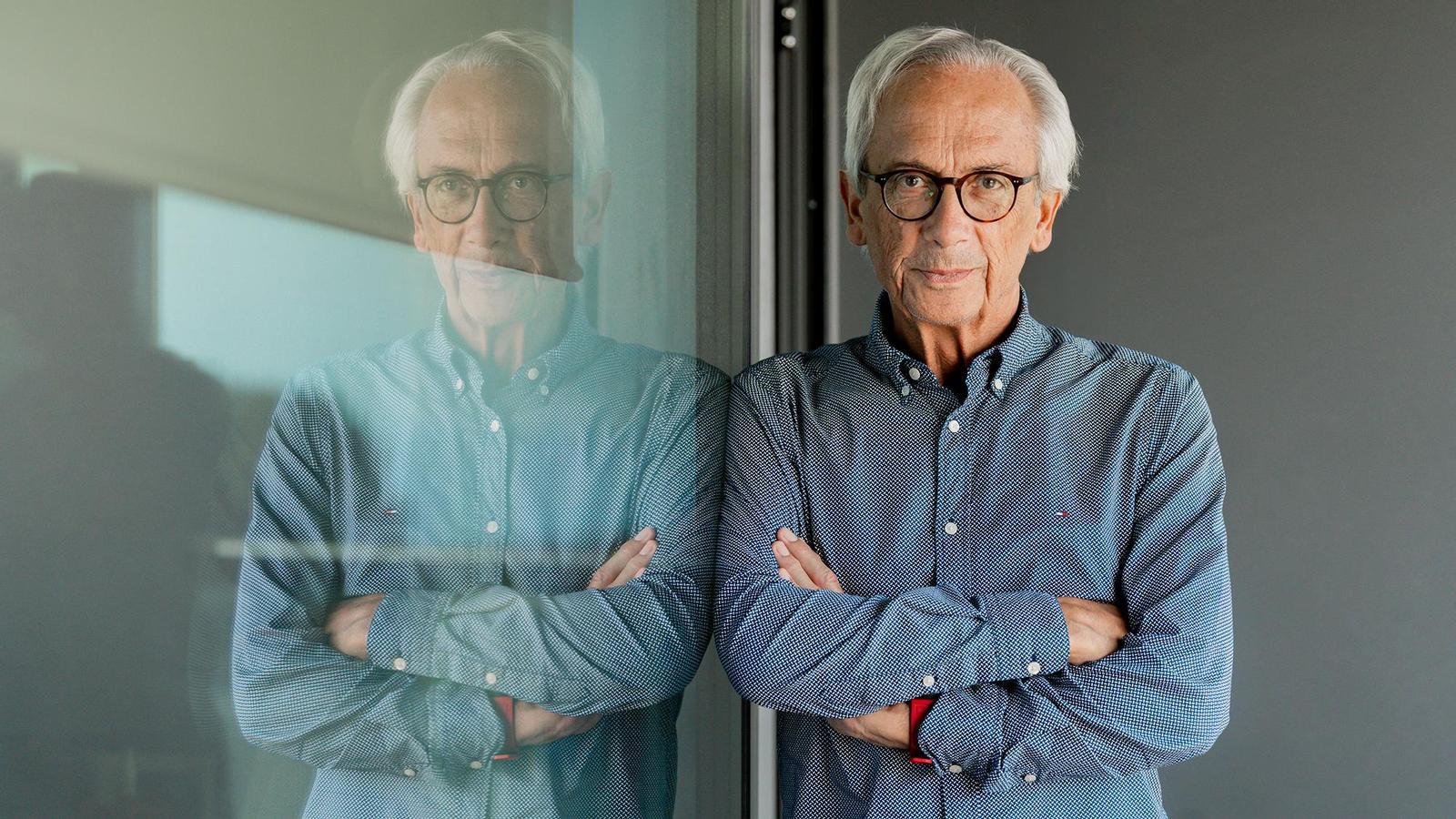
Doctor Bonaventura Clotet (Barcelona, 1953) ensures that the information he offers is correct while he speaks: he types—with two fingers—any factual data on his computer before accepting it as valid. The director of IrsiCaixa and founder of Fight Against Infections has another position that is probably less known: he has been, since 2017, an honorary member of the Cava Brotherhood of Sant Sadurní.
How exactly did the Brotherhood's gala go?
— They put a cape and a suit on me, they made me drink a glass of cava in one gulp –not very big–, and I swore loyalty to cava as medieval knights did: with a sword on one shoulder and then on the other.
Has he fulfilled this loyalty?
— Radically.
Is drinking wine or cava good for your health?
— In this ceremony I explained that, against anti-alcohol radicals, drinking in moderation can be useful. Red wine has resveratrol, an active ingredient that is now sold in pharmacies. Cava also contains it, although in lower quantities.
Why is resveratrol good?
— It is an antioxidant and, as such, fights cellular aging. It can be found in the skin of red grapes and red fruits, as well as in dark chocolate—the purer, the better—, peanuts, and walnuts. In a way, the fact that longevity in the Mediterranean basin is high depends a lot on these foods, as well as on the consumption of olive oil—which is good for neuronal aging—and fish.
My grandmother drank a little wine every day and lived to be 99 years old.
— Perhaps they had favorable genetics, but the glass surely did them good: wine raises HDL cholesterol —the “good” kind—. Drinking a couple of glasses of wine or cava a day is healthy; nothing more. And it must be combined with a healthy diet and walking for an hour every day, without stopping, quickly —going out to run errands or walk the dog doesn't count.
Do you have a favorite cava?
— The Nature Rosat from Martín Faixó. If I could choose, it would always be this one. At the Gala People in Red, the charity gala where we raise money for research into infectious diseases, we always serve this cava.
He recently said that cava helps him get through this night better.
— It is a very important gala. And it involves a lot of tension for me: I have to greet everyone, everyone wants to be in the photo, sometimes there is someone who gets annoyed. A glass of cava helps me relax.
Do you handle moments of being the center of attention well?
— I don't like it. I have no desire for the spotlight. In fact, when I was young, I was terribly shy. When I was 14 years old, I would go and talk to the tourists who went to the Zoo to lose my fear. Sometimes I was successful; other times, I wasn't. It was very hard for me to overcome my shyness. But the past is lessons, not condemnations.
Is there any lesson that you resisted learning?
— My father would sit me down every night by his side to read in French and in English, which is something that served me well. But he also tried to teach me how to type and I refused. I still type with two fingers.
Let's return to the wines. If we make him choose between white and red...
— There are very good ones of both types, which make the after-dinner conversation and the meals more pleasant. Deep down, socialization is based on the ability to be honest with oneself and with the person in front of you, and a glass of wine helps a lot with that. But if you have too much, you talk nonsense and you can end up getting worked up.
Do you have any criteria for choosing them that won't make them go wild?
— An 11-degree wine is not the same as a 15-degree one. I believe an attempt should be made to produce wines with a lower alcohol content. Or, at the very least, that restaurants should state the alcohol content of the bottles they offer on their menus.
Speaking of restaurants, do you recommend one in Barcelona?
— It would not be correct to mention just one. La Venta, El Racó d'en Cesc, Compartir, and Vivanda. These are the ones I frequent regularly, for work and for convenience. In addition to serving good food, they have pleasant and spacious areas that allow you to talk without the person at the next table hearing you. Then, in Cadaqués, I go to Can Rafa, Gula, and L'Enoteca, which are restaurants of great quality and good value for money.
You mentioned the fact of being able to speak without being heard. Do you highly value privacy in spaces?
— When you go to a restaurant, you go to share a pleasant time, to tell stories about work or life, and you need your privacy. That is why spacious premises are needed, with space between tables, and ideally where there are also private rooms. Another important issue is the waiters.
What is important to you?
— In all the places I have mentioned, there are polite, pleasant waiters with a lot of empathy. And I am quite demanding regarding the topic of Catalan: I greatly appreciate waiters who, despite not being Catalan, make the effort to speak it.
How can people be encouraged to dedicate more effort to donations for research?
— Society just needs to have the sensitivity that helping research is a way of helping oneself. Sometimes I explain this to people who have relatives with Alzheimer's, and they ask me: "But will this give me any return?" What return is better than knowing that you are helping society with something that will do it good?
Peter Singer has highlighted the importance of small donations.
— 10 euros a month is 120 euros a year. If you do it alone, it has a certain importance, but if a thousand people do it, it is 10,000 euros a month. 120,000 euros a year helps research a lot. It is like the hummingbird fable.
I don't know her.
— There is a big fire in the forest and all the animals are fleeing from it. All of them, except for a little hummingbird, who, after going to a lake to get a little bit of water, heads towards the fire. The other animals say to it: "Are you crazy? Don't you see there is a fire?" And it replies: "I am doing my bit against the fire, even if it is just this small drop." Life is this: small contributions that, when added together, can put out the fire.
