Joan Huguet: "I have one year left to get Corpinnat into the DO Penedès"
President of the DO Penedès

-
CAT -
CAST
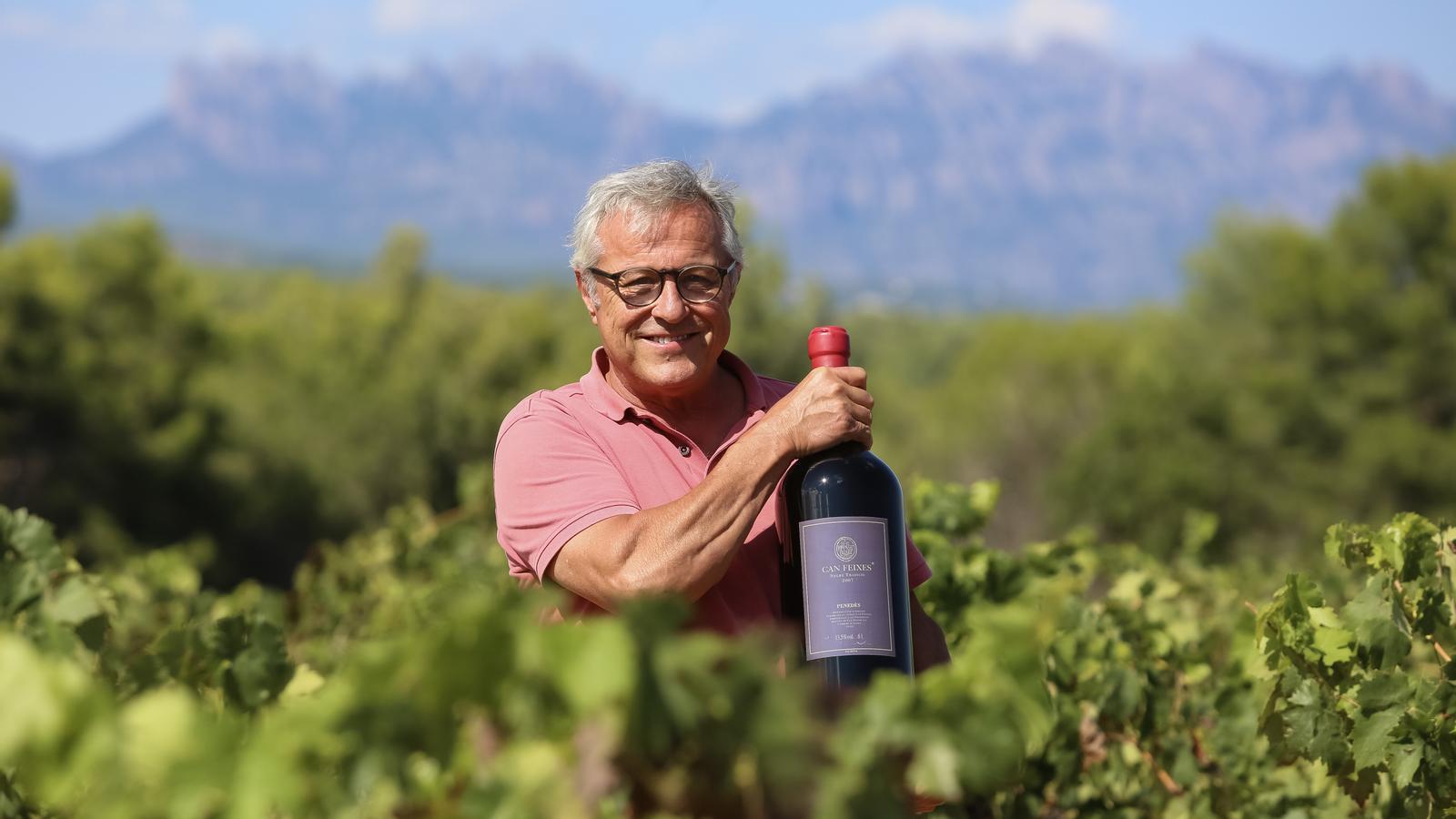
I am interviewing the president of DO Penedès, Joan Huguet, the day after they unanimously approved the creation of two independent chambers (commissions) within the designation: one for sparkling wines and another for still wines. They say they will launch it in 2027, and that the objective is to build a designation that brings together all the agents of the territory, winegrowers and producers. Joan has his own winery, Can Feixes, where he makes wines and also sparkling wines, affiliated with Corpinnat since almost the beginning. With his presidency, DO Penedès has become the first 100% organic in the world, which is one of the great achievements.

You have approved the creation of two commissions within the Penedès designation of origin.
— Yes, each commission will make its own decisions. The DO Penedès includes still wines and Clàssic Penedès, and in the future, we'll see. The fact that we have two commissions will allow each one to have its own regulations, with the grape varieties they want to work with. If in the future bubble producers say they only want to work with native varieties, then they can do so, without this decision affecting the regulations for still wines.
I understand you're saying you will grow in the future?
— First, let me tell you how the DO Cava is. It has become depersonalized. Before, we were all neighbors, we knew each other, we were friends, whether we were large or small producers. Now it's not like that anymore. There are foreign investors, whom we don't know. Furthermore, decisions about the DO Cava are made in Madrid, where they legislate. All this has caused the territory to become depersonalized. That's why Clàssic Penedès and Corpinnat were born, because the DO Cava was concentrating on mass production at low prices, which does not add value. We are not living in the times of good, beautiful, and cheap like in our parents' time. So, among sparkling wine producers, there are those who want volume and those who want quality.
So, you have created the regulations to welcome the producers of sparkling wines who work for quality.
— We have created the regulations to make space for it. However, to enter it, in DO Penedès they can only have the combination of being producers of still wines, registered with DO Penedès, and making bubbles. I mean they have to be integral producers, they cannot buy still wine to make bubbles.
Does belonging to a designation of origin imply more benefits or security for producers?
— It is always better. Especially if you go out into the world, if you say you are a designation of origin, it has more substance. Otherwise, when you go out into the world, they tell you that you belong to a club of friends who make bubbles, which I don't think is a bad expression, because if everything is done well and with quality, what can you tell me? The fact is that the protection of a designation of origin always helps.
Therefore, work so that in the future in Penedès, bubble producers are protected by two designations of origin: DO Cava and DO Penedès.
— It will be easier to understand the territory. The DO Cava is very large, it includes three hundred wineries, with two hundred million bottles, which are concentrated in a few companies. Furthermore, the DO Cava is not ours, the owners are not neighbors of the territory but have interests far from our home: all this is slipping out of our hands. The DO Penedès is of the territory, many already belong to it as producers of still wines, then it is a natural step. And if not, sometimes I think why can't it be? Are we ashamed to belong to Penedès? It's like we're ashamed of our hair color or our last name. We are from Penedès, why can't we put it on the label?
Therefore, if Corpinnat or other producers not affiliated with the DO Cava entered, would the Penedès brand be strengthened?
— Yes, and I think about the territory and the country, because I am proud of where I come from, Penedès, and I think I live in the best country in the world, which is Catalonia. After all, I think it's what should have been from the beginning. The DO Cava should not have been created as it was created, which was all due to entry into the European market, when Champagne said that producers from Penedès could not call their products champagne. That's where it all began. When I was little, every Sunday a bottle of champagne was opened, because it was Sunday and because that product was well made. Then it grew in volume, in size, and everything changed.
Do you think there is too much vineyard in the Penedès?
— With the business movements that have occurred, with a brand like Freixenet that has stopped making forty million bottles of cava because what it now makes is prosecco, which they put on sale in twenty-one days, then yes, there will be surplus hectares. If we think that in one bottle there is a kilo of grapes, what will happen to these forty million kilos that Freixenet does not use? What has happened with Freixenet is that they have a brand under which they sell everything, and people don't know what they are buying.
Where do we buy grapes, if not in Penedès?
— Wherever it may be, from everywhere, but not in Penedès nor in Catalonia. They only bet on their brand, which started with the traditional method, that is, with a second fermentation in the bottle, and now they do everything, and this confuses the consumer. As a Catalan, I also tell you that I am sorry. If the grandparents were to rise from their graves! These companies from Penedès that were the first great exporters from Penedès, look what they are doing! They do not promote Penedès, now they only have one brand, and they no longer care about anything more than making money. This is not working for the territory, there is no involvement in the culture. I want figures that do not relocate, that do not abandon the territory.
So, what will happen to these 40 million kilograms of surplus grapes?
— Walk between Barcelona and Tarragona, and observe the vineyards there. You will see many abandoned ones. Last year, vineyards were already left unharvested.
But this is a danger for the territory because the winegrower has to earn a living from the land, and if he doesn't, what will happen?
— So he will plant olive trees, pistachio trees.
Either solar panels or industrial estates.
— In the world of wine, it has been said until now that the big problem is the decrease in consumption, and no, it's not. The big problem is the delocalization of the product. For us specifically, that's what affects us most, not the decrease in global consumption. They delocalize the product, put it on sale in less than a month, sell it at very cheap prices, they don't have to wait the minimum nine months that the traditional method requires. And they sell them as fresh product with a few bubbles. Do you know that Freixenet sells bottles adhering to the DO Cava for four euros, and those made with the prosecco method for seven? They take zero risk with these products. Quality is not sought, but volume. It's a shame all in all.
The winemaker is the one who is left in a very weak position.
— There will be those who continue to work, but it is true that others will not. We are living in a very complicated time.
Complicated and dispersed for the consumer. I have seen menus in restaurants where under the word cava appear wineries that are attached to different places.
— In the street I know that not everything is known.
To finish, Joan, in the years you have been president of the DO Penedès, you have achieved the 100% organic certificate; it is the first designation of origin in the world to achieve this. What challenges do you have left?
— We have achieved this thanks to the winegrowers; we have all gone in the same direction. I think other denominations of origin could also have achieved this, especially the smaller ones. And what you ask me, well, I have one year left to achieve Corpinnat entering the DO Penedès.
