Manel Batet: "When someone says: 'I've had a coffee and I'm buzzing like a motor', it could partly be due to their caffeine intolerance"
Novell Coffees

-
CAT -
CAST
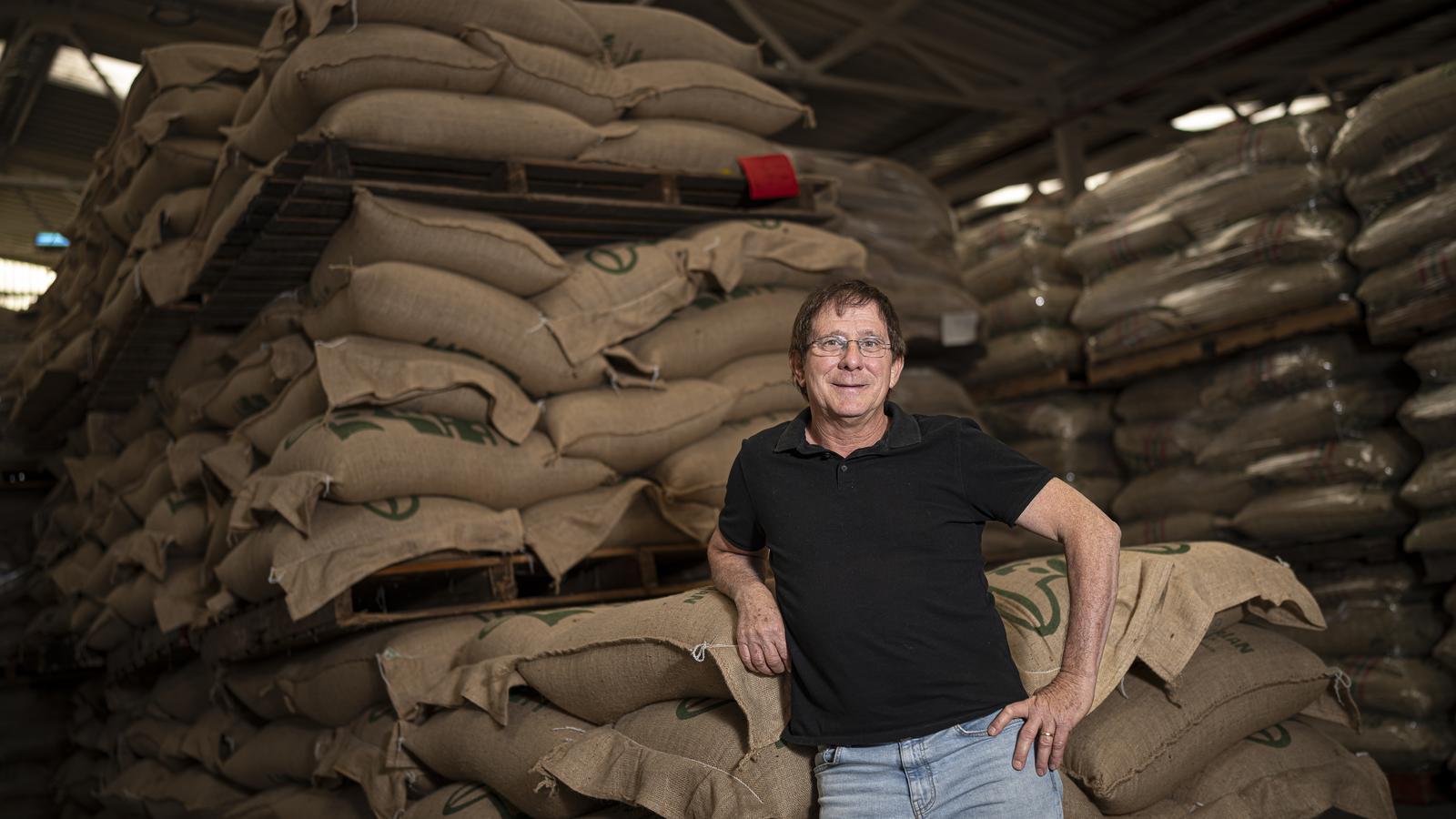
Vilafranca del PenedèsI am interviewing Manel Batet, from Cafès Novell, from Vilafranca del Penedès, so that he can explain to me the history of the company where he works and about the coffee we drink every day. I noticed the Novell brand the day I checked that the Disfrutar restaurant was the brand it used to prepare coffees. As the great enthusiast that Manel is, he knows data, dates, stories, and the evolution that the drink has undergone, which is more fashionable than ever. And it is also sold at higher prices than ever, probably. Current geopolitical situations and climate change will not favor it in the coming years for the situation to change. We will continue to pay a very high price for a cup of coffee.

We have more knowledge of coffee.
— Before, coffee was that strong drink we had to stay awake. It was a very bitter, astringent coffee. I remember we had to put two lumps of sugar in it to sweeten it. Now we don't put twelve grams of sugar in it anymore; now, five or none is enough for us.
What has changed?
— Before, the coffees used were of lower quality and were accompanied by a percentage of roasted coffee. The way of understanding the world of coffee at origin and its processing, the cooking method (roasting it) and the improvement of the tools (the grinder and the machine) have also evolved a lot.
Explain to me what the robusta and arabica varieties mean?
— Coffee is produced in tropical climates, between the Tropic of Cancer and the Tropic of Capricorn, on four continents: America (central and southern); Africa, Asia, and a part of Oceania. Therefore, it is produced at different altitudes, because, despite being tropical climates, there are low and high altitudes. Or there are also those that have rain more often or not so often. The common denominator of all areas is that they have a tropical climate with warm temperatures and, therefore, almost never have sub-zero temperatures. If they did, the coffee bush would suffer greatly and die. The robusta variety coffee bush grows at low altitudes, between 300 and 600 meters, while the arabica variety grows at altitudes between approximately 600 and 1,800 meters.
What attributes do they have?
— We would basically talk about body, acidity, and aromas. High-altitude coffees are more acidic and more aromatic; on the contrary, low-altitude coffees have more body and few aromatic attributes. Another very important point: high-altitude coffees, arabica ones, have less caffeine than robusta. Caffeine can vary quite a bit depending on the origin of the coffee. When someone says: "I had a coffee and I felt like a rocket", it could partly be due to their caffeine intolerance, because their body metabolizes caffeine differently or because they are more sensitive to the stimulating effects, but the type of coffee can also influence it. It could be because they had a coffee with a lot more robusta blend. On the other hand, if someone says: "I had a coffee and it made me feel really good", then it could have been arabica.
Coffee of the arabica variety is more expensive.
— Not necessarily. Within arabicas there are those that come from an altitude of 600 meters up to a maximum of 1,800 meters. The higher the bush has grown, the more aromatic and much less caffeine, therefore, a different price. The fact is that coffee is a commodity that is traded on the stock market and fluctuates daily according to production, supply and demand, and speculation.
Could the labels on coffees indicate the amount of caffeine a cup provides?
— It's complicated, because green coffee, when it arrives at the factory, is roasted and usually a blend (a mixture of different origins and altitudes) is made. Furthermore, depending on how you make your coffee, depending on the volume of water, extraction time, and temperature, the caffeine percentage can change.
Before, when it was said that there was no coffee culture, was it because we didn't know all this?
— And because alcohol was added to the coffee. If it was already strong, then we made it even stronger. And also because during the Franco dictatorship coffee was not a free market.
How did it work?
— In the post-war years, coffee, like other products, was controlled by the State, but it wasn't until 1959, with the Stabilization Plan, that coffee began to function as a normal market commodity. Until then, the State intervened and it could not be bought freely where one wanted, but rather went by modules, so that roasting companies were allocated batches with different origins, some good, but many others not so much. The fact is that during a part of the Franco dictatorship, we could basically drink coffee from the Spanish colonies, therefore, robusta, with a very bitter taste and a lot of caffeine.
Only robust?
— Yes. And other substances were added to make it more drinkable.
What were these other substances?
— Chicory or cereals. Or else, roasted coffee was made, which consisted of toasting the coffee, and at the time of cooking, caramelizing it with sugar, as if we were making a candied nut. With this, they managed to increase its volume. In one kilogram of coffee sold, there were 800 grams of coffee; the rest was coffee roasted with sugar.
Is it still roasted?
— Less and less. It has remained very residual, and even more so in the world of specialty coffee that we are currently experiencing.
What does specialty coffee mean?
— These are coffees without significant defects with origin traceability and clear, differentiated aromatic profiles. The price is detached from the stock market and is negotiated based on the quality, demand, and uniqueness of the lot.
Does the expression mean it's expensive?
— Coffee is the second most speculated commodity in the world. The first is oil. In the last two years, the price has doubled. Furthermore, we have the problem of climate change, which is severely affecting Brazil, to the point of reducing production areas. The bush gets sick; it stops producing.
So, does it increase in price due to climate change?
— Not only. Also because there are many more consumers. Coffee is fashionable all over the world. In Asian countries, where traditionally they didn't drink it, now they like it. China's coffee consumption represents a 2% annual global increase. It's a lot. To this fact are added the ravages of climate change and wars, the geopolitical situation. Coffee from Africa and Asia suffers from the instability of the turmoil in Yemen and Somalia. Then, to avoid this, they change the route and go towards South Africa, and then they go up towards Europe. The cost of changing routes and choosing a longer one ends up affecting the price. There are also other factors, such as the lack of labor in Colombia, because the population is moving to America. In Colombia, they don't find coffee pickers.
I think it must have been very difficult to buy coffee as a company established in Catalonia.
— You need to know how the world is. You need to know the continents. It is necessary to understand the economic, political, social situation. In addition, we buy coffee by reference samples, which in some cases has not even been harvested, and then we have to decide whether to buy it.
Do you think it's justified for a cup of coffee to cost four or five euros?
— Yes. It is worth it if the coffee is certified, like the one we sell, which means it ensures there are social, environmental, and economic codes of conduct. And we must also take into account the fact that the establishment has a whole series of expenses: in the premises, in the staff, etc.
Coffee has been linked with injustices.
— It is a product that is worked on in many developing countries, and that is why there have been some. That is why certified coffee assures codes of conduct, but what's more, it tells us that it has been harvested from a specific farm, which would be like if wine told us the vineyard where the grapes were grown.
Finally, I ask you about Cafès Novell. When did it start?
— In 1958, it was born in a pastry shop in Vilafranca del Penedès. The owner thought that the oven, when it was on, could be used to do more things, because otherwise, there were some hours of the day when it was on, but nothing was being done. He started to roast dried fruit and then, coffee. He started to sell that coffee he roasted in the pastry shop's oven, and it was liked, but it was the time of the dictatorship, so there was rationing in the purchase of coffee bags and they could only be acquired in Spanish colonies. He bought bags in Africa and exchanged them for bags from Brazil, because he wanted to have more quality. And so he reached the 90s, when he created the current company, Cafès Novell. Currently, father Novell is retired, and the three sons are in charge, who have distributed different branches of the company. They have a good understanding, and they have created a holding company, which also includes vending machines, machinery, and much more. They provide the hospitality industry with all the complements related to drinks that occupy the space of coffees, such as chocolates, matcha tea, infusions, sugars, and all complements.
