The tenth doctors' strike, and no solution in sight
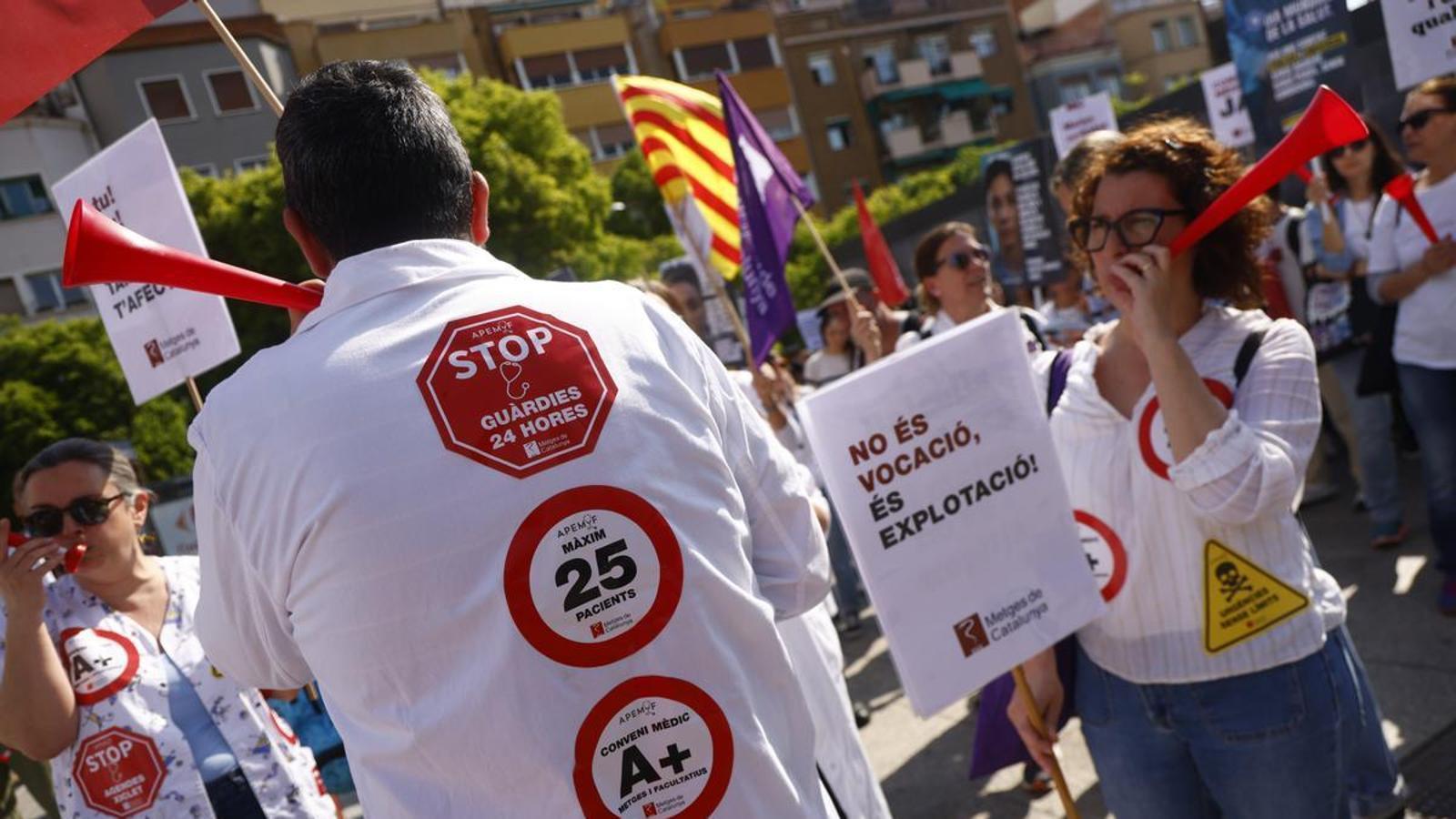

The confrontation between doctors' unions and the administration has become entrenched and a solution does not seem easy. Yesterday marked the tenth doctors' strike in Catalonia since the current negotiations began, and in the rest of the State, there have already been sixteen. Right now, there are two open fronts. One at a state level led by the strike committee of the Spanish Confederation of Medical Unions (CESM), which includes Metges de Catalunya, and which primarily demands a specific Framework Statute for doctors, an exclusive union negotiation table, and also improvements in working hours and on-call duties. And another at a Catalan level where specific aspects of healthcare organization are to be debated, such as 24-hour on-call duties or other more specific issues.
It is not an easy conflict to resolve. To begin with, we have a global context that does not help. The public healthcare system, which in Catalonia includes both public and subsidized services, suffers from chronic underfunding that has been aggravated by the fact that the population is increasingly aging, has more illnesses, and is more dependent, and at the same time, the population to be attended has grown, as in thirty years we have gone from six million inhabitants to eight. Furthermore, there is a shortage of professionals, especially doctors and nurses, and this further strains the system and leads to saturation that professionals suffer from severely.
These are, in principle, conditions that affect all health professionals. There are, however, some specificities that, indeed, affect specific groups, and in this sense it is significant that doctors feel so particularly harmed by having decided to withdraw from the negotiations to improve the Framework Statute agreed upon by the rest of the unions and health professionals. Doctors are at the top of the health system pyramid in terms of scientific training, training time, and civil, criminal, and moral responsibility. There is agreement in considering that, given the cost of pursuing the career, the years of specialization, and the responsibility they hold, they are not sufficiently well paid and an important improvement would be necessary in this regard to better align with European standards.
However, it is also true that their demands may have a corporate and professional reading that seems to forget the important role played in the system by other equally important groups, without whom nothing would be possible, such as nursing – which, moreover, since the Bologna process, is also a university degree–. Their insistence on wanting to negotiate separately from the rest is generating internal tension within the system and it is not clear that it will greatly help to ensure that their demands are well received by others. Now, moreover, they have called for the resignation of the Minister of Health, Mónica García, who is a doctor, and both in the Spanish and Catalan spheres, they demand to discuss directly with the presidents, Pedro Sánchez and Salvador Illa. In the Catalan case, with the excuse that the minister, also a doctor, is on leave. The conflict, therefore, is not only becoming chronic but also politicized in a way that further complicates what should be a technical and informed negotiation. An understanding should be reached as soon as possible, for the good of the system, the professionals, and also the patients.
