The Zapatero case: lead on the PSOE's wings
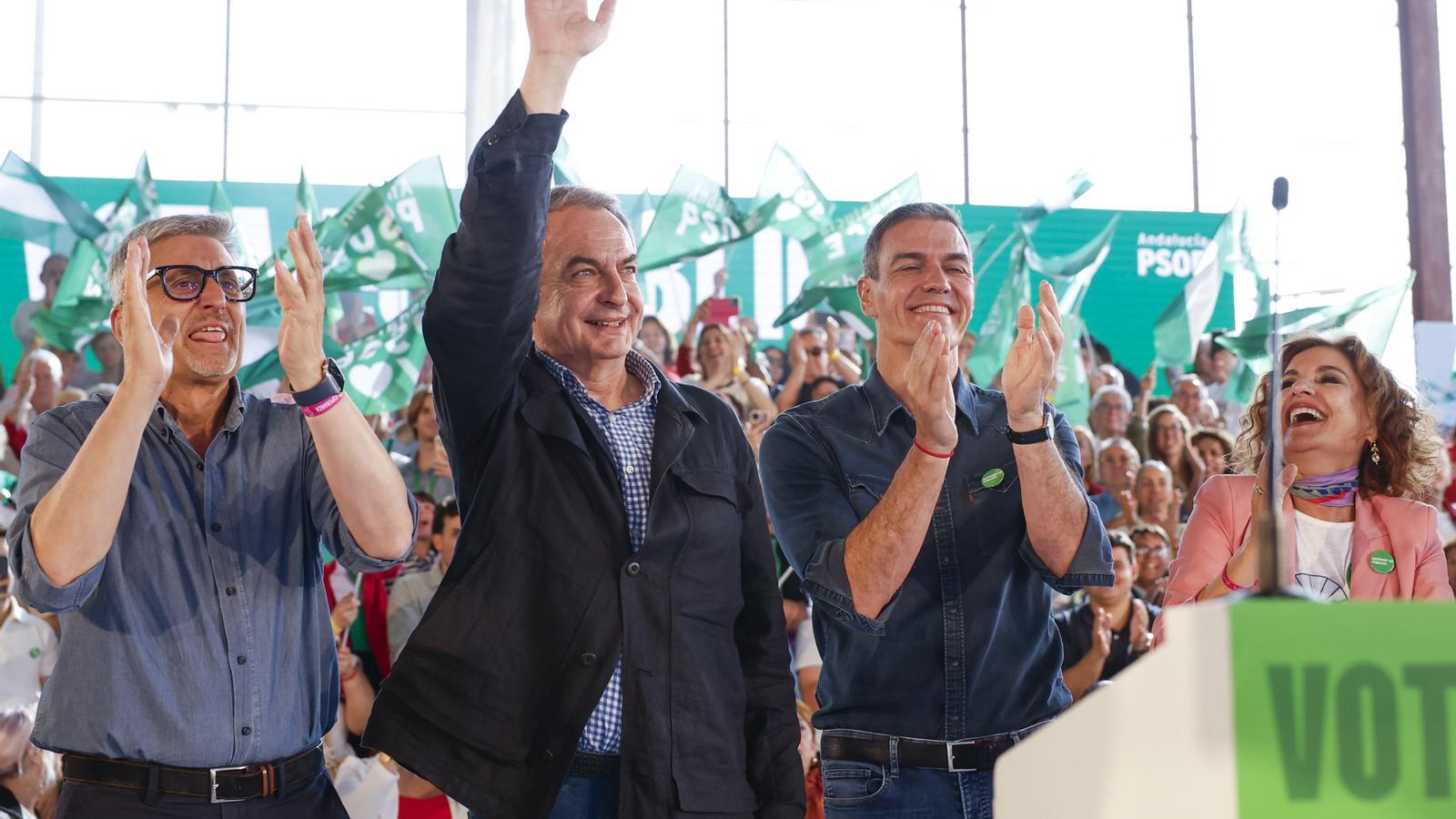

BarcelonaWith each passing day, the Zapatero case, awaiting the explanations he himself promised to give on the first day, becomes more difficult to digest for the PSOE and its supporting partners. The latest episode is the National High Court's decision to order the blocking of nearly half a million euros from his bank accounts, the sum he allegedly received from the company Análisis Relevante and which the judge suspects was actually a commission for having helped the airline Plus Ultra obtain a 53 million euro credit from the State at the height of the pandemic.
Although it is true that the indictment does not contain direct proof of influence peddling, and in the absence of detailed knowledge of the entire judicial summary, the detailed and well-documented account provided by Judge José Luis Calama of the efforts made by businessman and friend of Zapatero, Julio Martínez, to obtain the bailout, as well as the flow of almost two million euros to Zapatero himself and his daughters' marketing company, leaves the former president with little room to maneuver. The most urgent thing right now is to clarify whether, as the judge states, the network of companies created by Julio Martínez was a cover to conceal the collection of illegal commissions by Zapatero and his family circle. And here it will be key to see how payments that he has never denied are justified. Society needs these explanations to arrive as soon as possible, because otherwise, the shadow of suspicion grows longer every day.
The investigation opens several scenarios. The worst for the PSOE and Pedro Sánchez's government would be if influence peddling were confirmed, as this would mean that members of the government, or at least of the SEPI, would have collaborated with Zapatero to favor Plus Ultra. A second scenario would be that there was no influence peddling but there was a collection of commissions. Here, it would be necessary to see if the activity complies with the law, but Zapatero's image would be ruined anyway, because it would have been discovered that what in principle seemed a disinterested action to promote democracy and human rights in Venezuela would have been used to obtain income as a lobbyist.
Finally, there is still the possibility that everything is a fictitious construction by the judge and UDEF and that Julio Martínez was the one who, taking advantage of his friendship with Zapatero, orchestrated a setup to make the company owners believe that he had the capacity to influence the administration to ensure the bailout. And that afterwards the payments to Zapatero from his companies were in exchange for real benefits.
Be that as it may, the case weighs heavily on the PSOE and Sánchez, who will have to face the last year of the legislature pending court rulings (the next stops will be the ruling in the Mascaretes case and the trial of his brother), under siege from the opposition and with partners distancing themselves and already thinking about the elections. A very complicated scenario, even for Pedro Sánchez.
