High speed neither

-
CAT -
CAST
The chaos of Rodalies is an entrenched disaster. Promises of improvement drag on forever. The reality of delays, accidents, and breakdowns persists. Incidents are daily, a living hell for users. The latest rain episodes have once again highlighted the precariousness of a service that has its credibility in the dirt. And the covert strike by train drivers has only further aggravated the situation. Thousands of citizens have been living for a long time, a very long time, a daily disaster.
These are many years of delays and inefficiency. Of abandonment. In fact, one of the sparks that ignited the 'Procés' was precisely the disaster of the commuter trains: that indignation that people had been brewing at the beginning of the 21st century ended up taking political form. Two decades later, with a country that has grown significantly in population and has continued to lack investment and maintenance, the railway infrastructure of Rodalies is only now beginning to be the object of budgets and the start of some works. But the improvement will take years and the management of the service, with Renfe and Adif always blaming each other, shows no signs of real change. For the moment, the Government has assumed powers that are more nominal than real.
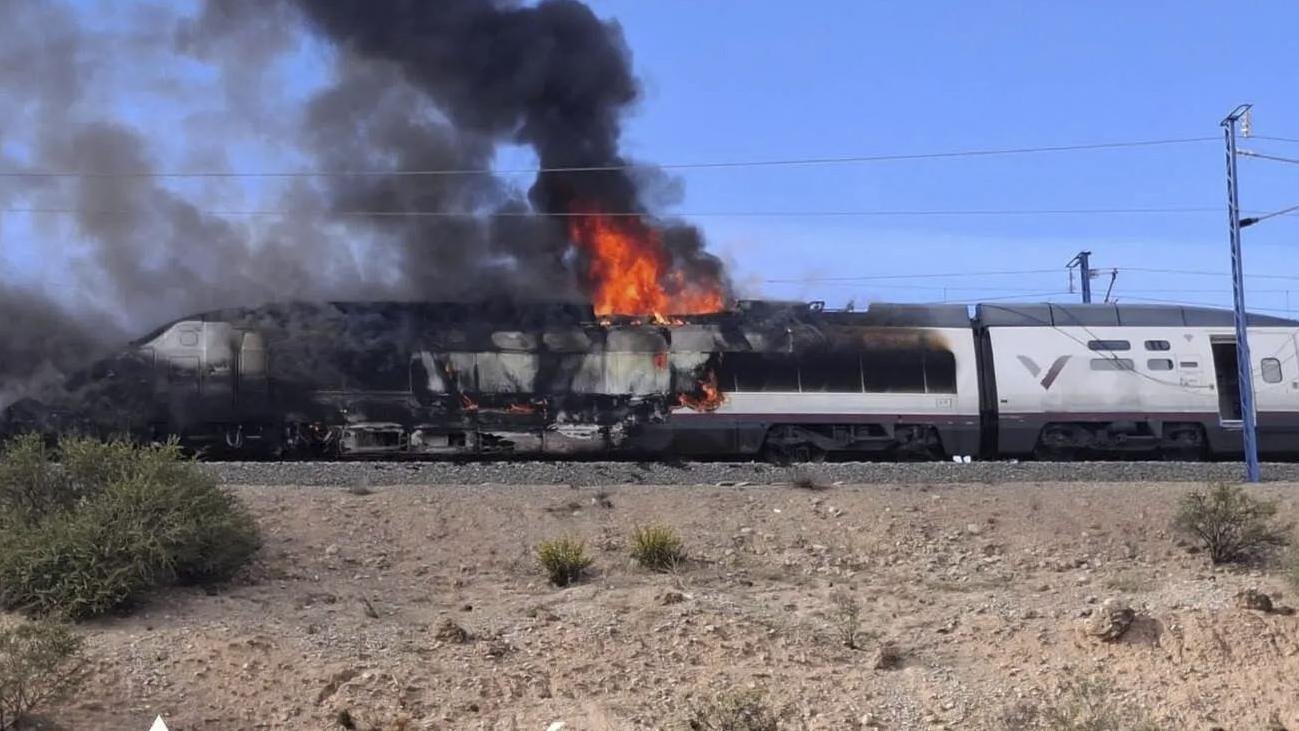
All this with Rodalies. But it is that high-speed rail, which was supposedly going to show a modern, and of course radial, Spain, has also turned out to be a fiasco in terms of maintenance, as well as in terms of user volume and profitability. The very serious accident in Adamuz at the beginning of this year, on the Madrid-Seville line, with more than 50 deaths, uncovered the black hole of poor maintenance. This weekend we saw a train on fire in Aragon, on the Madrid-Barcelona line, fortunately without casualties. It is hard to swallow seeing a train in flames: it inspires very little confidence and of course generates a lot of insecurity. In fact, the causes of the fire have not been indicated, just as those of the Adamuz tragedy have not been fully clarified either.
Commuter rail as a priority means of transport at a local and regional level, and high-speed rail as an alternative to the plane, should be a consolidated, fast, and safe reality. Effective and reliable. We are very far from this ideal of collective rail transport, which promotes energy saving and is respectful of the environment. We are also very far from European levels of rail freight transport. Of course, the Mediterranean corridor, from the border with France to Murcia, continues to be the eternal pending subject. How can it be that after so many years we are still like this? Neither commuter rail nor high-speed nor freight. Nothing works well. It is desperate.
Citizen disaffection with public authorities has a lot to do with such evident and habitual shortcomings as that of rail transport. With good reason, it is hard for citizens to understand such proven, harshly experienced, and persistent inefficiency. We have the right to imagine – and to demand – something as simple as a country where trains, all trains, run with punctuality.
