The sovereign cloud of the Generalitat, or how to avoid them "closing our digital stall"
Experts frame the Government's initiative within the European roadmap towards technological sovereignty, but warn that the objective is "unachievable in the short term"

-
CAT -
CAST
BarcelonaIn mid-June, United States President Donald Trump issued an order that seemed unthinkable: after weeks of tensions with Anthropic, the company that created the artificial intelligence model Claude, the Oval Office forced them to close their most advanced tools, Mythos and Fable, to any user who was not North American. Although the blockade has already been resolved, experts and markets are still trembling: Trump then demonstrated that he has his finger on the "on and off switch" for global technologies, comments Miquel Martí, executive director of Tech Barcelona. The temporary detention at Anthropic was irrefutable proof of the evidence that Europe, like so many other international players, does not control its digital and technological future, nor its present.
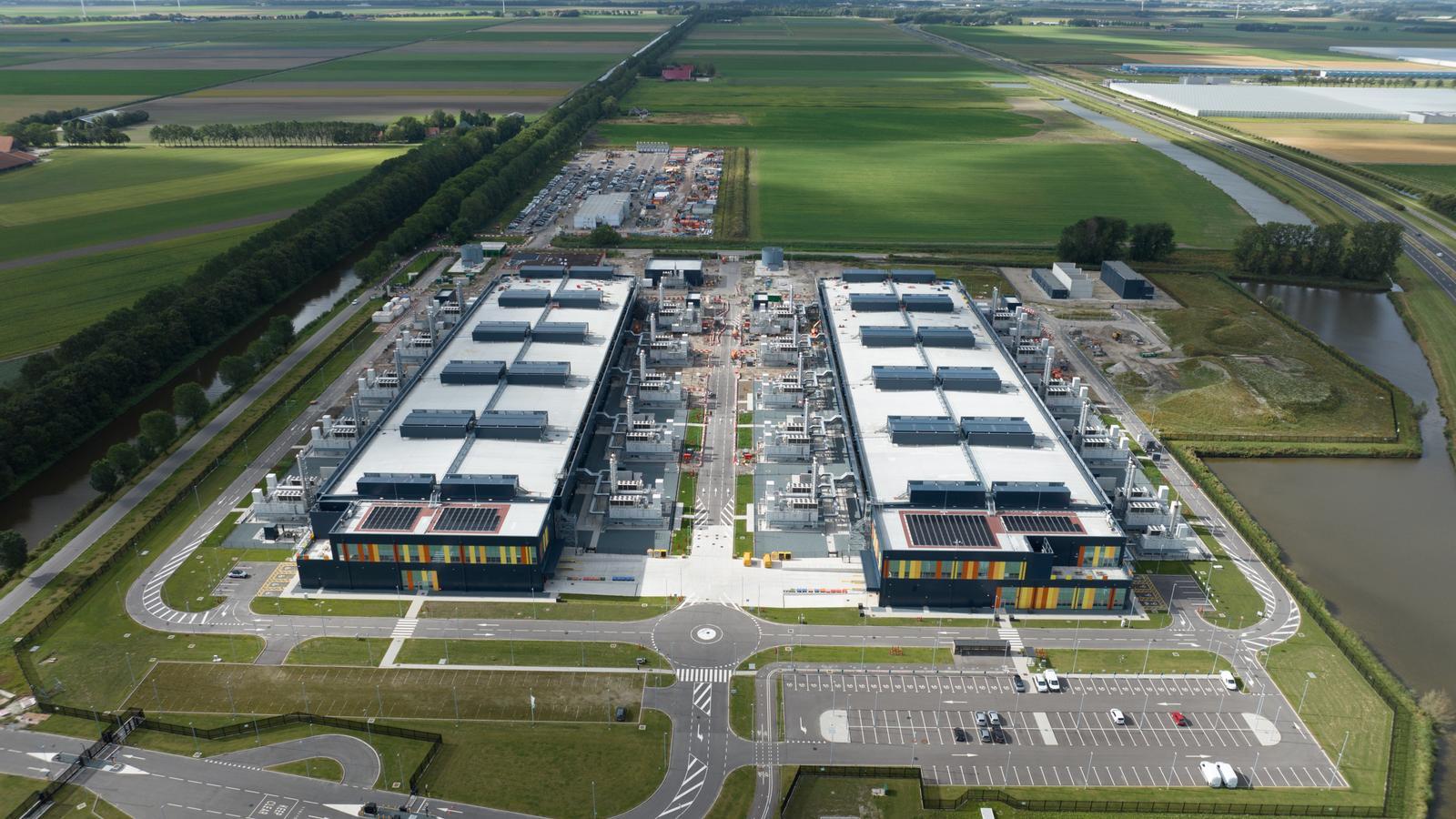
With more or less success, it must be said, institutions are fighting to reverse this defenselessness. The latest, the Generalitat, which announced at the beginning of the month an investment of 481 million euros to create a "sovereign public cloud". In other words, the Government aims to have a network of advanced web servers that can host data and utilities for critical services, such as health or security forces.
The essential requirement, which Salvador Illa's executive reiterated as much as possible, is that the infrastructure must be local: located in Catalonia and in full compliance with European legislation. René Serral, a professor in the computer architecture department at UPC, assures, in conversation with ARA, that local computing capacity becomes essential for any country that wants to be autonomous. "If I don't want them to forbid me from using resources, I have to have them at home," reasons the academic.
The level of European control over its own computational capabilities is negligible. According to the European Parliament's latest analysis on technological dependencies, 70% of the infrastructure for cloud computing which operates on the continent is in the hands of either Amazon Web Services (AWS), Microsoft Azure, or Google Cloud.
In contrast, all aggregate community operators concentrate, according to the same document, no more than 13% of the total installed capacity. Germany's SAP, the actor in the Twenty-seven with the most volume in the sector, holds a tiny 2% of the network in its portfolio. "Given that the cloud is the foundation of most modern software, this is a highly strategic dependency," acknowledge the European Parliament's experts.
"Necessary but not sufficient condition"
The experts consulted point out that the investment announced by the Generalitat signals the path chosen by Europe to achieve an acceptable degree of computational autonomy with respect to the US. The current model, analyzes the scientific director of Eurecat's digital area, Joan Mas-Albaigès, leaves too many shadows. "When you contract cloud services, you don't know what happens to your data; what happens to it if there's a conflict, a hack... Maybe it's in Oklahoma," jokes the expert. The executive's shift, therefore, will establish a "set of servers that will be under Catalan control.
In fact, the consulted voices consider it more than possible that initiatives like these will be repeated throughout the continent, both at a regional and state level. Nevertheless, experts demand that, should sovereign computing power be multiplied, the promoters share a strategic sense. "The initiative is on the right track, but it cannot remain within the borders of each country, because we will not have enough strength," observes Serral, who recalls that the rival is "megacorporations" with technical capabilities that multiply those of public actors by several factors.
In Mas-Albaigès's view, a European cloud also becomes essential for the private sector. The Catalan initiative, it should be remembered, also includes an offer of servers for companies. In this sense, the local control infrastructure should serve, according to the scientific director, to activate all the other pieces of the country's technological puzzle and, when the time comes, of the continent.
The sovereign cloud, but also other computing initiatives, such as the gigafactory in Móra la Nova or the recent investment by Submer in a new data center in Flix, must leave a legacy to the Catalan innovative ecosystem. "If all this infrastructure is well linked, it must be the cornerstone of new spin-off and emerging companies, and help create wealth," contemplates the expert.
The paradox of giants
For the Catalan technological world, contributing to the development of private operators is essential to aspire to autonomy. The new European cloud and artificial intelligence legislation tries to put fences around the open field of the technology sector, with obligations for European data protection or promotion of local servers, for example. The Brussels regulations, however, clash head-on with the North American Cloud Act, as Serral recalls; a law that, among other things, obliges US companies to make any data available to the administration – whether it is hosted on US soil or not – if it requests it.
For Martí, beyond Europe's capacity to generate its own cloud champions, Brussels must have "negotiating capacity" with established players. "The European market is still very large, and no company wants to give it up," argues the Tech executive director. In fact, some have already adapted: the main companies already operate or have announced their European sovereign cloud initiatives to comply with EU legislation.
However, taming the technological beasts is, in the eyes of the experts consulted, only part of the job. For Mas-Albaigès, "we will not be autonomous if we have to continue calling Microsoft, Google and Amazon to operate our infrastructures". In this sense, regulation must be accompanied by initiatives that foster the growth of European cloud companies, such as SAP itself, France's Scaleway, or Switzerland's Exoscale.
"There must be European champions, but we are very far behind the rest," laments Martí. So much so that, in Serral's view, it is "unviable" to create a direct competitor in the short term. "It is clear that this should be the way out, but in Europe we are much less capitalist than in the US," he points out. The UPC professor, in fact, calls for living in a precarious balance: "The task of autonomy, in the short term, is unattainable. But there is no other way out," he states. Martí's reading is similar, who recalls that "power is exercised through the control of things". "Adapting means ensuring that a president doesn't shut down your little shop," he concludes.
