Qilimanjaro, the Catalan quantum computer, Ignasi Pujol award
The company, the only one in the state that develops all the layers of a quantum machine, awarded with the ARA prize for the promotion of entrepreneurship
-
CAT -
CAST
BarcelonaCatalonia, as the director general of the Mobile World Capital Foundation, Laia Corbella, explained at the recent FAR awards gala, "is a hub technological and digital, and it no longer has to argue that it is." It is increasingly less surprising that the Principality brings together companies, both local and foreign, with innovative capacity in some of the most disruptive technological fields, from artificial intelligence to the more than dense network of Barcelona's biotechnology. An area in which the country stands out even above its general dynamism is that of quantum technologies: a recent analysis by Acció, the agency for business growth of the Department of Business, placed the Catalan quantum sector's fabric at a turnover of over 91 million euros, and growing.
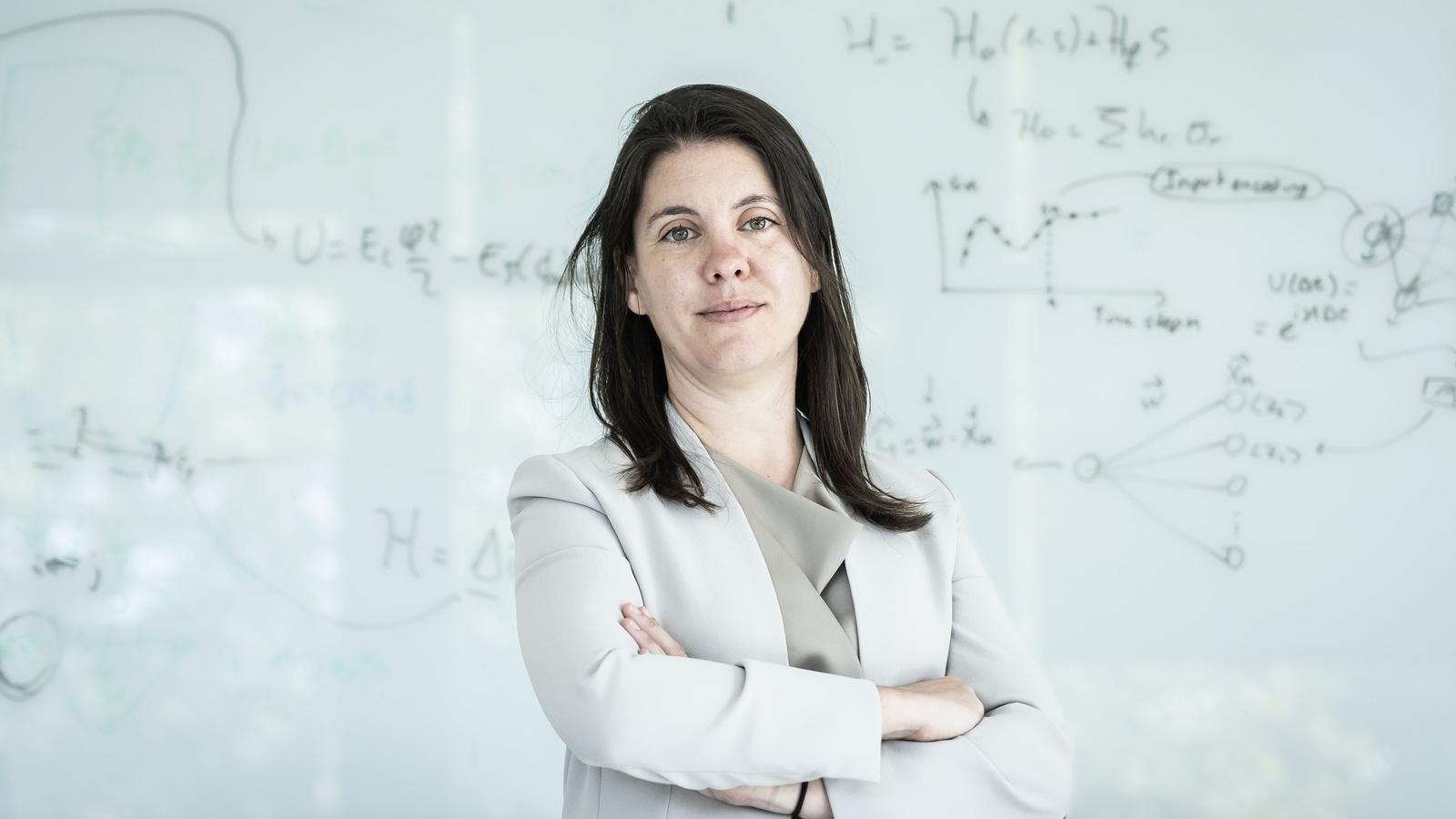
The spearhead is Qilimanjaro Quantum Tech, the company that won the Ignasi Pujol award for entrepreneurship granted by the newspaper ARA in collaboration with the Fundació la Caixa. It is the only full stack quantum computing company in the country; that is, the only Spanish company that builds, in the words of its CEO, Marta P. Estarellas, "all the layers that are necessary to be able to develop quantum computers." With just over seven years of life, Qilimanjaro is already one of the European references in a technological segment that can accelerate everything from world simulation to drug research, or artificial intelligence. The company was awarded this Thursday with the Ignasi Pujol award for the promotion of entrepreneurship.
Qilimanjaro "was born from the Catalan research ecosystem," recalls Estarellas; as a spin-off of the Barcelona Supercomputing Center, the University of Barcelona and the Institute for High Energy Physics. In the medium term, the Catalan company seeks to "democratize this technology and for there to be more and more companies, more engineers, more scientists who seek how to take advantage of it to expand the horizons of knowledge and make the lives of companies and industries more efficient and more agile."
At the BSC, precisely, is one of the company's great achievements to date: Qilimanjaro has been in charge of the development of the three quantum computers that are already operating at the supercomputing center. Its first step in the sector, however, was in the United Arab Emirates, with the infrastructure of a quantum computing laboratory at a technology center in Abu Dhabi. That operation “provided the resources to grow” for the Catalan company, and to “expand the systems with improvements” that now aspire to lead the quantum sector. With eighty employees, Qilimanjaro continues “working on all layers of the full stack of quantum computers”.
What does a quantum computer do?
Quantum computers seem like science fiction devices, destined for unimaginable uses. However, Estarellas and Qilimanjaro are more than capable of bringing their functions down to earth. A quantum computer, the CEO reminds us, "uses the laws of quantum mechanics" to perform tasks that a traditional computer would be unable to do. For example, a computer like those developed by the company is especially powerful when it comes to "simulating the world around us"; down to the microscopic scale. Uses in fields such as chemistry or medicine, as well as new materials, are disruptive; and they address problems "generally intractable with classical machines".
In the medium and long term, quantum computing also holds a "great promise": a more efficient and sustainable artificial intelligence. Extended quantum computing, integrated into the data centers that underpin AI, "brings to the table a more efficient, more sustainable way to continue doing computing and transforming digital and technological society". This field, however, is still nascent, although expectations are high: "It is not yet rigorously proven, but we expect to see these results very soon".
Catalonia in the quantum race
Qilimanjaro, as Estarellas herself recalls, is one of the pillars of a quantum ecosystem that has one of its best expressions in Europe in Catalonia. Few territories possess the diversity of quantum businesses, with scalability potential, that the Principality shows. The ecosystem is completed by projects such as those of LuxQuanta or Quside, focused on quantum communications and security; or Qurv, specialized in quantum sensors. The origin of this multiplicity of proposals, the executive asserts, is found in the universities and research centers. “A very strong ecosystem has been created that, at the same time, has been successfully transferred to the company,” explains Estarellas. “The investment in research, in education, in talent, is what has allowed Catalonia to become this technological hub,” concludes the CEO.
