Intellectuals and Nobel laureates demand a tax on the richest to curb the oligarchy
The collective warns that the excess of power of the elites triggers inequality and threatens democracies

BarcelonaA group of more than 100 intellectuals and Nobel laureates have published a manifesto in defense of a tax on billionaires. In the text, signed among others by Nobel laureate in Economics Joseph Stiglitz and by specialists in inequality and advocates for taxation on the ultra-wealthy such as Gabriel Zucman or Thomas Piketty, the alarm is sounded: “Billionaires are a threat to our democracies”. The signatories encourage curbing the rise of oligarchies, which they see as a threat to democracies.
This collective, which brings together everyone from economists and political scientists to anthropologists, philosophers, or historians, argues that with “a minimum tax on the ultra-rich, combined with the recovery of unpaid taxes from the past, greater independence for the media and better protection of journalists against interference and censorship, and a new model of ownership, international and deprivatized, for artificial intelligence (AI) companies, the democratic forces of the world can regain control”.

The manifesto calls for building “a democratic international” to combat “the international oligarchy”. “The survival of democracies and the habitability of the planet are at stake”, they warn. The signatories recall that when the magazine Forbes began to classify the world's largest fortunes in 1987, the wealth of the richest 0.0001%, some 1,500 families at that time, was equivalent to 3% of the global gross domestic product. In 2026, “this same small fraction of the population, which now comprises nearly 3,000 households as a result of global demographic growth, will have wealth equivalent to 17% of the global GDP”, they denounce.
Balance of power
This evolution, they warn, “has disrupted the balance of power: the power to direct multinational corporations, whose decisions, such as developing artificial intelligence, affect all of humanity; the power to shape the dominant ideology by purchasing newspapers, radio stations, television channels, and social media; and the power to influence public policies by financing electoral campaigns and candidates”. Furthermore, “this power feeds back on itself, in a dynamic that corrupts contemporary democracies,” they add.
Planetary scale
Proponents of this movement remind us that inequality had reached a minimum after the Second World War, while today “the tension between democracy and oligarchy has returned with force and is once again becoming a central theme of our time.” And they sound the alarm: “For the first time in history, extreme wealth and the power it confers are prevailing on a truly planetary scale”.
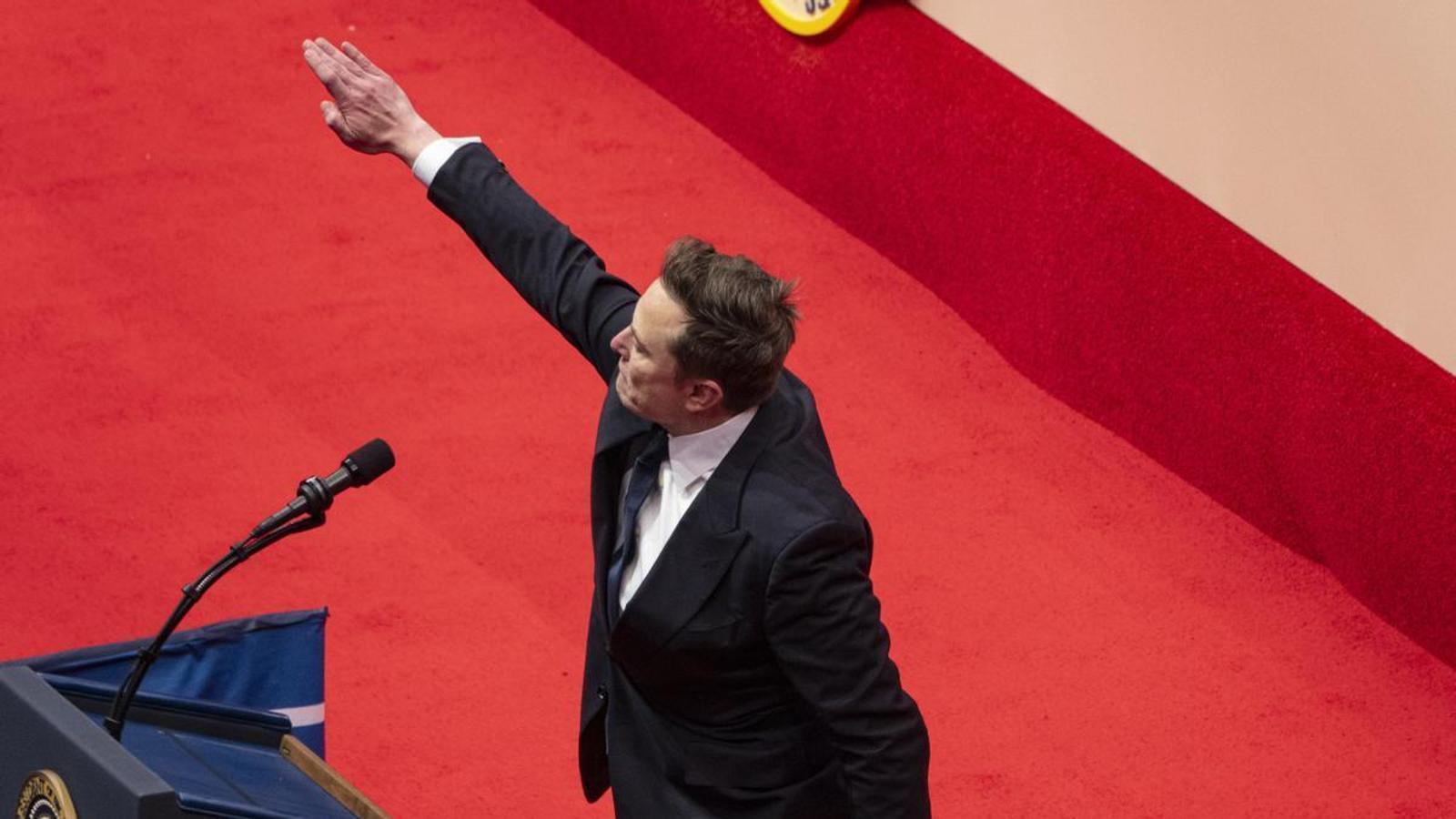
They recall the power and wealth accumulated by Elon Musk, the richest man in the world, owner of Tesla and Space X (which has starred in one of the biggest stock market debuts of the year), and also of the social network Twitter, renamed as X, and placed “at the service of his favorite ideological causes”. They warn that not only is “the American republic faltering”, but that in many countries “the very terms of public debate, the heart of the democratic life of nations, are being transformed”.
In this regressive context, they also place the President of the United States, Donald Trump, whom they accuse of wanting to implement tax cuts for companies and dismantle financial transparency rules. All this will mean that “not only will the richest Americans benefit, but also oligarchs from all over the world, who will be able to make their businesses in the United States even more profitable”.
Tech magnates
They also criticize that “a handful of tech moguls” decide to “cover the Earth with data centers that devour energy and water,” and that “not only are they appropriating the resources of Tennessee or Inner Mongolia,” but that it is “the planet as a whole that is rushing towards the abyss.”
The warning from the signatories of the manifesto is clear: “Extreme wealth always brings extreme power, and billionaires are right to point out that their fortunes do not consist primarily of gold bars or cash. They consist of much more than that: above all, in control over the direction of the world’s major corporations, through the stock portfolios they hold, which constitute the bulk of their wealth.”
Among the signatories are Daron Acemoglu, Institute Professor of Economics at MIT, 2024 Nobel Laureate in Economics; Elizabeth Anderson, Professor of Philosophy at the University of Michigan; anthropologist Arjun Appadurai, Professor Emeritus at New York University; Souleymane Bachir Diagne, Professor of Philosophy at Columbia University; Rutger Bregman, historian and author and founder of the School for Moral Ambition; Esther Duflo, 2019 Nobel Laureate in Economics; Naomi Klein, journalist and author and Professor of Climate Justice at the University of British Columbia; Paul Krugman, 2008 Nobel Laureate in Economics; Mariana Mazzucato, Professor of the Economics of Innovation and Public Value at UCL; Thomas Piketty, Professor at the Paris School of Economics; Joseph Stiglitz, 2001 Nobel Laureate in Economics; or Gabriel Zucman, of the University of California, Berkeley and Director of the EU Tax Observatory, among others.
