Endesa, more Italian than ever?
With the departure of José Bogas, the parent company Enel places a man close to Giorgia Meloni at the helm of the energy company
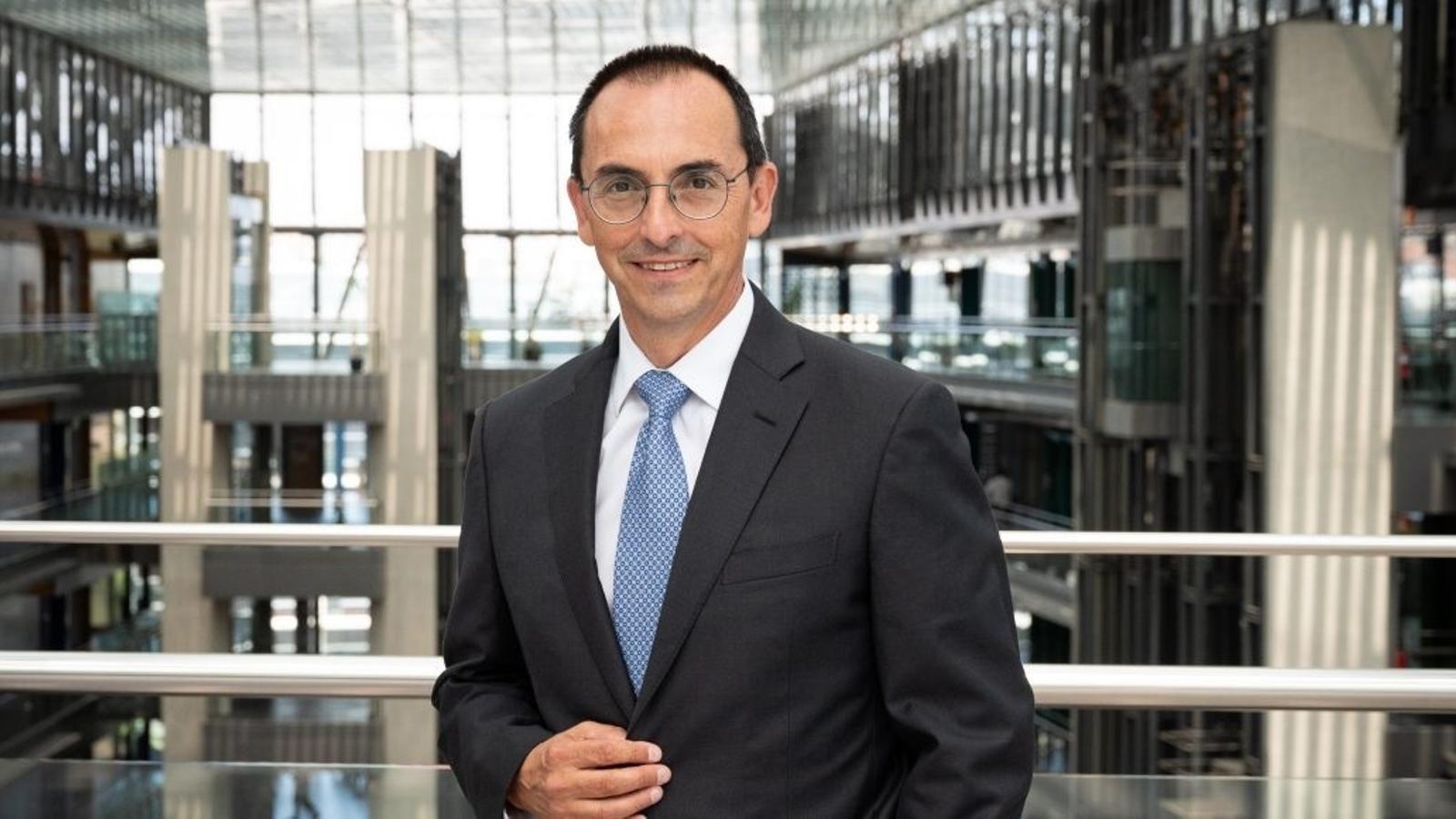

MadridWhen José Bogas was appointed CEO of Endesa in 2014, he had a mission: to design a new industrial and investment plan in Spain, a market he knew firsthand because until then he was the general director of the business in the State and Portugal. Bogas held the position with an Endesa already in the hands of the Italian Enel, which today controls 70% of the share capital. And he did so, precisely, after the energy company had few assets left beyond those in the Iberian Peninsula: Enel had just expanded its operations to Latin America, which was seen as a first step to slim down Endesa.
Despite the Italianization of the company, the person in charge of managing Endesa and acting as an interlocutor with the government was still a Spanish executive. On April 28, however, this will change. The general shareholders' meeting will vote on a new CEO, the Italian Gianni Vittorio Armani. Endesa will thus begin a new phase with a leadership that has Rome as its epicenter: Juan Sánchez-Calero Guilarte, the chairman of Endesa, is Italian, as is the finance director, Marco Palermo.
Gianni Vittorio Armani is not just any executive. He is a man close to the Italian Prime Minister, Giorgia Meloni – it should be remembered that the Italian government is the main shareholder of Enel with almost 24% of the share capital –. Until now, he held the position of General Manager of Enel Grids & Innovation, a role he rose to in July 2023, a few months after the shake-up in Enel's leadership. Meloni's own government – elected Prime Minister of Italy six months before the earthquake in the energy company – decided to dismiss Enel's then CEO, Francesco Starace, who had been appointed by Matteo Renzi's social democratic government, and replaced him with Flavio Cattaneo. "[Francesco Starace] did not have the support of the Prime Minister's inner circle," reported Reuters, which stated that one of Meloni's intentions was, precisely, "to impose her stamp on the main Italian state-owned companies".

In addition to a person, the change of Starace for Cattaneo, led to the revival of Endesa's Italianization – the Spanish government of José María Aznar (PP) began to privatize the electric company in 1997 and Enel absorbed it in 2009 after a battle triggered by Naturgy's tender offer to the electric company–. José Bogas had been chosen by the executive dismissed by Meloni, which led to speculation about a precipitate departure.
New interlocutor
For the past twelve years, Bogas has been in charge of direct relations with the Spanish government and, in particular, with the Ministry for Ecological Transition and the Demographic Challenge. The end of his term – he is retiring at 71 years old – has been marked by different fronts that have led him to permanent contact, in some cases even to clashes, with Pedro Sánchez's executive: the unprecedented energy crisis of 2021, the approval of the extraordinary tax on the sector, the remuneration of the electricity grid, the extension of the operating life of nuclear power plants, or the massive blackout on April 28 last year. As published by Expansión, at Moncloa, where they were aware of the change at Endesa, they would have preferred a Spanish executive. Government sources have declined to comment on this information.
