Dual technology, an antidote against deindustrialization
The Enfoquem conference claims the transformation potential of Catalonia in the civil and military sector
-
CAT -
CAST
BarcelonaFor years, relaunching the industry has been one of the great priorities in Catalonia. With the eternal promise that the sector must reach 25% of the gross domestic product (GDP, the indicator that measures the volume of an economy), the Government sealed a major pact with employers' associations and unions at the beginning of the summer to strengthen the weight of industry within the economy, which since the great financial crisis of 2008 has remained at around 17%. And in a context in which dual-use technologies –for civil and military use– are becoming increasingly relevant in the face of the Russian threat, this activity can become key to the country's growth and prosperity.
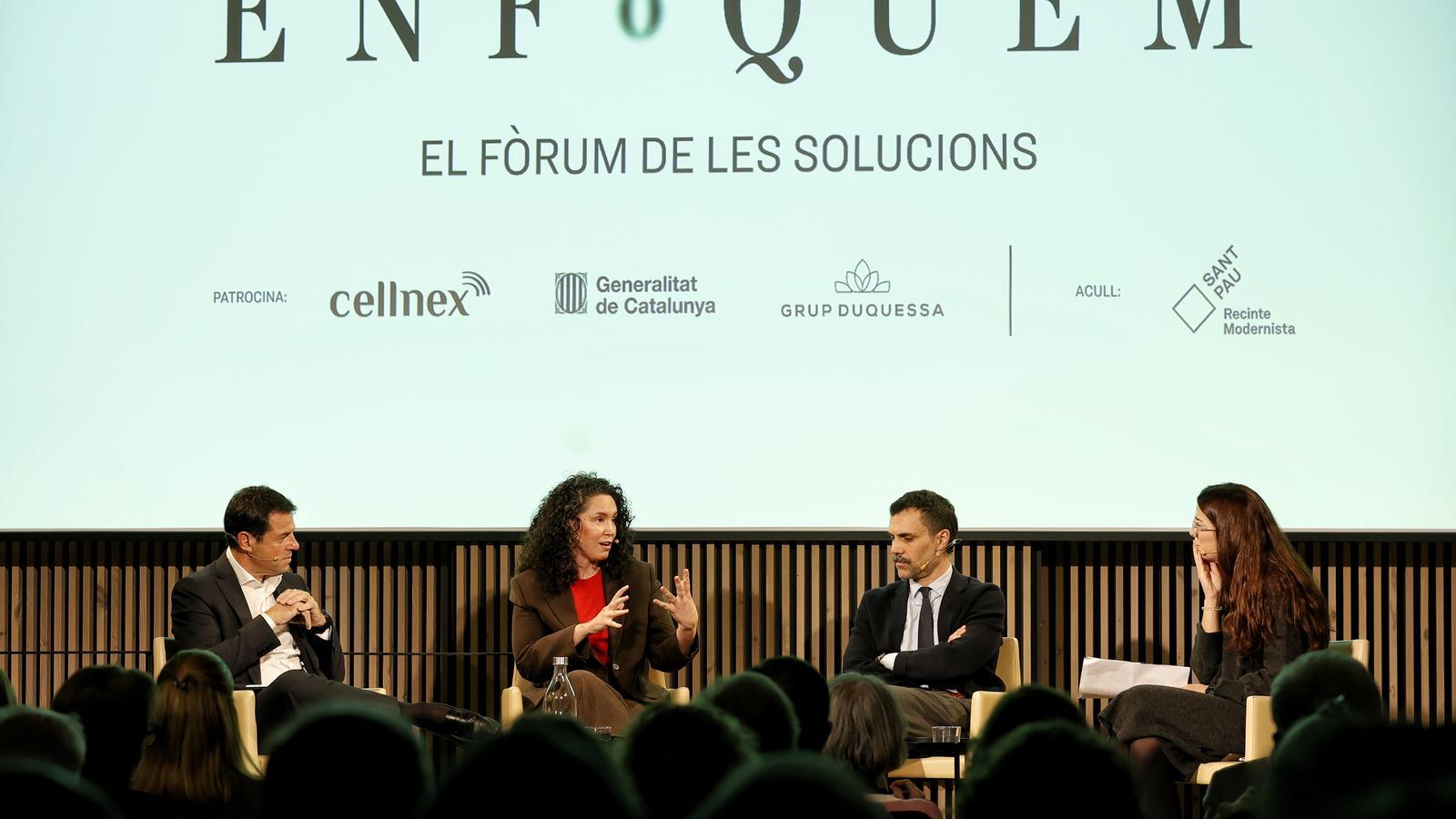
"Dual-use technologies should be the best antidote [against deindustrialization]" at the moment when the investment fervor directed at the defense sector ends. The statement by the founding partner of the consultancy Dualys and former president of the Parliament of Catalonia, Roger Torrent, marked one of the round tables held this Monday promoted by the newspaper ARA at the Sant Pau Modernist Site, within the framework of the Enfoquem conferences.
Under the title What are we really talking about when we talk about dual-use technology?, the also former Minister of Business and Labor placed special emphasis on the fact that technological investment in dual-use sectors can have "a long way to go". In a report prepared by Torrent himself, the executive identified up to 812 companies with the potential to transform and adapt to the defense environment, especially those coming from the automotive industry. For the former minister, the sector has always been there, but the current scenario has turned the ecosystem upside down. "Before, wars started where borders ended, and now they start on our computers and in digital clouds," he pointed out.
Precisely along these lines, the head of innovation business for the space sector at the i2CAT Foundation, Clàudia Mateo, another of the voices invited to the round table, expressed herself. During her interventions, Mateo exemplified the influence that infrastructures invisible to our eyes have, but at the same time are essential for our day-to-day life. "On average, we use 30 satellites every day: to check the weather, the bus schedule, or to pay with a card," she commented.

In this regard, the representative of the i2CAT Foundation has stressed the importance of Europe and Catalonia being "sovereign" and "controlling" these spaces to prevent the most relevant decisions from depending on third parties. "The use we make of technology must be aligned with our democratic values," she remarked.
In this sense, it becomes essential to choose appropriately in which segments to put one's eggs. Diversifying is an option, true, but resources are also limited. That is why the head of strategic marketing, commercial development and alliances of Vertical Solutions at Cellnex, Òscar Pallarols, has asked "not to shoot at everything that moves". "As a country, there are industries where Catalonia has capabilities, and this must be promoted. But this is not an open bar for everyone, there will be sectors where you will never be able to catch up with the leaders," he pointed out.
The human factor
While all speeches point to an increasingly widespread use of tools linked to artificial intelligence, the speakers invited to the ARA conference have championed the human factor to avoid loss of control. "The more capable the technology is, the more capable our judgment will be," commented the vice president of strategic alliances at the company Openchip, Therese Jamaa, during her presentation titled What will technology be capable of?
Although Jamaa has acknowledged that full sovereignty is practically impossible – "alliances" and being "connected with the best ecosystems" are necessary – he also spoke about the importance of having "own capabilities and talent". "Not to do it alone, but to have the capacity to decide: sovereignty is having options", he summarized.
In turn, the analyst and Media journalist at the newspaper ARA specializing in technology, Albert Cuesta, made it evident how, as time goes on, society is more dependent on technology. "We have fewer and fewer plan Bs", he observed, and stated that this increase in vulnerability has arrived in a "wanted" and at the same time "unconscious" way.
Citing the CEO of Palantir, Alex Karp, Cuesta lamented that, unlike in past eras, the brightest minds in the technology industry are dedicated to optimizing ads instead of truly making society progress.
