Catalonia and defense investment: from taboo to idyll?
The sector recognizes that there are projects that are not "friendly" in the Principality and the Generalitat is rowing so that SMEs take advantage of the boom

-
CAT -
CAST
MadridThe arms and defense industry is almost nonexistent in Catalonia. The Principality has never strived to play a relevant role in the large contracts of the Ministry of Defense, and the ministry has not been concerned with it being so. The reason: Catalonia has always been a hostile territory for this type of industry, and society has shown its opposition to this sector. No major manufacturer of military equipment has settled there, although some companies have been – and are – linked to it as suppliers.This does not mean, however, that anyone has been interested in growing this sector. “It is an unsatisfied desire”, summarized the researcher from the Delàs Centre Pere Ortega in a report in 2013. Ortega thus referred to the ambition of some companies and politicians to develop this industrial fabric already at that time. Today, more than a decade after the researcher's reflection, and in full European and Spanish rearmament, that desire is more alive than ever and satisfying it does not seem a chimera for those who pursue it: has it gone from taboo to idyll? The cornerstone is the current defense investment cycle: in 2025 alone, the State has mobilized at least 33 billion euros – a Sipri report places the figure at 40.2 billion– to reach 2% of gross domestic product (GDP) in defense, and the European Union has also opened the tap through special programs. This contrasts with the spending that has been allocated to the sector in recent years: “We are coming from a drought period,” says a senior executive from a defense company. Furthermore, this is a boom that will not end tomorrow: a voice that has been working in the sector for years estimates that it will last 48 months: “A year has passed and there are three more months of spending growth left.” For this reason, large companies (Indra, Navantia, Airbus, Escribano, or Santa Bárbara) plan to double their turnover by 2030, according to a report by the consulting firm EY published this week.
The Generalitat is aware of this scenario, and has just publicly announced a program to facilitate the entry of Catalan SMEs into this business. “The new European framework for strategic sovereignty, which includes an increase in investment in security policy, can become a new driver for industrial policy [...] We cannot afford not to be there,” indicate government sources. Together with Acció, the Catalan economic promotion agency, they are aligned with social agents, especially with Catalan employers' associations, to avoid being left out of the boom. The commitment to defense investments is firm, and even other Catalan parties beyond the Government embrace it, starting with Junts.

“In Catalonia is where there is more work”, maintains the former executive. “For the first time it does not want to be seen as excluded [from this industry]”, assures the spokesperson of another company. The large companies in the military and defense sector in Spain, almost all based in Madrid, see that doors are opening for them in the Principality with political messages and gestures. They perceive a change in vision: from living “inwardly” to a “necessity” to reactivate the economic world. “They know that where there is new and fresh money is in defense”, indicates one of the sources consulted. For this reason, it is again common to see them in the territory: they hold press calls, seek alliances and synergies with Catalan companies, and promise money and jobs.”Santa Barbara, for example, did so a month ago and Indra will do so this Monday in Barcelona. The defense company now chaired by Catalan Àngel Simón and in which the State holds 28% of the share capital has organized a large, massive event that is expected to bring together around 300 Catalan entrepreneurs linked to the defense, security, and space ecosystem. But representatives from universities and technological centers where an interest has been detected in responding, in terms of training, to this boom will also attend. Indra will explain its military and defense industrial plans to those present and around twenty agreements with Catalan companies are expected to be signed. From cybersecurity to the automobile
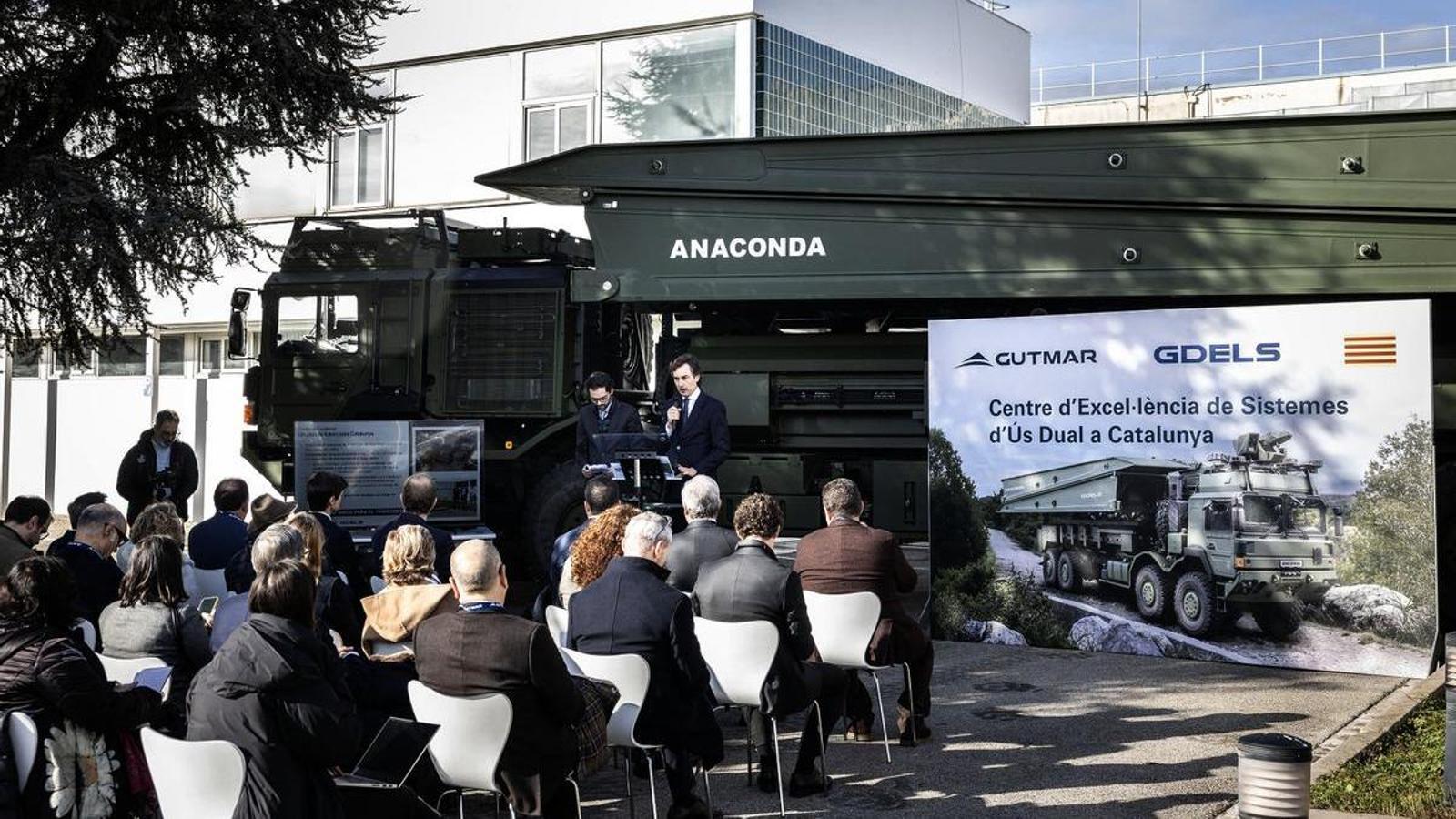
The business fabric, and also the political one, sees potential growth in very specific and above all dual areas: military use, but without neglecting civilian use. We are talking about space and aeronautics, with a focus on satellites and drones. Also cybersecurity – telecommunications and communications, programming or IT – electronics and, finally, the automotive industry. A recent study by the Chamber of Commerce piloted by former ERC councilor Roger Torrent – who has just founded a consultancy specializing in defense, Dualys Strategy – indicated that around 800 Catalan companies can find a place in the sector. It also assured that A recent study by the Chamber of Commerce piloted by former ERC councilor Roger Torrent – who has just founded a consultancy specializing in defense, Dualys Strategy – indicated that around 800 Catalan companies can find a place in the sector. It also assured that The study focuses on SMEs. Names such as Gutmar, SIRT, Sateliot, Pangea Propulsion, or GTD stand out, but also Zero 2 Infinity, Aistech Space, IsardSAT, the Armonia group, and emerging companies like Grasshopper Air Mobility and Omnios Cognitive Solutions, among others. Almost all of them focus on the aerospace, satellite, or communication and control software business. The different voices consulted agree that it is a "valuable fabric", but they believe that a "leading project" – a large company at the forefront – is needed to mobilize them.In the case of the automobile, the possible understanding also arises from the moment the car industry is experiencing, particularly the electric vehicle. Although it has not had a significant investment boom for that long, it sees defense as an opportunity to boost the figures of a business that is doing its utmost to sell more electric cars, as well as to face the headache of new US tariffs or Chinese competition. Meanwhile, the defense sector, which is in talks with “all” Catalan automotive companies, including major firms like Seat, aims to be able to supply itself with components, materials, and technology. At the same time, given the surge in orders, it needs to increase its production and, although it is not easy to convert a civilian company into a military one –especially due to the requirements–, there are vehicles that are “near” to military ones and with which synergies can be created, consider those in the defense industry. An approach that the Spanish government itself shares.
For example, the Catalan Ficosa has allied with Indra to develop vision systems for military armored vehicles, and at the same time has just announced a redundancy plan (ERO) for 172 people at the Viladecavalls plant due to the decrease in production in the automotive sector. In fact, the current CEO of Indra, José Vicente de los Mozos, who has a long professional career at Nissan, Ficosa and Renault, is the one championing this new bridge between the two activities., with a long professional career at Nissan, Ficosa and Renault. De los Mozos himself claimed a few days ago that in Catalonia it is necessary to "change the mentality from the world of the automobile to the world of defense". Material "friendly"
“Catalonia must make an effort”, said Roger Torrent this week. One does not have to go back many years to find an example of how the defense industry in Catalonia is stirring things up. In 2021, a workshop for repairing and adapting military vehicles was among the candidates to reindustrialize the former Nissan factory in the Zona Franca. Pere Aragonès's (ERC) government shelved it, even though the Minister of Defense, Margarita Robles, also did not see the Catalan option – she wanted it to be located in Andalusia –, as revealed by ARA. “If the project were proposed today, I don't know what would have happened”, reflects one of the voices consulted. In fact, there are Catalan companies in the chemical industry that have played a role for years as suppliers of products for the defense and military sector, even though they do not express it publicly, they acknowledge from a Catalan employers' association. as revealed by ARA. “If the project were proposed today, I don't know what would have happened”, reflects one of the voices consulted. In fact, there are Catalan companies in the chemical industry that have played a role for years as suppliers of products for the defense and military sector, even though they do not express it publicly, they acknowledge from a Catalan employers' association. Therefore, some take for granted that defense investment in the Principality, beyond dual-use, will have to be "soft", because it is believed to be the one that can receive more support. "Let's say it wouldn't be friendly to bring the production of a gadget like this," says the same executive as before, pointing to an image of an armored military vehicle. "It's not the same to talk about communication control as it is about ammunition. Catalonia will never make missiles," states a voice from the sector. On the other hand, the idea of having a role in Europe, according to the industry, plays in favor due to the Europeanism that is breathed in Catalonia.A different sensitivity?
However, it is perceived that the sensitivity of the Catalan population towards this business has changed, as a result of the geopolitical tensions of recent years, marked by the threat of Russian expansionism and the abandonment by the United States. The Centre d’Estudis d’Opinió (CEO) has just published a survey in collaboration with the European Parliament in which 26% of Catalans believe that European Union countries must increase defense spending. 36% believe it should be maintained and 34% believe it should be reduced. These figures coincide with the ARA survey of May 3, in which 30% of the Catalan population sees well to increase defense spending, but 43% do not. The rest do not know or do not answer.The CEO was not asking about defense since 2023. In fact, the first time he did was in 2022. That year, an assessment of this expenditure was requested – not at all or very much in agreement –, but it was differentiated by concepts: military and defense. Between 43% and 41% of citizens were not "at all in agreement" on increasing the budget and "military" expenditure; whereas if asked about budget and expenditure on "defense" the percentage fell to 38% and 36%, respectively. Beyond the opinion of the citizens, faced with the framework of "the more [spending], the better", the researcher from the Catalan Institute for Peace Sandra Martínez reflected in an article from 2025 "which can be fallacious because the possibility of defending oneself does not depend so much on the quantity of weapons as on the will and conviction to use them".Inverter cycle
However, in the face of these promises, some are cautious: “They are going to all the parishes,” summarizes a business source in reference to the other autonomous communities. It is also taken for granted that as an investment cycle, it will begin to decline at some point, or not grow as much. And, in fact, there are precedents. For example, in 2010, when European countries such as France, Germany, or the United Kingdom began to announce defense cuts, some companies were forced to announce layoffs, while others sought to diversify. In the Spanish case, the then Minister of Defense, Carme Chacón, asked the large groups to focus on technologies and products of “added value”. This echoed what had happened from 1989 onwards, when the fall of the Berlin Wall was accompanied by a decrease in funds for the armies and, therefore, a blow to the companies' accounts.Meanwhile, the impact on public accounts is already noticeable. Pedro Sánchez, who refuses to spend at the levels demanded by Donald Trump – 5% for NATO members by 2035 –, has ended up activating the safeguard clause to be able to exceed the usual public spending cap and, in this way, comply with the European Union's fiscal rules. In fact, of the twenty-seven member states that make up the European bloc, seventeen governments have requested Brussels to activate this clause. This is a completely exceptional measure that, for example, was not applied at the most serious moment of the economic crisis that began in 2008 and, for example, Brussels refuses to apply it to other issues, such as the current energy crisis or the promotion of investments in renewables. On the other hand, the cap was suspended due to the coronavirus pandemic, reports Gerard Fageda.The European bloc, which had always embraced pacifism and, in any case, had outsourced the defense of member states to NATO, is today one of the main administrations promoting the growth of the war industry.
