What do historians say about 'The black ball'?
Experts applaud the film's effectiveness in making trauma visible, but warn of the risk of diluting the political causes of the conflict
-
CAT -
CAST
BarcelonaThe Black Ball has demonstrated the Javis' ability to connect with mainstream audiences on topics that until recently were quite marginal. The film's phenomenon goes beyond the award at Cannes and the audience awards at the Toronto and San Sebastian festivals: it attracts audiences in droves to theaters. It debuted with 4.7 million euros in its first three days and more than 610,000 viewers, exceptional figures. In two weeks it has reached 2 million viewers and almost 15 million euros in box office revenue.
Of The Black Ball, the work that Federico García Lorca left unfinished before fascist bullets killed him in the summer of 1936, only three or four pages remain, and this scrap of paper, which leaves many questions open, is the inspiration for the two directors. The film does not seek to answer with the accuracy of a historian, but with the freedom of fiction, and places the romantic drama between Lorca and one of his lovers, Rafael Rodríguez Rapún, at the center. This is how historians and philosophers have seen it.
"Cinematic language is not that of books, and we must grant certain margins of freedom to directors," argues Magí Crusells, director of Film-History at the University of Barcelona (UB). For Crusells, the film should not be understood as a traditional biopic nor as a literal recreation, but as a tool of enormous efficacy for rescuing the fierce repression suffered by the gay community from collective oblivion. "The creators themselves have never hidden that it is a uchronia. For me, historical rigor is not repeating the facts to the letter, but using cinema to explain a real oppression that remained buried for decades," he asserts.
Historian Gonzalo Berger is of a similar opinion, noting that the film does not claim to function as a documentary about the Civil War, but rather to place a great love story within a context of political violence. "When we enter the realm of fiction, we cannot demand that a film act like a documentary," remarks Berger, author of books such as The Combatants: The Forgotten History of Anti-Fascist Militant Women (Rosa dels Vents, 2021). The historian highlights a detail that cinema often overlooks: the everyday nature of war. "In the midst of the conflict, life goes on. Soldiers talk about going on a hike and climbing a mountain, and nurses talk about their own affairs. Presenting this normality within the tragedy is one of the film's great successes," says Berger.
For his part, Federico Vázquez Osuna, a historian and specialist in repression and the administration of justice during the Republic and the Franco regime, highlights the two directors' look at the past: "Through the film, we witness the disaster of our contemporary history and see how a society in full ferment grows, with the figure of Federico García Lorca as a reference: a son of the Restoration and monarchist Spain who receives the freedom of the Republic and promotes projects like La Barraca, traveling the country to spread culture among puppeteers and artists. But this impulse is suddenly broken by the cut of the Civil War and the entry of Franco's troops into Madrid," he says. "The film shows how this trauma marked a turning point, leaving an indelible mark on different generations, including today's," adds Vázquez Osuna, who also values the formal beauty of the film and how it conveys the suffering of the victims and sexual repression to the viewer.

LGBTI+ memory at the center of everything
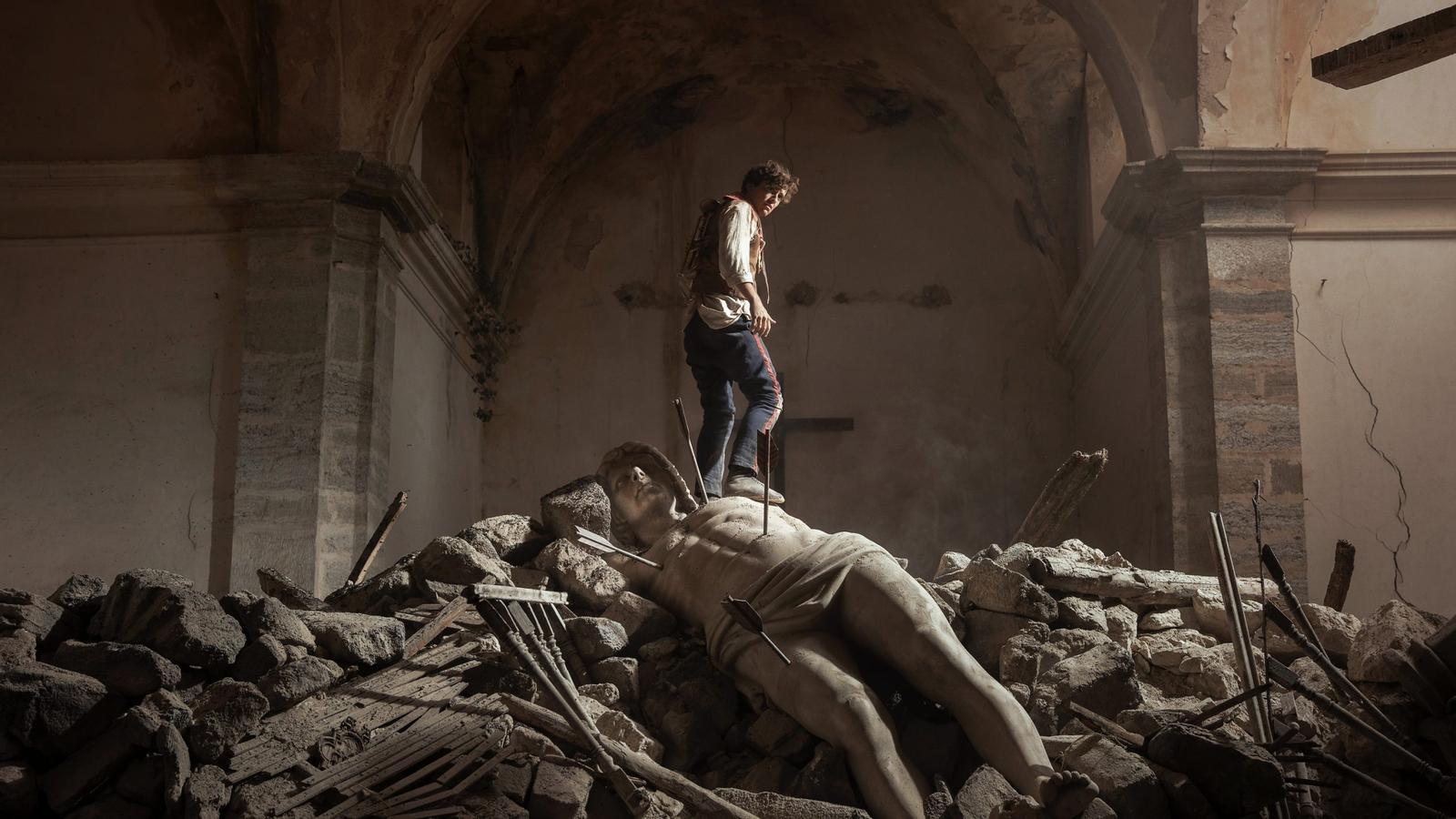
Esa Díaz-León, a philosophy professor at the University of Barcelona, highlights the value of turning this denunciation into a commercial blockbuster: "Until now, LGBTI+ memory had been treated more from the perspective of auteur or independent cinema, with smaller stories. That a major production puts a homosexual love story at the center and fills theaters is a giant step." Díaz-León also points out the double violence suffered by the characters and appreciates the visual references to the history of veiled representation of homosexuality, such as the use of the iconography of Saint Sebastian or the homoerotic aesthetics of the era.
One of the film's great merits is its ability to portray the fear and shame that have historically accompanied homosexual people, emotions that have not completely disappeared. "It is essential that younger generations understand where we come from and everything that has been learned and achieved; but it must be recognized that today many young people continue to be afraid of coming out, suffer harassment, and feel internalized rejection. The fear of being repressed or judged remains very much alive," emphasizes Díaz-León. In this sense, the professor underscores the film's decisive contribution to the debate on historical memory: "Beyond other works that delve into the conflict from a military or political perspective, this film places the emphasis on the memory of homosexuality, the need to remember, and the importance of making visible that which was intended to be erased," she adds.
In fact, the representation of homosexual characters, memory, and their traumas is one of the points most valued by historians. "The film is a clear product of the millennial and Z generations: it places the emphasis on the complexity of memory narratives and not so much on that of historical narratives," reflects historian Anna Pastor, a researcher in topics of pedagogy of memory. "One of the points in its favor is that the persecution of homosexuality is not presented as an isolated fact of a specific moment, but as a form of violence linked to a social and moral conservatism that transcends eras –the Primo de Rivera dictatorship, the Republic, and Francoism– and which during the Republic began to crack too slowly," points out Pastor, who also celebrates the recovery of historical figures of the community such as Edmond de Vries. For her, the film approaches the past as a territory of trauma and personal experiences where the historiographical dimension is simplified to give more importance to emotions and the weight of intergenerational silence: "The effects of this silence are very well portrayed, and the catharsis arrives precisely when it is broken, when all the generations finally understand the void and the secret surrounding the figure of the grandfather," she concludes.
A diluted political context
This emphasis on emotions and the trauma of silence, in the opinion of Vázquez and Pastor, means that the political context sometimes remains diluted. "You see soldiers killing each other, but at no point is it clearly explained that this is the result of a coup d'état against the Republic. Even so, the film's merit is enormous: it vindicates sexual freedom, the Republic, and the people who suffered repression much more effectively than many documentaries," points out Osuna, who highlights the film's ability to show how the violence of war and repression permeate everything: from women forced to stay at home to sexist violence and executions.
Pastor notes that this simplification is especially noticeable in the treatment of political forces: "The anti-fascist side sometimes appears as a mob, a shapeless mass. The complexity of this space is not explained, nor are the different social projects that coexisted and competed between socialism, anarchism, and republicanism." Like Osuna, however, Pastor highlights that one of the great merits of the film is the forcefulness with which Francoism is portrayed: "The film shows with great strength the extreme capacity for dehumanization of fascism, and also the connivance and participation of the Catholic Church in the repression. It is one of the most striking aspects and generates deeply disturbing scenes," he asserts.
Beyond the debates about the rigor of the facts and the simplification of political contexts, analysts agree that the true milestone of the film lies in its final message and its ability to transform the present. "Recovering the frustrated revolutions of history allows us to understand them not only as episodes of defeat, but as the realization that the past could have been different. And if the past could have taken another path, the present can too: in this way, memory becomes a direct tool to imagine other futures," highlights Pastor.
Much has been written and said about the Civil War. Many books have been written about it, it has inspired many literary fictions and, even today, it is a subject of controversial and tense debates. The Javis have chosen a way to explain it and have managed to reach a great many people of different generations, something that historians value. In Berger's opinion, it is on the big screen where the great narratives of our time are disputed today. "The cultural and memory battle will be won in the audiovisual field," he asserts.
