They begin to dismantle the profane paintings of the MNAC that will be taken to Sixena
The technicians will work four weeks to pack, heading to Aragon, some works from the 13th century

-
CAT -
CAST
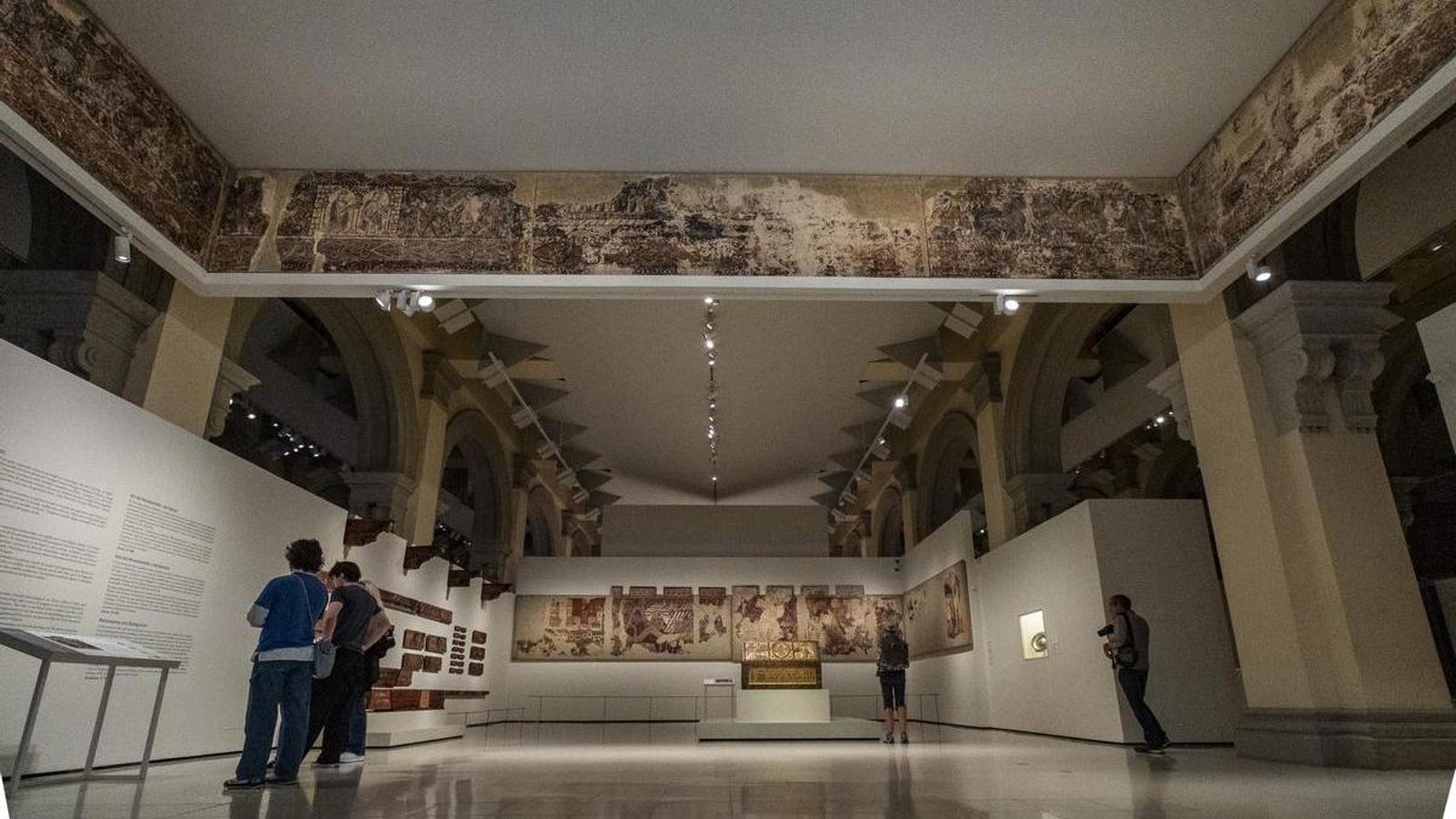
BarcelonaThe technicians who will dismantle the profane paintings of the National Art Museum of Catalonia (MNAC) to take them to Sixena begin work this Tuesday. The General Director of Culture and Cultural Heritage of Aragon, Pedro Olloqui, has already entered the museum to supervise the process. “This is like an operating room: until everyone leaves the room, we cannot start,” they explain from the MNAC. The room will remain closed for two weeks. The profane paintings, from the 13th century, are a mural work mounted on eight panels (fresco transferred onto canvas), so they will not need to be modified for transport. The set was a frieze that decorated the upper part of the walls of a rectangular room located between the church and the cloister.
As planned, a process begins today that will last four weeks and will require the intervention of specialists to protect, consolidate, and pack the pieces for transport to Aragon. The company awarded the process is the Madrid-based firm SIT, the only one that submitted a proposal to the MNAC call. This set of mural paintings left the Monastery of Santa Maria de Sixena in the 1960s, under the protection of the General Directorate of Fine Arts, as a deposit signed by the Saint John's nuns. Sixty years later, on December 2nd, the pieces are scheduled to enter the monastery again. For a few months, they will be stored in the nave of the old dormitories for study and conservation, but the Aragonese government has assured that they will be exhibited to the public at the beginning of next year.
The departure of these works is one more chapter in the long judicial litigation that has pitted Catalan cultural institutions against the government of Aragon since 2013, and which the Aragonese plaintiffs have been winning in stages. In July 2016 there was already a first batch of objects from the MNAC reserves that left for Sixena. In December 2017, a judicial delegation took 44 works from the Lleida Museum to the Aragonese monastery. The Generalitat is now claiming 790,000 euros as compensation for having conserved all these elements for decades.
According to the rulings, before the coming May 10th the MNAC would have to relinquish the paintings from the chapter house, a collection from 1200 that entered the museum in 1940 after being saved from the flames and degradation, as the religious site had been partially destroyed during the war. The works were restored and have been on display at the MNAC since the 60s. The museum maintains that the dismantling process, which would involve sawing through a medieval work of art that is in a delicate state, cannot be carried out: “The museum does not have the capacity nor does it recommend doing so, because the risks of destroying a large part of the work are extremely high,” warned director Pepe Serra just a few days ago. The final chapter of the Sixena case has not yet been written.
