The talent and literature of the self

BarcelonaI often hear criticism about "I" literature. “Current authors only know how to talk about themselves”, “hardly anyone does real fiction exercises”, “there is too much egocentrism”, etcetera. When I hear these comments, the first thing I think is that I agree, of course. I may have even said it out loud myself: “I’m sick of reading stories about people who only talk about themselves!”. In recent years, autofiction has occupied many bookstore shelves. Perhaps too many. Perhaps it’s a trend and perhaps we’ve gotten tired of it, it’s true.
But if I keep mulling over the debate, I realize that when an author interests me, it’s not because of the topic they’re addressing, but because of the talent they have. Because of the skill in creating a story, because of the use of language, because of the depth of the reflections, because of the mastery of rhythm, because of the sentences I can’t help but underline. When I read, I don’t care at all whether or not something really happened; whether the author wrote that book as therapy or for fun. Luckily, reading is an individual act. The author can say whatever they want, because when I read, I’m only looking for that specific and revealing pleasure that we call “reader’s pleasure”. The thrill of the experience doesn’t matter to me.
So, there is "I" literature that I find to be crap, and "I" literature that I enjoy with all my heart. Several positive examples come to mind: The History of Vertebrates, by Mar García Puig (La Magrana, 2023); Building Materials, by Eider Rodríguez(Periscopi, 2023); or, lately, the book Famesick, by Lena Dunham, an American screenwriter who marked an era with the series Girls (2012) and whom I follow everywhere blindly (the book is not available in Catalan, I am reading it in English in an edition by Fourth Estate; Debate will publish it in Spanish). They are personal, honest voices, but, above all, talented. Even, and not to only mention women’s names, The World of Yesterday by Stefan Zweig (Quaderns Crema, 2001) is also "I" literature, and it is a cornerstone of European literature.
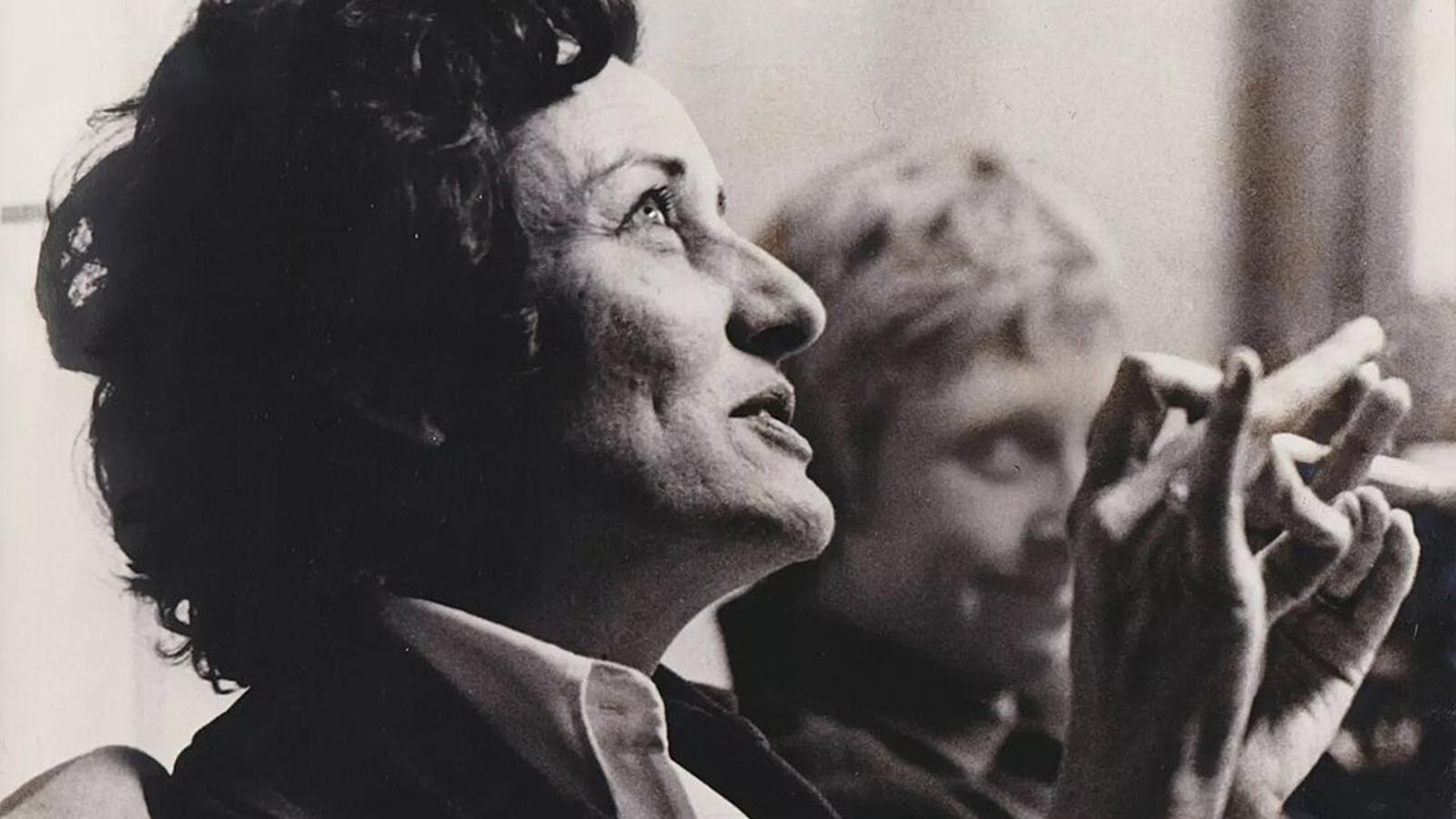
In reality, I reflect on this because I have read Live or Die, a book of poems by Anne Sexton (Massachusetts, 1928-1974) that Godall edicions has published in Catalan, and which in 1967 received the Pulitzer Prize for poetry. Sexton has often received criticism "of the self." That she is too confessional, that she only talks about her dramas... But, on the other hand, her poems are universal. She was a person who lived with bipolar disorder, postpartum depression, suicide attempts, and serious mental problems, and who, because she had the gift of words, has bequeathed to us her entire existence transcribed in a good handful of verses of those that, once you have read them, you can no longer forget. Verses of no return.
The pleasure of reading a good translation
Godall's edition is bilingual, English-Catalan, which I celebrate, because it makes you enjoy reading twice as much. The translation has been carried out by Núria Busquet Molist and Mireia Vidal-Conte, who have done a considerable exercise in abstraction. Their translations are not always literal, which I, personally, have found amusing, because I have read both versions in parallel and have amused myself thinking whether I, in Catalan, would have chosen that word or not. It is priceless that each language gives you a different layer of meaning. The translators themselves explain, in the footnote to the poem I una per a la meva dama, that they have decided to respect a wish that Sexton expressed in an interview in 1970. She said: “When I am translated I only want the images, I don't care about syllables or rhyme.” Thus, in many cases, Busquet and Vidal-Conte's decisions are more personal or creative than exact or faithful. It is another of the pleasures of the book, the great game of translation.
Viu o mor is a harsh, unsettling poetry collection, in which Sexton describes moments of her life, always marked by misunderstanding, by violence, by the feeling of incapacity and lack of control over others and over oneself. It is a poetry collection by someone who never saw the boundaries between life and death very clearly, as happens to so many people. In fact, one of the poems is what the author writes when she receives the news that Sylvia Plath has committed suicide. She says: “Thief! / How did you crawl there, / to the death I wanted so much and for so long, / the death that we both said we had overcome / […] the death for which we drank, / the reasons and, then, the silent act?”. The literature of the self can saturate us, but, in fact, it is as old as humanity, and if it is well written, like Anne Sexton's, it has nothing of self-help or egocentrism. After all, if we are honest, the human experience is anything but therapeutic.
