The sculptor who sought models in Moroccan prisons: the colonial past of Catalan museums
The study '(Tr)african(t)s' documents 3,397 objects from the Ethnological Museum and five other centers, and reveals abusive practices in Morocco, the Philippines, and Guinea
-
CAT -
CAST
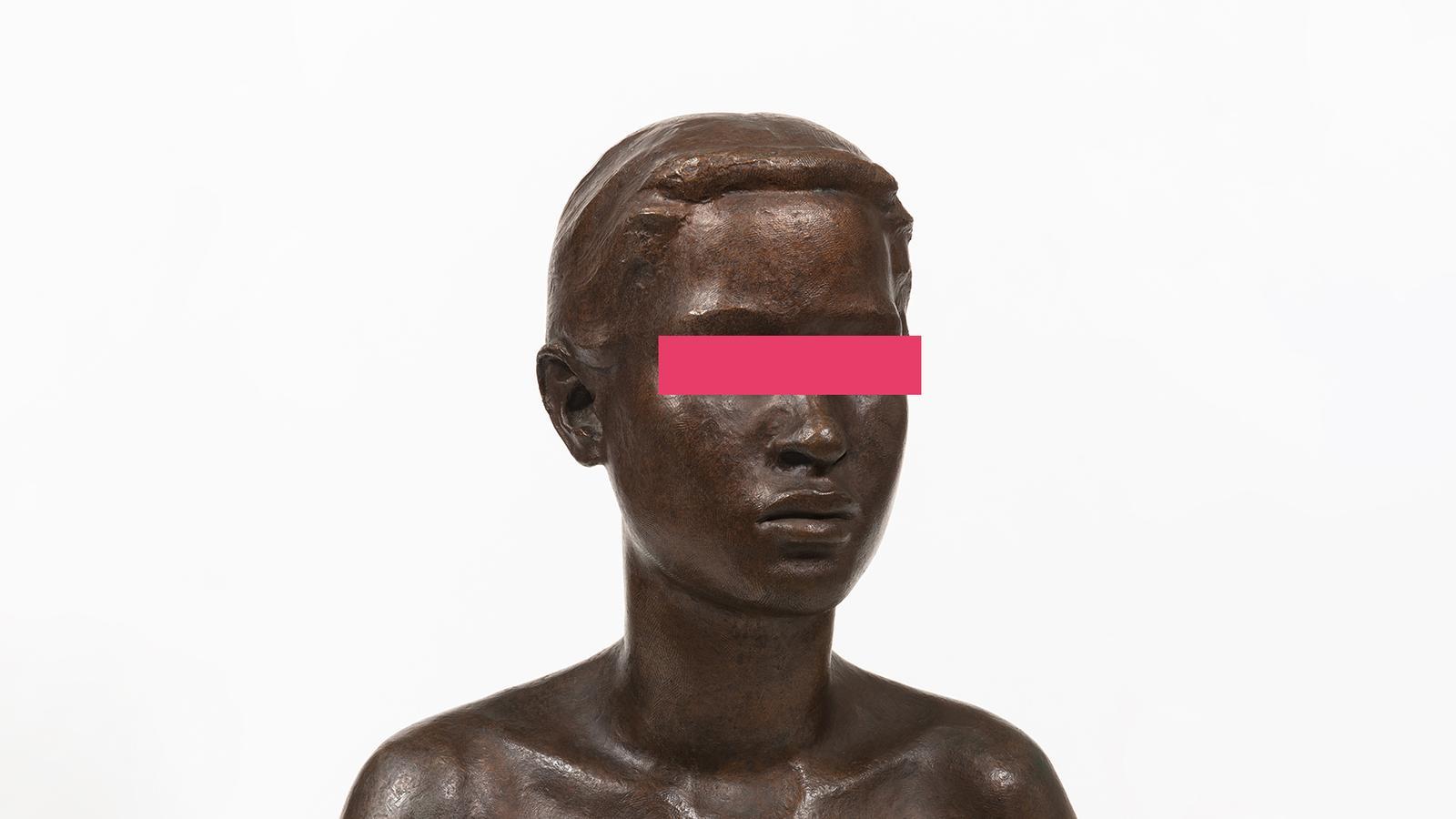
BarcelonaBetween April and May 1954, one of the most ambitious expeditions of the Ethnological Museum of Barcelona, inaugurated in 1949, was organized in the protectorate of Morocco. The sculptor Eudald Serra, who was part of the expedition, wanted to model a nude bust, but local law and morals made it impossible to find any woman who would pose. Serra did not give up; he simply looked where colonial power was absolute. With the collaboration of the Spanish authorities, he visited prisons, reformatories, and "public houses." The use of sex workers as models was systematic and deliberate in many campaigns, taking advantage of their extreme vulnerability in a context of colonial domination.
The memoirs of the director of the Ethnological Museum at the time, August Panyella, describe with admiration the work of Eudald Serra, who was particularly looking for models who did not have "mestizaje" (mixed race). Men were chosen, with the help of the Spanish authorities, in barracks or cells. Serra even modeled inside a prison in Tetouan, thanking the center's director for the facilities, and pointed out that some women were imprisoned there for "illegitimate pregnancy." The nude bust, which is part of the collection of the Ethnological Museum, is one of the 3,397 pieces of colonial origin that the research project (Tr)african(t)s has identified in six Catalan museums: the Ethnological and World Cultures Museum, the Barcelona Natural Science Museum, the Darder Museum of Banyoles, the Igualada Leather Museum, the Vic Art of Leather Museum, and the Víctor Balaguer Library Museum of Vilanova i la Geltrú. There are items ranging from photographs to hunting traps and weapons, as well as musical instruments, funerary objects, tools, masks, and sculptures, mainly from former Spanish Guinea, Morocco, the Philippines, and the Sahara. The research team documents this in the book Espectres de la vitrina (Manifest), which aims to shake up the museum landscape.
"We have found a more favorable scenario for revision in Catalonia than in Madrid, where there is strong public resistance," says Andrés Antebi, who is part of the project. There are museums that are initiating processes related to this critical revision and others that are not part of this first part of the research, such as the Archaeological Museum of Catalonia, which want to collaborate. Unlike countries like France, the United Kingdom, and Belgium,The Claretian missionaries and the Fang women

The Claretian missionaries and the Fang women
Catalan responsibility in these eventsAnother example is a carving attributed to the workshop of the fang master Ndutumu Singó. The piece ended up in the museum after passing through the hands of Miguel Núñez de Prado, governor of Spanish Guinea between 1925 and 1931. The trail of the object – finally bought by the Generalitat in 1936 from the governor's widow – perfectly illustrates how heritage circulated among the colonial elites before filling public display cases.
The diagnosis of (Tr)african(t)s is clear: we must decolonize our gaze. The research denounces that many sacred objects are displayed out of context, reinforcing the old idea of "civilization versus savagery". "The project's proposal aims to integrate the communities of origin into decision-making bodies and review documentation that is often deficient," says Antebi. In short, the research challenges museums to stop being warehouses of a colonial past and to properly explain the origin of many of these pieces. "It aims to have a social impact through a book, a traveling exhibition, and a documentary," adds Antebi. The study also concludes that there is a certain reluctance to acknowledge the involvement of Spanish colonialism. "There is a resistance to recognizing this involvement, both from Spanish nationalism and from a part of Catalan nationalism, which argues that since Catalonia did not have its own state during the period when Spain colonized America, Africa, and the Pacific, there is no Catalan responsibility in these events," says the report. Catalan responsibility in these events", says the report.

