"Capitalism is doing its job and music is falling into the hands of three agencies and three 'ticketers'"
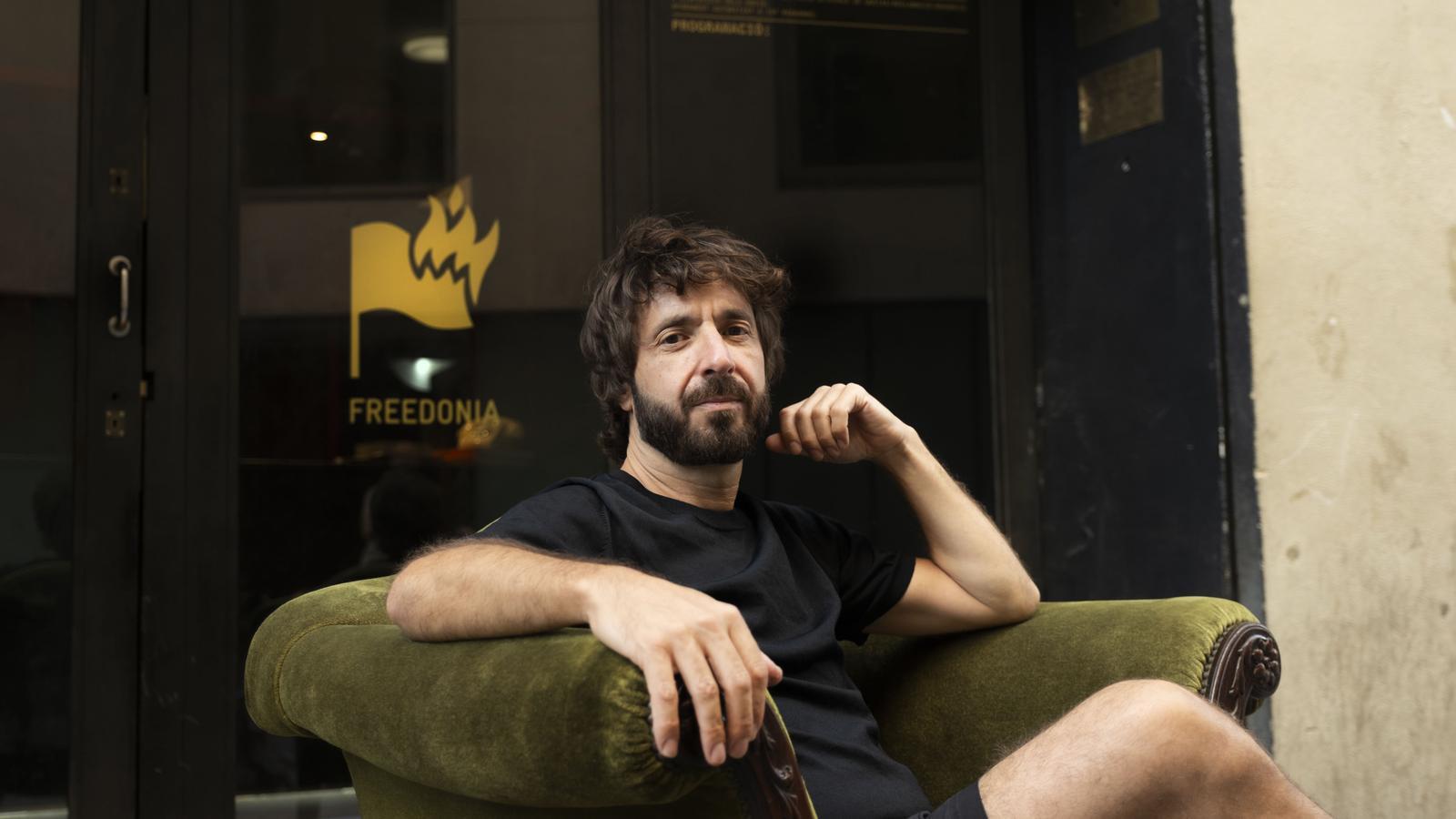
Coque Sánchez is founder of Freedonia, one of Barcelona's most active underground music venues

-
CAT -
CAST
In 2005, four friends who shared an apartment in Barcelona decided to found an association named Freedonia to promote activities related to theater, music, art, and culture in general. Some time later, in 2009, they opened their own venue on Lleialtat street in El Raval, very close to the editorial office of l’ARA, which has become one of the music venues underground more active and resistant in the city, along with others such as the Meteoro hall, Diobar, or Heliogàbal in Gràcia. One of the founders was Coque Sánchez: “At that time, some venues we liked had to close and we wanted to create a space to share culture beyond the commercial logic of bars or nightclubs”. Currently, Coque manages this non-profit entity “with almost 10,000 active members” that schedules live music every weekend with a capacity for a hundred people. An increasingly exceptional project in the city, as obtaining a live music license is quite complicated: “Venues are closing and new ones are not opening. 30 years ago, there were about 400 live music licenses in the metropolitan area, and now we have 160. Barcelona wants to boast of being a culturally active city, but with the conveniences of a dormitory city; we must mediate to defend the rest of the neighbors, but also to promote nightlife culture, which is also a service to citizens and serves, among other things, to prevent young people from all ending up with depression”.
The lowest point for Freedonia was during the pandemic, with months and months of accumulating debt and no clear end in sight. “There was a time, with the restrictions, when opening the venue was a loss-making operation; it was impossible to cover expenses with only 20 people in the room. And we still did it, because our members asked us to. We raised 8,000 euros through crowdfunding and finally, public aid arrived. The truth is that the vast majority of venues in Barcelona survived the pandemic, and in the end, it was shown that we had done much better here than in Madrid.” Now Coque combines managing Freedonia with his work as a DJ, with gigs both here and abroad: “At first, I worked at Freedonia 100 hours a week: programming performances, doing all the promotion, managing the accounts, tending the bar, fixing anything that broke… Now we are a team and I have more time to listen to music and to DJ.” The main difficulty, in the case of venues like Freedonia, is to promote live music and emerging artists: “There's a lot of talk about whether young people go to concerts. They do go, but to local festivals and especially to big festivals, which are a bit like theme parks where people spend a lot of money and where the same bands always play. Capitalism does its thing, and in the end, live music remains in the hands of three major agencies and three ticket vendors. Furthermore, many of the contracts they sign are draconian: when a big festival hires a band, for example, it demands that they do not play in that same city for several months before or after.” Small-format venues, on the other hand, are the only way for emerging musicians and bands in an era when record sales are also limited. “It's clear that no one will get rich in this circuit, but I want there to be spaces for people to discover this music and my goal is to book even more concerts.” Coque also points out another pending issue, gentrification, which he has observed in other big cities like London or Berlin. “The little live music we have is concentrating heavily in the city center and the neighborhoods are being left with nothing. I believe that each neighborhood should have a space like ours, to share culture, to share music, just as each neighborhood has a library”.
