"The motivation was simply playful: to kill someone and return home unpunished"
The Italian journalist Ezio Gavazzeni has managed to have the human safaris that took place in Sarajevo judicially investigated
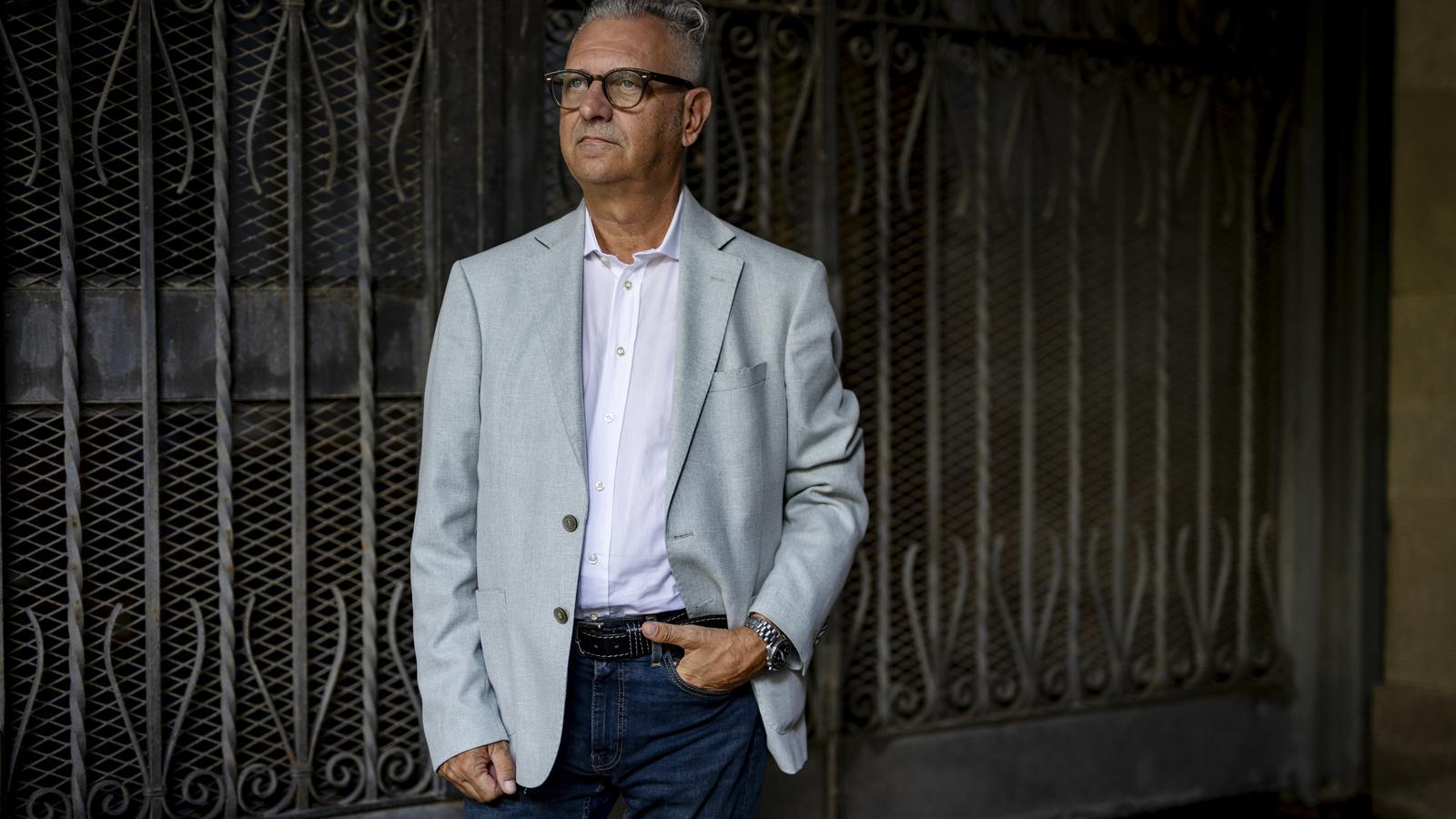
-
CAT -
CAST
BarcelonaWhen someone does something as cruel as taking a plane to go and be a weekend sniper and dedicate themselves to killing children, young girls, or the elderly, the first reaction is disbelief. Then come the questions. Why? Who was organizing it? Who were these macabre tourists? What drove them to go "hunting" for defenseless and vulnerable people? How is it that no one saw it, or why did people look the other way?
The Italian researcher and writer Ezio Gavazzeni has found some answers and explains them in Safaris humanos (Península), an investigative work that has transformed what many considered an urban legend into an international legal case. Gavazzeni is clear about the motivation of these wealthy tourists: "With criminologist Martina Radice, we asked ourselves precisely about the motivations. The first hypothesis was that there was a religious or political motivation. We reached the conclusion that the motivation was simply recreational. They wanted to satisfy their desire to kill someone with the satisfaction of being able to return home with impunity."
Among these wealthy people who, between 1992 and 1996, traveled to a besieged Sarajevo and other towns during the Balkan war, there were citizens of various nationalities: Russians, Serbs, Belarusians, Ukrainians, Italians, North Americans, Canadians, British, French, and probably also Spaniards. They had very high purchasing power. "They were rich people, businessmen, professionals, and, in some cases, unfortunately, witnesses say also doctors," states Gavazzeni. "These people all had a common denominator: they love weapons and hunting. Therefore, they are people who frequent shooting ranges, hunting clubs, the circles that revolve around this world, they take trips to participate in African safaris... We cannot separate the person from the weapons: for these people, weapons are a bit like the ring for Gollum in The Lord of the Rings: the ring influences Gollum's character and makes him greedy. In this case, these people have a great fascination for weapons and think that their own power, the one they exercise every day at work, can be extended through the weapon," the author asserts.
To travel there, they used European documents that gave them permission to hunt animals in the Balkans. One of the routes passed through Croatia and Trieste (Italy), and they took a plane from the Serbian company Aviogenex that landed in Belgrade. From there, in vans or minibuses, they moved towards Sarajevo, Pale, or Mostar. Alongside the snipers of the Serbian army, they dedicated themselves to shooting and killing. Even a witness from the NGOs traveling in humanitarian aid convoys states in the book that they saw these men, dressed for hunting, at checkpoints. This witness explains that it was known they were going to hunt people.
The most coveted "pieces"
"The most coveted pieces were children and young girls," asserts Gavazzeni. Infants were twice as expensive, different sources in the book claim. The colors marked on the bullet casings had a double meaning: on one hand, the hunter took it home as a trophy, it was a souvenir that they had killed a person, but on the other hand, they served for the companion, to account for what had been killed, because depending on the pieces it was one rate or another. This assertion that weekend snipers yearned above all to kill infants and that these were more expensive, according to Gavazzeni, has been confirmed independently by different witnesses.
This macabre business, explains the Italian journalist, was no secret. In 1995, the newspaper La Nazione, from Florence, published several articles and located a person working in Tuscany finding clients to take this trip. Another agent was located in Naples and there was the testimony of a priest from Beati Costruttori di Pace, an Italian NGO that worked extensively in the Balkans. Later, media such as Corriere della Sera and La Stampa collected more information, but none of those clues opened a judicial process at the time.
Gavazzeni rescued those articles, pulled the thread of the documentary Sarajevo Safari (2023) by Miran Zupanic and managed to speak with many witnesses. For his investigation, it was very important to be able to talk to a man who had worked for the intelligence services. In the book, the sources hide under pseudonyms: the Nameless One, the Falcon, the Frenchman, and the Legionnaire. "I have provided testimonies, but the judiciary has what I call superpowers," explains Gavazzeni. "It can perform wiretaps, enter computers, place hidden microphones, cameras, and conduct searches. It is a great leap in quality," he asserts. 70% of the anonymous sources who spoke with the author have decided to ratify their testimony before the judges.
The Milan Prosecutor's Office opened an investigation in October 2025 and, within the framework of this case, the number of investigated persons has risen to five (the last one added last June). In addition to Milan, four other prosecutor's offices have opened independent investigations in Sarajevo, Vienna, Bern, and Brussels. The five prosecutor's offices met at the Eurojust headquarters in The Hague to set a joint working protocol, while 23 countries of the European Union have formally requested an investigation from the Council of Europe.
The Spanish clue
Gavazzeni also points to Spain. "From Milan I cannot investigate Spain because I have problems with the language, I do not know the places, the institutions, I do not have the contacts or the knowledge," admits the journalist. "In Spain there were at least a couple of agencies active, especially one in Barcelona that organized African safaris in the nineties and before the war. There is a witness who explains that this agency was moving to facilitate these types of trips. There was also another very important one in Madrid that moved many groups. It would be worth investigating," he says. The author gives more clues about what could be found in Spain. While the Sarajevo sector was under French responsibility, Mostar remained under the control of the Spanish contingent. "According to the documentation I have found, the Spanish contingent activated a fairly consistent network of informants that surely generated reports. I would like to read this information," he asserts. Furthermore, there were pre-existing channels: "Between the years 1989 and 1990 there was already a constant flow of hunters (of animals) from Catalonia to the Balkans on flights of up to 150 people," he states.
