The Barcelona-based publishing house Saldonar was born in 2011 with the goal of helping to "explain the current world to ourselves" from a double perspective: poetry and non-fiction. Its catalog features poetry books by Attilio Bertolucci, Iannis Ritsos, Maria Beneyto, and Vicent Andrés Estellés, alongside an extensive list of essays, memoirs, and investigative books. In addition to dedicating a collection to journalism – with titles by Jordi Borràs, Lluc Salellas, and Alba Sidera – and another that incorporates travel literature by authors such as Per Nyholm, Cal Flyn, and Leila Guerriero, as well as investigative books by Adrian Nicole LeBlanc and Ted Conover, Saldonar has launched Monod, focused on current affairs. It opened with the collection Hotel Palestina (2025), by Marc Comas and David Fontseca, and continued with Manel Riu's investigation into how a Catalan nuclear tragedy was averted (Els herois de Vandellòs I, 2025). Now it reaches its third volume with the memoir about pregnancy and first-time motherhood by Amanda Hess (Segona vida, 2026).
Amanda Hess: "The mobile phone had become a kind of religious guide about my motherhood"
Journalist and writer. Author of 'Segona vida'

-
CAT -
CAST
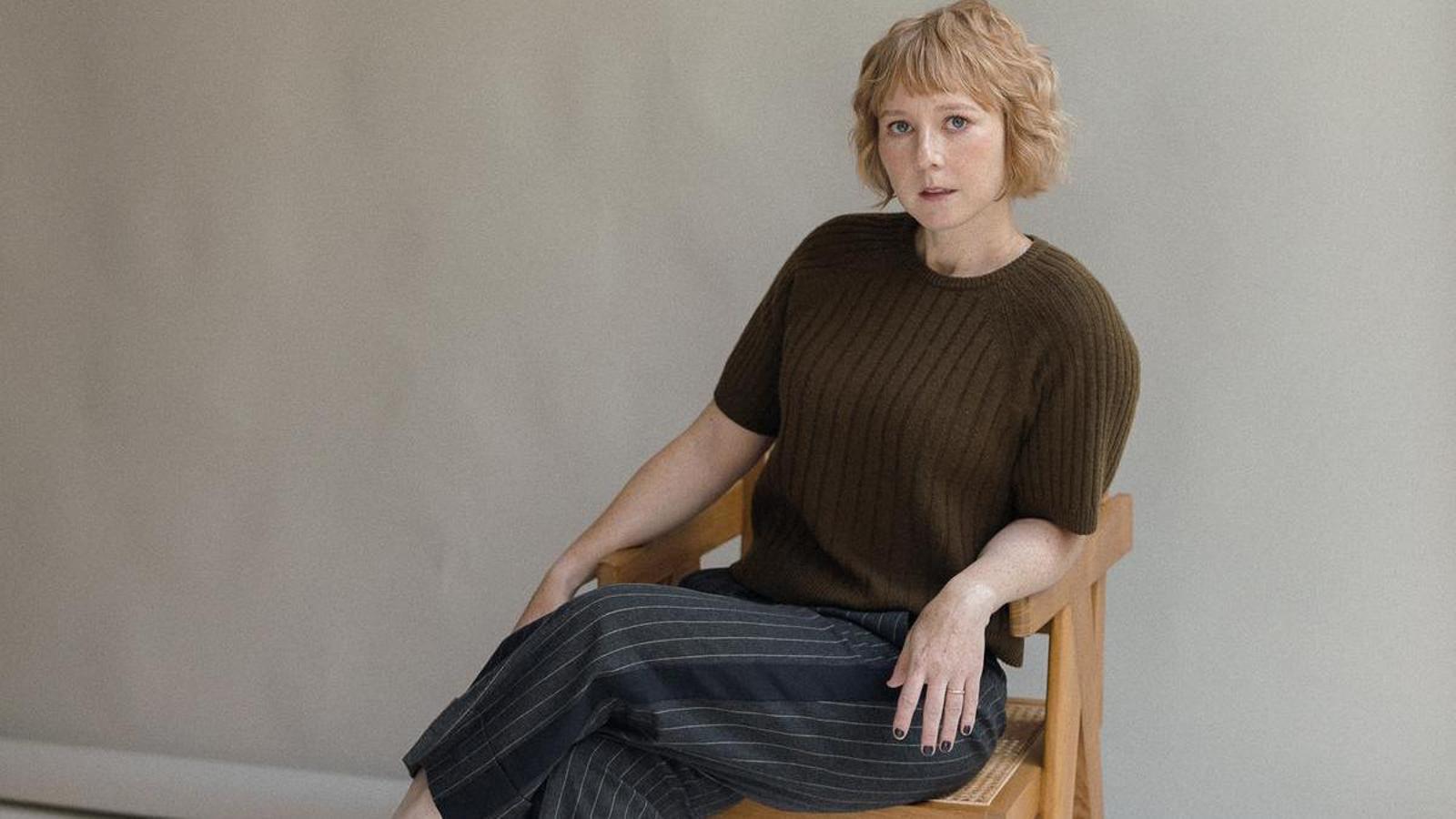
BarcelonaNew York Times journalist Amanda Hess became pregnant when she was approaching 35. Perhaps because she has specialized professionally in studying new technologies—especially those derived from the internet—the first thing Hess did was to announce that she was pregnant to the phone application that monitored her menstrual cycles. This was the beginning of a very close relationship between the journalist's mobile phone and the gestation of the child, which unexpectedly became complicated from the seventh month onwards. Five years after giving birth, Amanda Hess published Second Life (now in Catalan at Saldonar, translated by Elena Ordeig), where she combines her personal testimony with the analysis of fertility apps, prenatal genetic tests, gender reveal videos, freebirth influencers and Facebook groups and forums about rare diseases. The author connects with ARA via video call from the apartment in New York where she lives with her husband and their two children. She responds with precision and without sparing details, despite addressing delicate topics.
The title of her book refers to a simulator and a virtual world that became fashionable a little over two decades ago. Was Second Life one of your gateways to your attraction to realities parallel to our own?
— I had limited contact with Second Life, but when looking for a title for my book I thought it was a good idea to relate the months of pregnancy to entering a parallel reality, especially based on how I related to the internet, but also because it is a season in which your life becomes an act of imagination. You dedicate yourself to fantasizing about the ways your day-to-day life will transform, and you also project what your child will be like and what kind of mother you will be. It must be said that a good part of these projections are wrong.
Surely your relationship with the internet has changed a lot since you started using it.
— Yes. The first times I connected I was still a primary school student. I remember the long process of connecting the modem before being able to browse web pages and connecting to chats. I was a very shy girl, and the internet allowed me to explore both the places that interested me and those that scared me. During adolescence, the internet helped me forge my personal identity.
All this was happening at the end of the 90s of the last century.
— These were years when the internet had not yet been monetized to the extreme we have reached now, where a few companies control everything. When I became pregnant in 2019, I went through a second adolescence. My body was changing again and I was entering a territory I was completely unfamiliar with. Since I had been specializing in writing articles about internet culture, I believed I could control any message I received.
The book explains that it did not happen like that.
— It was as if during pregnancy my critical spirit failed me. Perhaps it had something to do with the fact that the COVID-19 pandemic broke out a few months after I became pregnant. In New York, which is a city with a very high population density, there were many deaths from the very first moment. During pregnancy, most women feel isolated and alone. With the pandemic, this feeling was magnified, and I ended up depending perhaps too much on what my phone told me.

She was registered on Flo, a phone application that monitored her menstrual cycles. It was to the application that she explained before anyone else that she was expecting a child.
— When I found out I was pregnant, my husband was away on a business trip, and since I wanted to give him the news in person, I first communicated with him over the phone. Without really realizing what I was doing, I provided him with very intimate information. In fact, I was giving details about my future child even before it was visible in an ultrasound.
Immediately, she started receiving advertisements for maternity and baby clothes, baby monitors, furniture, toys... Wasn't she afraid?
— I wasn't afraid because, at that moment, what really scared me was being pregnant.
These applications sell our data to companies that offer us their products. Second Life is a warning in this regard?
— In some way they control us. If they have our data, they can recommend what we should consume and how we should behave. Sometimes they end up turning you into who they want you to be. When you buy any kind of item for your future baby you are making very intimate decisions, and these companies can make you take decisions that later have great importance. I bought a device that my child wore strapped to his body 15 hours a day. This influenced what I ended up thinking about his sleep cycles and, consequently, also my own.
In her pregnancy there was a before and after the seventh-month ultrasound, in which the doctor saw "something" that he did not "like".
— During the first few months I had been taking notes on how women are treated online when they are pregnant. All this extreme feminization and infantilization stimulated my sense of humor. Sometimes I would take screenshots of what I was finding in case I ever wrote an article about it in the near future. When that ultrasound went wrong, I changed my mind. I couldn't do anything with all that material, among other things because my life had just taken an uncertain turn. I began to believe, superstitiously, that having allowed myself to joke about a subject as important as my son had condemned me.
Technology ends up being one more element of the control exercised over mothers' bodies, doesn't it?
— Yes. When the seventh-month ultrasound came out wrong, I started to feel guilty. My mobile phone had become a kind of religious guide to my motherhood. If I did everything it asked of me, I was convinced I would have a normal, healthy baby. During the four-week process of determining exactly what was wrong with my fetus, I told the doctors about every little thing that might have had anything to do with it, from a glass of wine I drank one day to an anti-anxiety pill I took. Even though the syndrome they diagnosed had nothing to do with anything I did, I still felt guilty. We women are constantly supervised and controlled. At all levels. Since I hadn't spent my whole life thinking that one day I would get pregnant, it was my fault that the fetus had a problem.
Historically, if a child was born with problems, it was attributed to the mother.
— It was even said that if the child was born with any physical defect, it was the fault of the bad thoughts the mother had during pregnancy.
With her husband, they could not avoid looking on the internet at all the problems that Beckwith-Wiedemann syndrome entailed. There was, among others, very rapid growth, an overly large tongue –which could require going through surgery–, problems with eating, speaking, and breathing, and the propensity to develop childhood cancer.
— A large part of the images we saw were of extreme situations that the syndrome could entail. We found them both in medical publications and in sensationalist newspapers: they love to publish articles about rare genetic diseases as if they were part of a modern freak show. My son has had medical problems, but 99% of his time he leads a normal life. Many children have their own particularities. Difference is the most normal thing in the world.
Although your child required special attention since they were born, was your anxiety less than during the last trimester of pregnancy?
— Yes. I went from feeling miserable and guilty to feeling lucky and happy. The anxiety I felt during pregnancy disappeared since my son was born. By this, I am not saying that our life was not difficult and stressful, but we faced this new stage with great relief. I had postpartum depression before giving birth.
