The great lesson of Piotr Beczala
The Polish tenor stars at the Palau de la Música in one of the best recitals of this season
-
CAT -
CAST
- Palau de la Música. April 13, 2026
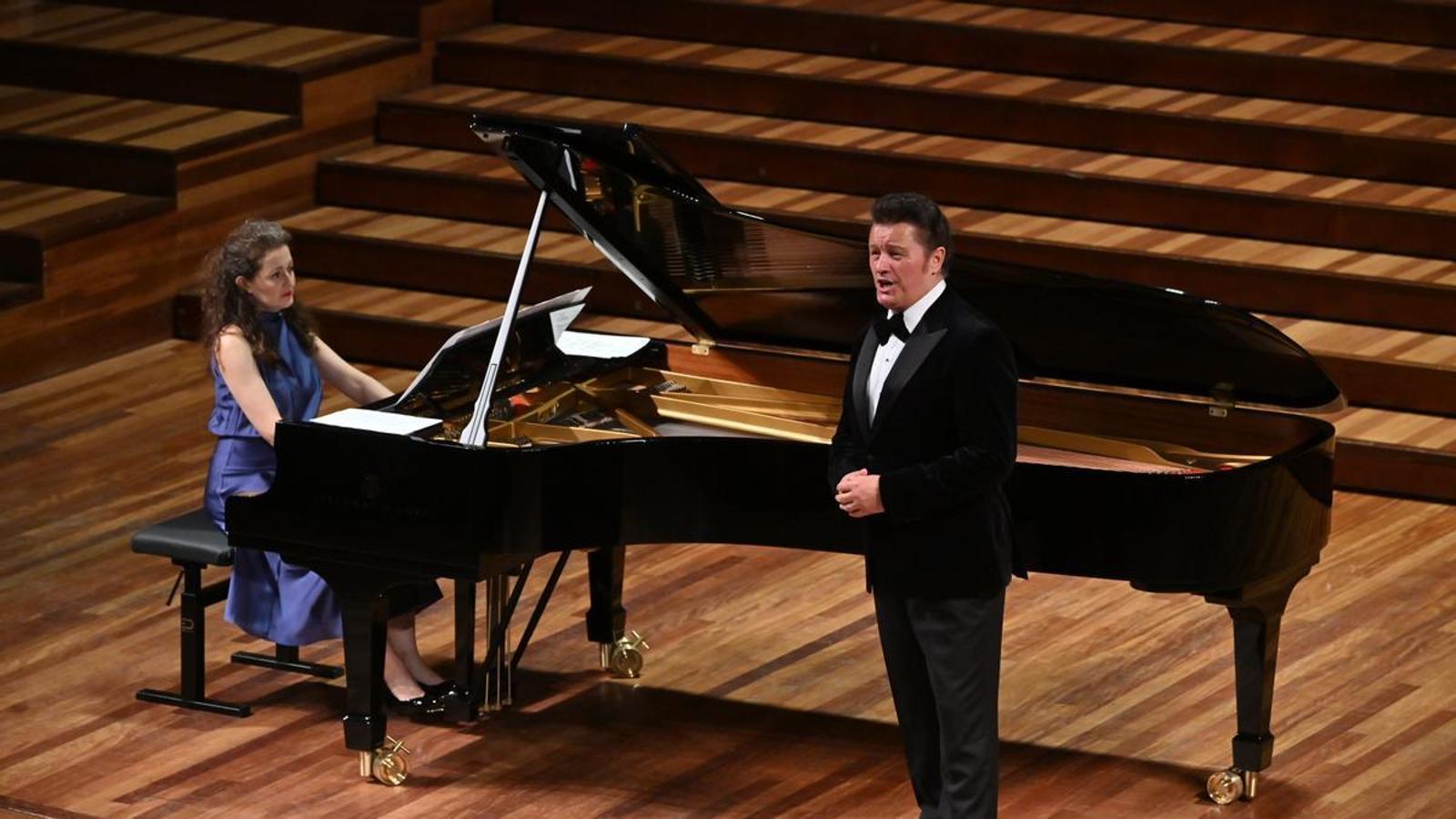
Hardly half the Palau was filled on Monday night to host one of the best recitals of this season so far: the one starring Piotr Beczała and pianist Sarah Tysman. Few people but a cozy atmosphere, of utmost attention and maximum respect, without mobiles or coughing fits and with total devotion to what was happening on stage.At this point, and with more than thirty years of career, the Polish tenor does not have to prove anything to anyone. Simply, he continues to be one of the best lyric singers of his generation, with a career as coherent as it is brilliant, as serious as it is well chosen. And this success in the choice also extended to the repertoire selected on the occasion we are dealing with.Like a King Midas, the beautiful but inconsequential songs of Mieczyslaw Karlowicz became pure filigree with Beczala's fresh voice, thanks to simply admirable technical mastery and sensitivity. All before giving way to a brilliant page by the also Polish Stanislaw Moniuszko extracted from the opera The Haunted Manor. Half-voices and semi-high notes resolved with sinuous nuances also took hold of Dvorák's four "Gypsy Songs", before closing the first part with the aria of the prince from Smetana's Rusalka by the Czech composer.Second Russian part with seven precious songs by Tchaikovsky, during which the French pianist Sarah Tysman showed much more sensitivity, setting aside the help in Beczala's small memory lapse at the end of Rachmaninoff's Vesennie vody which officially closed the evening, which previously had another of its highlights with the very famous Kuda, kuda from Tchaikovsky's opera Eugene Onegin.Beczala showed himself at all times committed to what he had in hand, sensitive, dedicated and a very good communicator, aware that this was neither an easy nor a common repertoire for the Barcelona public. But he knew how to use all the resources of his art – which are not few – to master the stage. And to top it off, two encores with a Hispanic flavor such as No puede ser from La tabernera del puerto, by Pablo Sorozábal, and the song Granada, both with impeccable pronunciation. And as if that were not enough, the always effective Non ti scordar di me by Ernesto De’Curtis. A golden clasp to an equally golden night for the annals of the Palau de la Música.
