The Booksellers' Guild denounces irregular practices that erode the sector
They launch a campaign to warn that illegal discounts, inaccessible public tenders, and direct book sales undermine a fragile system

-
CAT -
CAST
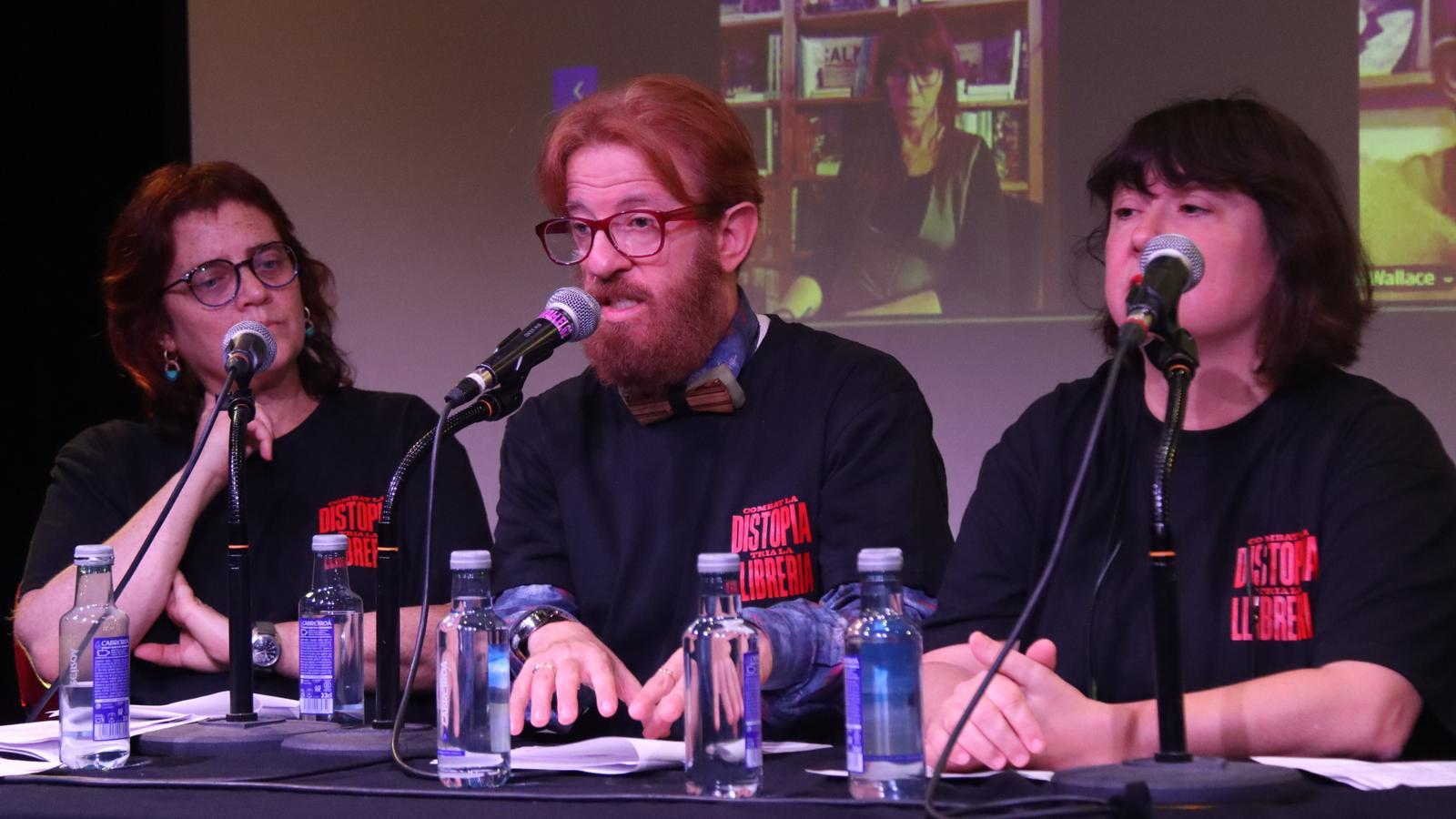
BarcelonaOne month after the explosive Sant Jordi day, the Booksellers Guild launches a campaign to warn about various irregular practices in the sector that "put the future of bookstores at risk". Specifically, they denounce practices that break the book chain, meaning they bypass bookstores as intermediaries and expert prescribers protected by the Book Law. The guild insists it is not raising its voice "against anyone," but specifically points to public purchases and direct sales to administrations, libraries, schools, and fairs.
The campaign's slogan is "Fight dystopia, choose the bookstore" and will feature awareness and outreach actions to reach all agents in the sector, with whom structural changes are intended to be negotiated. "Can you imagine a country without bookstores?" asks the guild's president, Èric del Arco. Bookstores are considered key cultural and social agents for cities, but they warn that they are tired of setbacks. "When a bookstore closes, everyone cries. We don't want to get to that point," says Fe Fernández, from L’Espolsada de les Franqueses del Vallès. "We still have time to avoid a dystopian future —says Del Arco—. Sant Jordi is a very important moment because it places bookstores at the center, but that doesn't mean that the rest of the year there are processes that are eroding the book chain and we can reach a point of no return".
Illegal or irregular
. That is why the guild has grouped all these practices In addition to wholesale school purchases, bookstores denounce direct sales by publishers via the internet or at fairs. "There are not enough bookstores for so many book fairs," says Del Arco, who calls for a debate with publishers to analyze which fairs are necessary, which are purely commercial, and how their stock can be exhibited at fairs and markets without bypassing booksellers and distributors. An example of good practice is the Liberisliber Fair, where publishers provide the stock and booksellers handle sales at the stall.
One of the most serious problems began five years ago with the elimination of minor contracts and the introduction of European directives that involve a type of tender that excludes bookstores, especially independent ones, and instead favors companies with great administrative and logistical capacity. "We have encountered investment funds that present themselves for public tenders to sell books, and we don't know what criteria they meet," states Fe Fernández. The guild states there is a clash between the Contracts Law and the Book Law, which protects the sector, and therefore they ask that books have an exceptional contracting system and, at the same time, that criteria of expertise and specialized service that bookstores can offer be included in tenders.
Even though all these issues already appeared in the drafting of the National Book and Reading Plan, nothing has been done, except for the Plan to support bookstores in Barcelona. That is why the guild has grouped all these practices into a campaign and proposes to work with all sector agents, public administrations, libraries, and educational centers. The campaign also aims to raise awareness among individuals against "the amazonization of society" and schools so that they do not buy exclusively from a single publisher, but rather they want to invite them to jointly work on their reading plan with the booksellers of their neighborhood or city. They also ask that libraries prioritize proximity purchases from bookstores and not from bulk orders managed by large platforms that do not take into account aspects such as language or editorial diversity.
"How books are bought and sold matters. We have to decide if we want to have bookstores or book supermarkets. If they are supermarkets, you won't find us there," states Aitor Martos. "We are not here to cry, we are here because we believe what we do is important and we are here to defend it," says Elisa Fernández of La No Llegiu.
