The splendor of Montserrat Torrent's organ resounds in Sant Felip Neri
The centenarian organist officially inaugurates the instrument that bears her name in a very emotional event
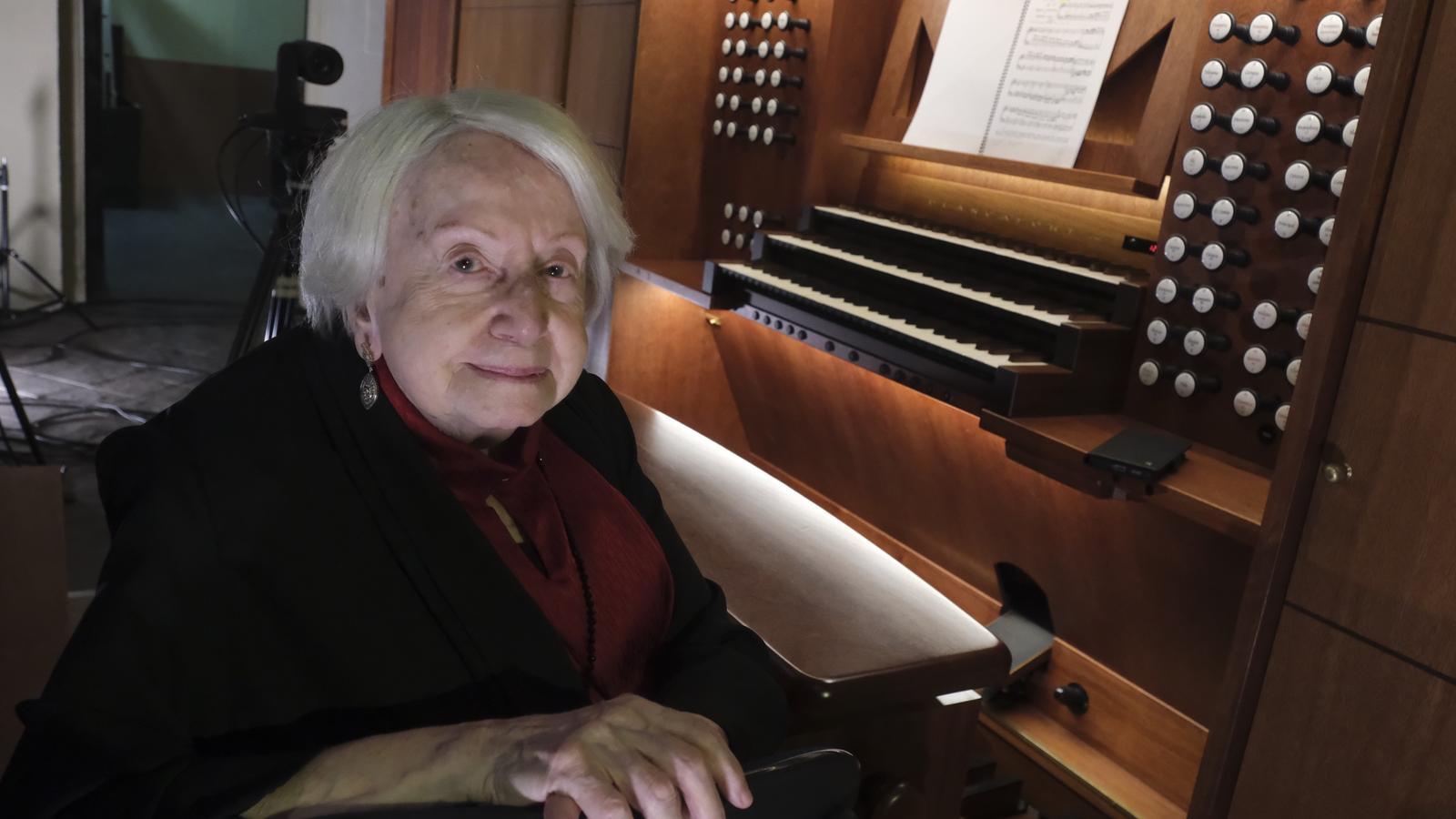

BarcelonaIt was a dream that began to come true in December 2021, when Cardinal Omella blessed the M-shaped organ named after Montserrat Torrent. The Barcelona organist premiered it then, but the instrument built by the Blancafort workshop was not yet finished. It lacked a final phase that, once completed, allowed this Monday the official inauguration of a magnificent organ with 50 registers, 3,454 pipes, and three keyboards installed in the choir tribune of the Oratory of Sant Felip Neri, in Barcelona's Gothic Quarter. "We are in the heart of the city, in the heart of Catalonia," said the President of the Generalitat, Salvador Illa, at the beginning of an event that was also a tribute to Montserrat Torrent, "a key figure in Catalan culture, a source of national pride." "This organ is the project of her life, because it was planned sixty years ago, but nothing ends now; a new stage begins now: to bring this fantastic instrument to life," explained Albert Torrens, commissioner of the Year Montserrat Torrent and biographer of the organist.
In a church packed to the brim, also present were the Minister of Culture, Sònia Hernández Almodóvar; the Mayor of Barcelona, Jaume Collboni; and the Provost of the Oratories of Sant Felip Neri of Barcelona and Gràcia, Father Ferran Colás, as well as various personalities from the music world.

"It is the only large-format baroque organ in the city," highlighted Collboni a few minutes before the second part of the event began, in which actor Pere Arquillué acted as a rhapsodist reciting the Poem for an organ by Narcís Comadira. Arquillué was reciting in a dialogue with the music performed by seven organists, who demonstrated the different sonic and expressive possibilities of the organ beyond the baroque. However, neither Illa nor Collboni were able to verify this splendor and versatility because they left to attend other commitments after Torrent's first performance, who opened the musical part with a work by Francisco Correa de Arauxo, one of the reference composers of the transition between the Renaissance and Iberian baroque.
Bernat Bailbé also offered baroque moments on the occasion of two pieces by Miguel López Sebastián, and Juan de la Rubia explored the expressiveness of Montserrat Torrent's organ with an exuberant rendition of Bach's Concert BWV 596. Beyond the baroque, Guido Iotti performed Giovanni Pietro Baldi's Sonata per il grand'organo; Saskia Roures championed the great Swedish organ pioneer, Elfrida Andrée, and Joan Seguí unfurled symphonic color playing a piece by Charles-Marie Widor. Furthermore, Ignacio Ribas premiered his own composition, Com un Torrent de llum, obviously dedicated to the Lady of the Organ. She herself closed the event with the martial push of Johann Caspar Kerll's Battaglia, at the end of which she received ovations and many "Bravo!" from the attendees. "It is an important moment for all of us," Albert Torrens had said. And it was thanks to Montserrat Torrent's perseverance.
