Xi and Putin multiply their ties in the face of US hegemony: "Our friendship is at an unprecedented level"
The two leaders sign about twenty agreements in economic, educational, cultural, tourist and sports matters

-
CAT -
CAST
BeijingThe meeting between Vladimir Putin and Xi Jinping in Beijing shows the strength of their alliance and how the two leaders share the vision of a new world order. Putin's official trip to the Chinese capital results in a string of mutual compliments, some agreements, and declarations of friendship.
not to negotiate a new nuclear treaty after the existing one expirednot negotiate a new nuclear treaty after the existing one expired.
Putin's visit was made with less pomp than Trump's but with more concrete agreements signed, especially with documents that reinforce the solidity of relations between Russia and China. The two presidents have not hesitated to highlight the good moment that diplomacy between the two countries is experiencing. For Putin, they are at an "unprecedented level", and Xi emphasizes that the two powers have managed to "deepen mutual political trust and strategic cooperation".

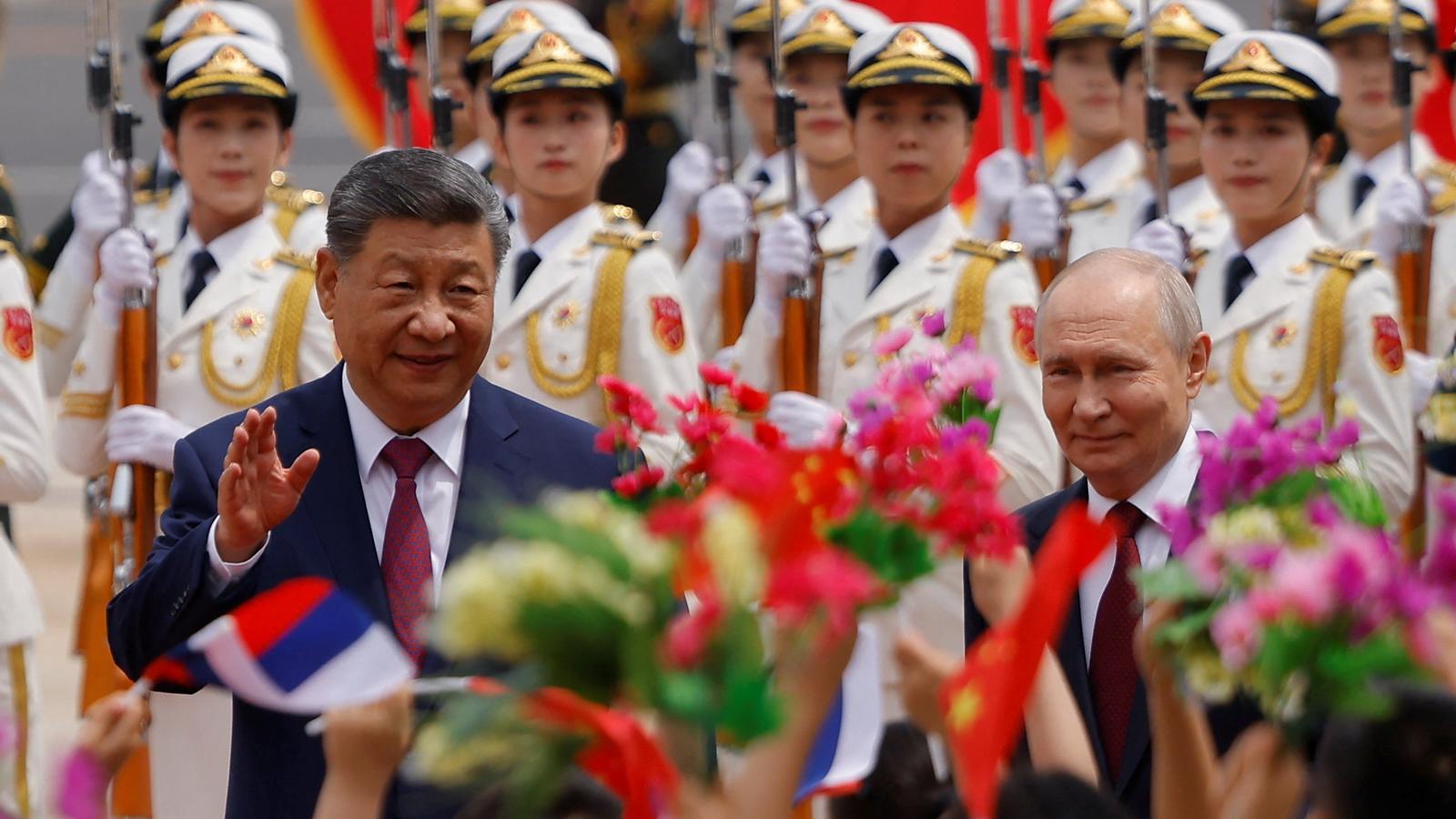
Xi offered his counterpart the traditional welcome ceremony in Tiananmen Square at the gates of the Great Hall of the People, with the usual display of flags, military guard, and waving children. The two leaders showed themselves to the press in a relaxed atmosphere before closing the doors of the room to hold a bilateral meeting.
Putin addressed Xi as "dear friend," and the Chinese president called him "old friend," a treatment used in China to express respect and long friendship. In addition, Xi welcomed Putin with a Chinese proverb to emphasize that he was a highly anticipated visitor: "Although we haven't seen each other for a day, it feels like three autumns have passed." Contrary to what happened on Trump's visit, on this occasion Xi Jinping and Vladimir Putin did appear before the cameras signing agreements.
About twenty specific agreements
Xi and Putin have signed a joint declaration to strengthen strategic cooperation, as well as an agreement to reinforce relations of good neighborliness, friendship and cooperation. Both have shown agreement in interpreting international relations by approving a second declaration on the establishment of a multipolar world.
The Chinese president said that they should focus on promoting a global governance system “more just and reasonable”, according to the official Xinhua news agency. Furthermore, Xi warned of the risk of reverting to the "law of the jungle", an expression that China has used recently to criticize the United States' decisions to act outside of agreements and international institutions.
In total, the two leaders have signed about twenty agreements in the economic, educational, technological, cultural, tourist and sporting fields. Putin's agenda this Wednesday in Beijing has been very intense. After the bilateral meeting at the Great Hall of the People, Xi and Putin inaugurated the China-Russia Years of Education event. Afterwards, Putin traveled to Diaoyutai, the official residence for foreign guests, to visit an exhibition and held a meeting with Prime Minister Li Qiang. Xi offered a state banquet at the end of the day.
Russia, a reliable energy provider
The Kremlin has not reached a firm agreement for the construction of the new Power of Siberia 2 gas pipeline. The objective is to connect the Siberian fields with the Asian giant through Mongolia. The infrastructure, which would be 2,600 km long, is designed to transport 50 billion cubic meters of Russian natural gas per year, but for now it will have to wait and negotiations will continue. Beijing seems to fear ending up in excessive dependence on Russian gas and oil.
However, Putin has insisted that Russia will continue to be a "reliable energy supplier." The sanctions caused by the invasion of Ukraine have made China the main destination for Russian exports and a support for its economy.
China has seen the United States reduce its access to energy. The United States' control over Venezuelan oil and the attack on Iran, which has caused the closure of the Strait of Hormuz, directly affect the Asian giant. 45% of its gas and oil imports circulate through Hormuz.
As a sign of the fluid relationship between the two leaders, Vladimir Putin has invited Xi Jinping to visit Moscow next year. Before that, however, both leaders – who have already held meetings on more than forty occasions – plan to meet again at the end of August at the summit of the Shanghai Cooperation Organization, in Bishkek, and at the APEC summit, which will be held in Shenzhen, southern China, in November, where Donald Trump will also be present.
