The gust of wind destroys the glass labyrinth of the Mies van der Rohe pavilion
The installation ‘Pavilion-Labyrinth’, formed by 300 sheets of glass, only lasted one day and is being repaired to reopen Saturday
-
CAT -
CAST
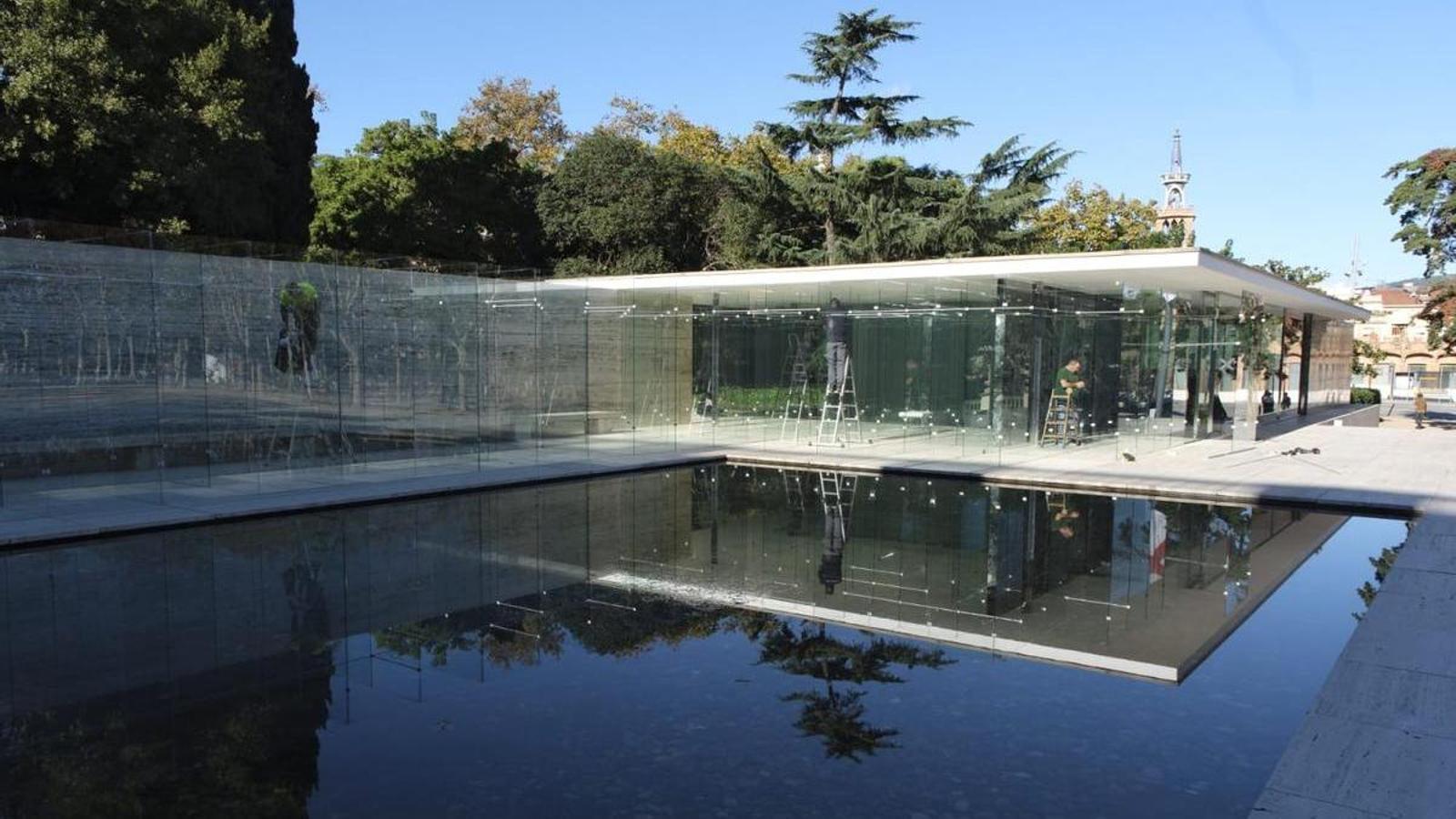
BarcelonaThis Thursday at noon, the Pavilion-labyrinth installation was inaugurated at the Mies van der Rohe pavilion, an artistic intervention by the Argentine architect Ciro Najle and the Barcelona-based architect Josep Ferrando. The work consisted entirely of 300 glass sheets, which took more than a week to install, and which played with the empty space of the pavilion, considered the first stone of 20th-century modern architecture. The installation, however, lasted a short time. That same Thursday afternoon, the wind blew with such force, especially on Montjuïc, that it broke several glass panes and damaged others, which forced the fragile installation to be closed yesterday for safety reasons. There were no personal injuries. “The Mies van der Rohe Foundation, taking into account the fragility of the intervention, had already established a specific safety protocol for visits to the space,” assert sources from the house.

This Friday the damaged glass sheets were being repaired, and the Mies van der Rohe Foundation has confirmed to ARA that the exhibition will be visible starting Saturday, after technical work. "Safety criteria linked to weather alerts will be reinforced," they say from communications. Visits can be made, as is usual in this space, in groups and with prior reservation. It is scheduled to be open until November 22nd.
The intervention invites one to rethink the space and places different layers of reality in an iconic architectural space: "Transparency as a disturbing limit," the authors announced. The intervention raises tensions between the interior and exterior space, geometry and architecture, solidity and weightlessness.
