The 17-A film that explains the attacks only from the police point of view
'Cronos' dramatizes the events from the narrative and very emotional perspective of the Mossos d'Esquadra
-
CAT -
CAST
- Director: Fernando González Molina. Screenplay: Alberto Marini based on the investigation by Nacho Carretero and Arturo Lezcano González.118 minutes. Spain (2026)With Enric Auquer, Diana Gómez and Mónica López
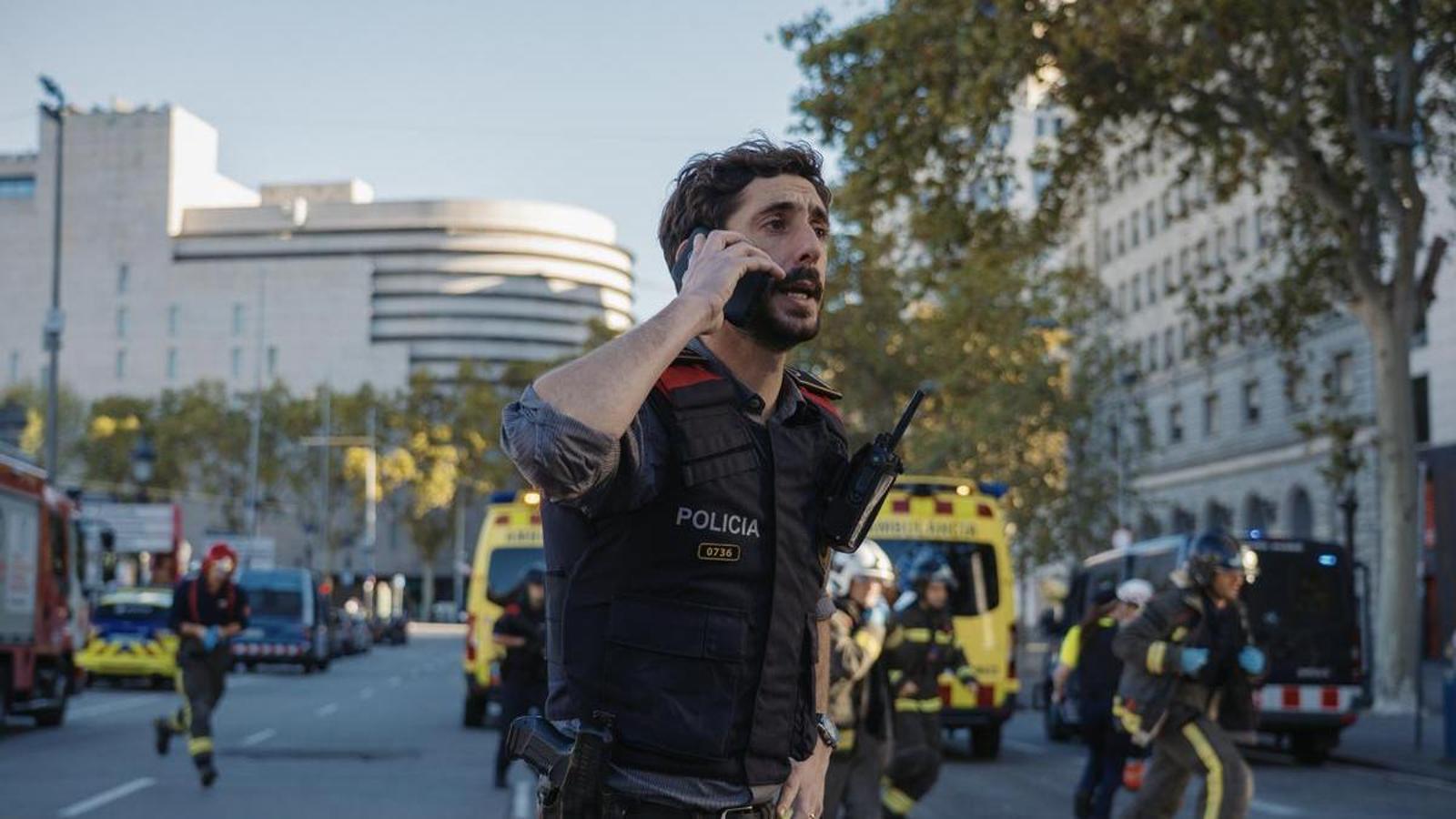
In a country like Catalonia, built politically from a critical consciousness towards the police, few actions have received more consensus than that of the Mossos d'Esquadra in the face of the attacks of August 17, 2017, in Barcelona and Cambrils. That is why Cronos is possible, a film with the vocation of reaching a wide audience in which these events unfold only from the police perspective. A model common in Hollywood that screenwriter Alberto Marini brings to our context, insisting on the human (and not superheroic) dimension of the protagonists, and director Fernando González Molina orchestrates with more efficiency than personality. The goal is to recreate those fateful hours that everyone vividly remembers in the form of a thriller that is realistic (that is to say, with many exterior locations) and loaded with emotions.
Despite a fairly choral view of the lead roles, most of the action follows three characters. Jaume, the head of operations, who is embodied by an Enric Auquer who seems overwhelmed by the role. Daniela, the communications manager and therefore a surrogate for Patrícia Plaja, who is brought to life by a convincing Diana Gómez. Through her, the only political reading of the film is pointed out, one that denounces the interference of a Spanish government incapable of letting the Mossos act on their own. But also of a Generalitat that wants to control the police narrative. It is true that Cronos avoids the gruesome representation of the violence of the events. But it also ends up reducing the victims to anonymous corpses that only serve to show the pain of the Mossos. In a proposal that underlines the emotions of all the police officers, the most penetrating anguish is that of the third protagonist, Anna (Mónica López is always good), who introduces in a schematic but clear way the wound still open in Ripoll.
