Pilar Rahola, Cadaqués and the others
-
CAT -
CAST
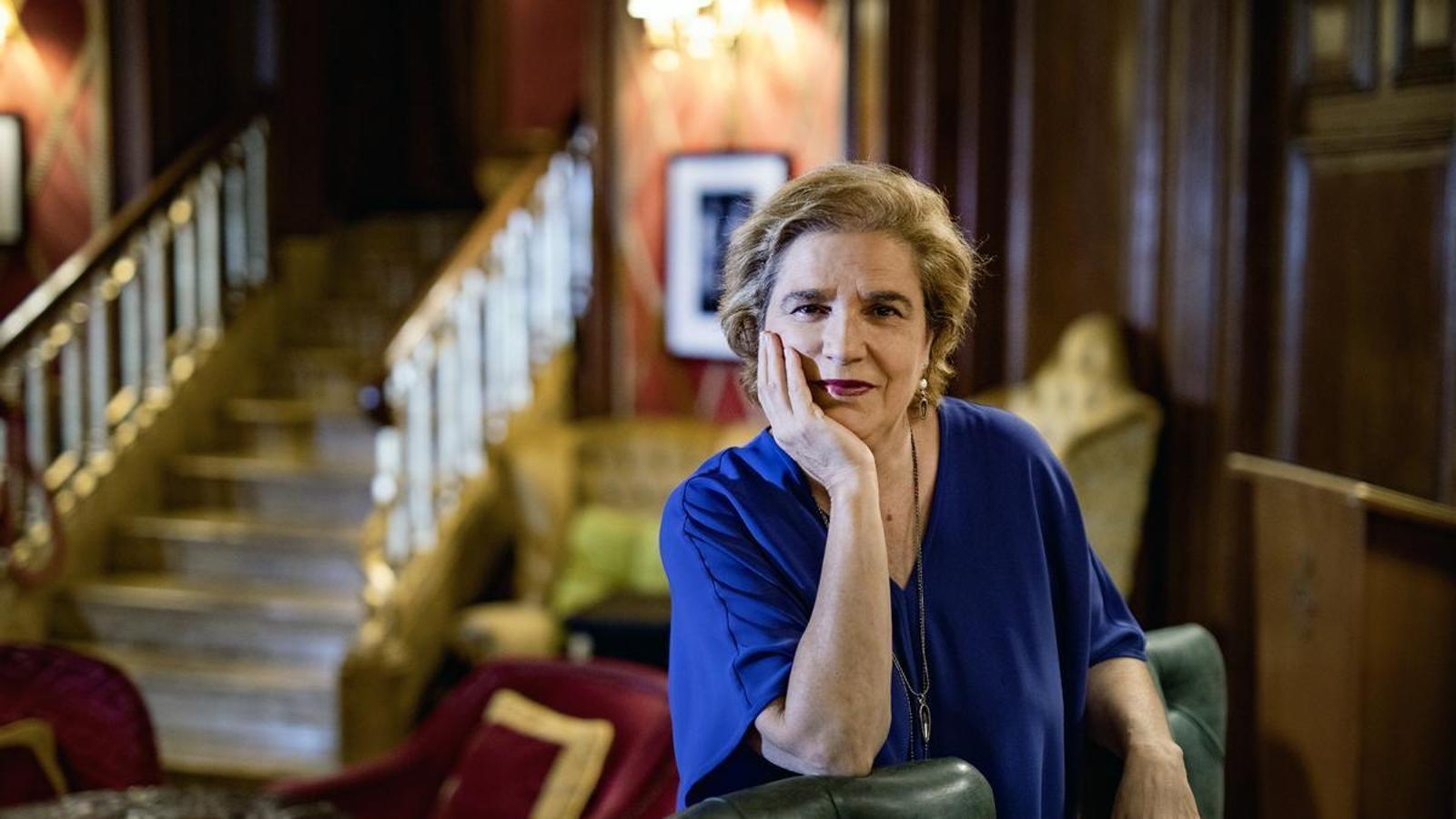
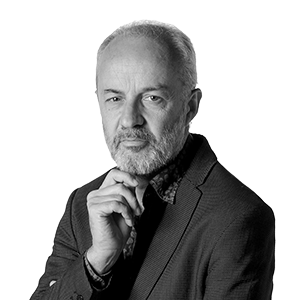
Pilar Rahola Martínez reached a moment, during the 'Procés', when she became the organic and ubiquitous talk show guest of the independence movement. She was everywhere, pontificating about everything, supposedly knowing everything. Until everything went to rack and ruin and she disappeared. Some illustrious Rahola ancestors who preceded her were also, in their time, prominent figures: lawyers, politicians, businessmen, doctors, bankers, architects, editors... And they also disappeared, of course. Nothing lasts forever. We could say that she is the last—so far—of an energetic and influential Empordà lineage. The journalist and writer Xavier Febrés reviews their relevant figures in Els Rahola, una saga infinita (Editorial Gavarres).
In Icelandic, Rahola means squirrel skin. There they write it Rakola or Rahjola. The Catalan surname was born in Cadaqués, from where it expanded to Roses, Girona, and Barcelona. The Raholas were related to the Serinyanas and the Escofets, two surnames also relevant to the most remote town in the Alt Empordà of Cap de Creus, for centuries more connected by sea than by land. Even today, by road, 115 curves separate it from Roses.
Until the arrival of phylloxera (1883) and steam navigation, in which Cadaqués did not know how to invest, it was a thriving town. It was the second-largest cargo port in Girona, only behind Sant Feliu de Guíxols. In the 18th century, it had soap, brandy, salted fish, preserves, and barrel-making industries. In the 1821 list of 59 skippers, captains, and ship owners, four Raholas appeared. The set of vessels provided work for 524 professionals, to which the fishermen had to be added. The sea—and the vineyard—was a source of life and wealth.
When that world collapsed, the population, like a castaway, clung to tourism as a lifeline. In 1905 the telephone arrived there and in 1908 the road was inaugurated (until then, the carriage needed more than 5 hours to reach Figueres). Electricity began to flicker there in 1915. In 1930, about thirty Cadaqués residents, including six Raholas, asked the City Council to carry out a project for drinking water and a sewage network because "today tourism constitutes the main and almost only source of wealth for our town"Among the first prominent Raholas are Frederic and Víctor Rahola Trèmols, born in Cadaqués in 1858 and 1866. The elder, a lawyer, economist, and poet, was a deputy and senator at the turn of the century for the Lliga, and was key in bringing electricity, the telephone, the telegraph, and the postal service to the town. The younger, a doctor, made a fortune on the stock market and, from a certain point on, dedicated himself to hosting intellectuals in Cadaqués: Puig i Cadafalch, D'Ors, Picasso, Pla...
Pere Rahola Batlle, born in 1807, a younger son of the shipowner Pere Rahola Casañas, founded the branch of the Raholas of Roses. His son Josep Rahola Berga, affiliated with the Lliga, would be its mayor (1907-1912), and the other son, Pere Rahola Berga, was a deputy to the Cortes. A nephew of the latter, the bachelor and wealthy Pere Rahola Molinas, a schoolmate of Cambó, became an ephemeral Minister of the Navy (September-December 1935), vice-president of the Congress, and president of the Ateneu Barcelonès. The house of this branch of the Raholas, in the Plaça Catalunya in Roses, is now municipal property and was intended to house the archive, but for the moment it is empty. Pere Rahola Molinas was a first cousin of Pilar Rahola's great-grandfather.
Other Raholas, small shipowners and sailors from Cadaqués, ended up first in Castelló d'Empúries and later in Roses. Among their descendants are Roser Rahola d'Espona, married to the historian Jaume Vicens Vives and who died in 2020 at 105 years old, and Frederic Rahola, Minister of Governance with the restored Generalitat under Tarradellas and the first Ombudsman (Síndic de Greuges).
The list could be much longer, but if one name cannot be missing, it is that of the meritorious Carles Rahola, a moderate Catalanist, historian, and journalist –who wrote for L’Autonomista–,executed by firing squad by Franco in Girona on March 15, 1939. He is the martyr Rahola.
