Falangists and good witches in the middle of the civil war
At the core of 'Cosamala', the long-awaited second novel by Alana S. Portero, there is a handful of women who resist being subjected in the Andalusian town of Guillena
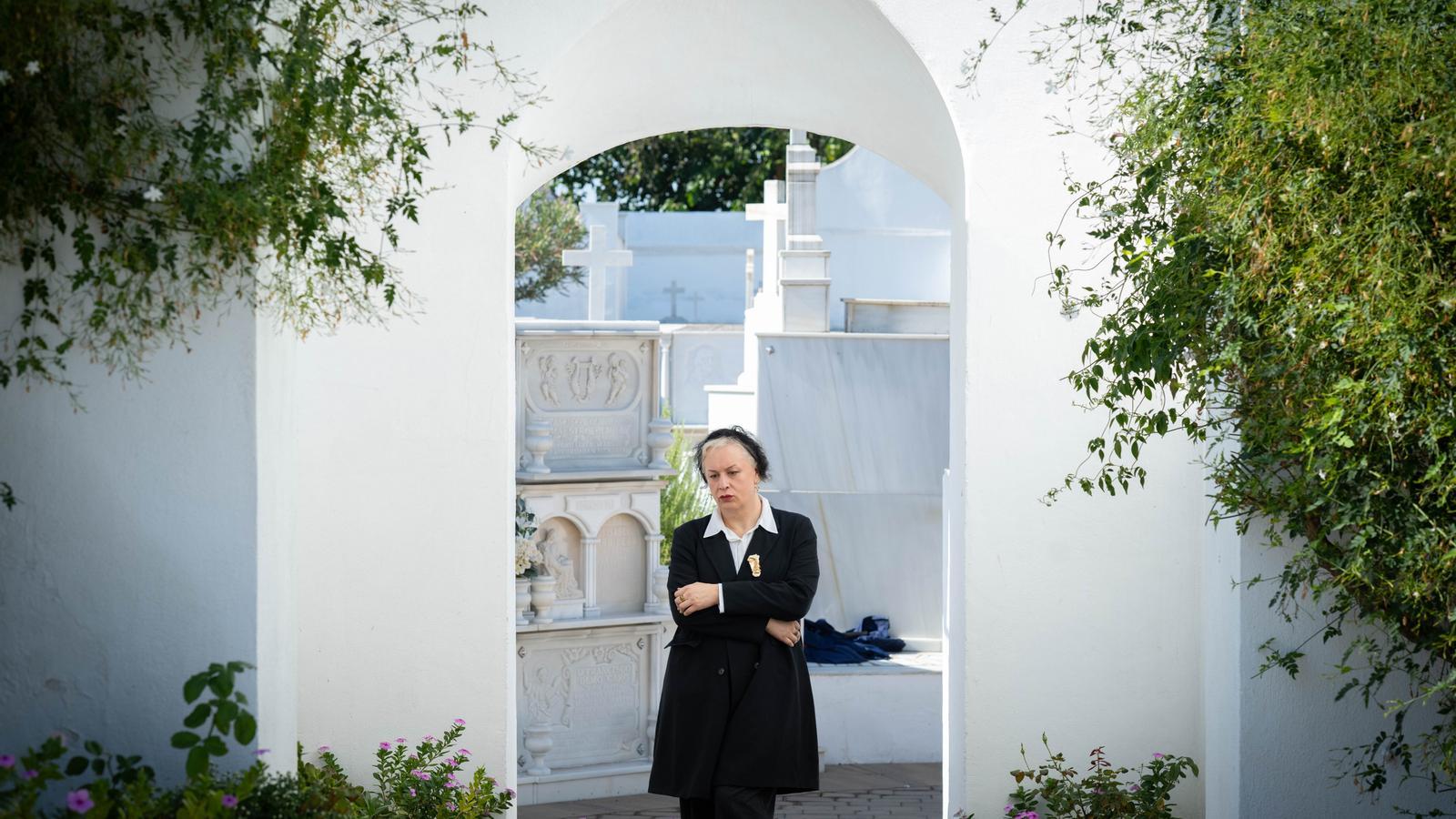

- Alana S. Portero
- Seix Barral
- 270 pages / 20.90 euros
I would not want in any way to put myself in the shoes of any of those authors who triumph with their first published book –I certainly do not dream of resurfacing like Carmen Laforet–, because the generated expectations are so high that it is very difficult not to fail. Even though the success that the writer Alana S. Portero (Madrid, 1978) obtained with her first novel, La mala costumbre, was more than justified, now the publication of her second, Cosamala, puts her in a complicated position. Will the author revalidate her triumph or will she fall?
The year 1937. A fascist column advances through the villages sowing terror and barbarism. Upon arriving at a town in the province of Seville, Guillena, one of them turns out to be a fellow villager who, when the town stood up against the coup d'état, narrowly escaped being shot. Now that vengeful man returns with a pistol and a blue shirt that is too big for him under the orders of Ramón de Carranza, Marquis of Soto Hermoso.
Cosamala is based on a true story, that of the repression suffered by that town at the beginning of the Civil War and, specifically, the more than tragic case of the so-called 17 roses of Guillena, detained, humiliated, and finally executed by Falangist forces, only to be thrown into a mass grave. One more of the many displays of cruelty from those who came to save the homeland from the red threat, something that some aspire to do again now. The case has even inspired a documentary, Guillena 1937, directed by Mariano Agudo in 2013.
Resisting submission
At the core of the novel is a handful of women who refuse to be subdued. Including Tórtola, a trans woman who, when the column advances towards the town, raises the cry of alarm: “La Tórtola warns everyone, knocks on doors and windows; some were already waiting, others were sleeping peacefully. From the north, entering by the Castilblanco road, the column advances and is almost reaching Guillena. By the time she manages to reach her house, with mud up to her knees, her hair like a madwoman, her skirt twisted”. And the men flee the town with nothing but their shirts on their backs, wherever it is they won't be found. When they reappear in the story, they no longer have any strength left: “They are famished, hunched over; for some, the thinness gives them a wild nerve, a scavenger's fury disputing the last corpse before winter; for others, it only warns them day by day that they are fading into thin air”.
But the great contribution of this novel is not them, but the brave women who, through sisterhood, with magic potions and a Herculean resistance, stand up to the invaders led by Trinidad la Camacha, who organizes offerings to the world of the dead –the underworld–, in a clear tribute to the thousands and thousands of bodies of murdered people still unaccounted for: “What a pity they have so little time left, it would have been nice to grow old together, to shroud and bury one another until the last one had someone to tell the secret of the ground to”.
Alana S. Portero proves to be a thoroughbred writer and passes with flying colors in this second novel. In La mala costumbre she was convincing due to the subject matter addressed —transsexuality—, but also due to her rich and suggestive language. In Cosamala, this language is exaggerated to the point of becoming almost Lorquian and, in fact, we find verses by the poet from Granada interwoven throughout. The linguistic commitment serves the plot well, a story of witches and ghosts lubricated with organic sensations and tears of blood. However, it is a bit cloying, because it bursts at the seams. With more linguistic restraint, the story would have worked better, but the universe created by the author is convincing.
