A documentary reviews the case of the 9/11 impostor from New York
'The Survivor', by Kike Maíllo, delves into the story of Tania Head, the woman who pretended to be a victim of the Twin Towers attacks
-
CAT -
CAST
BarcelonaThe story of Tania Head struck North American society in the early 2000s, when Americans were just recovering after the September 11, 2001 attacks against the Twin Towers of New York and the Pentagon. For years, Head posed as a survivor of the attack, appeared publicly on numerous occasions explaining the false story of her trauma, led guided tours of New York's ground zero, and even became president of the World Trade Center Survivors' Network, the association of attack survivors. In 2007, an investigative report by The New York Times revealed that everything Head had explained was a lie: she neither worked in the Twin Towers, nor had a husband who had died in the attack, nor had she been rescued by a man with a red scarf. After that revelation, Tania Head disappeared.
Since then, filmmaker Kike Maíllo has had the desire to approach Head's story to delve into how some people are capable of sustaining a lie of such magnitude and how society responds to it. Maíllo has done so through a documentary film titled "The Survivor. 9/11 was just the beginning" and produced by Sábado Time with the participation of 3Cat and Filmin. The documentary premieres this Friday, will be available on 3Cat on September 8, and on Filmin on September 11. The piece revisits the idea of false identities and collective deception, a theme that Maíllo already addressed in the documentary Oswald, the Forger (2022).
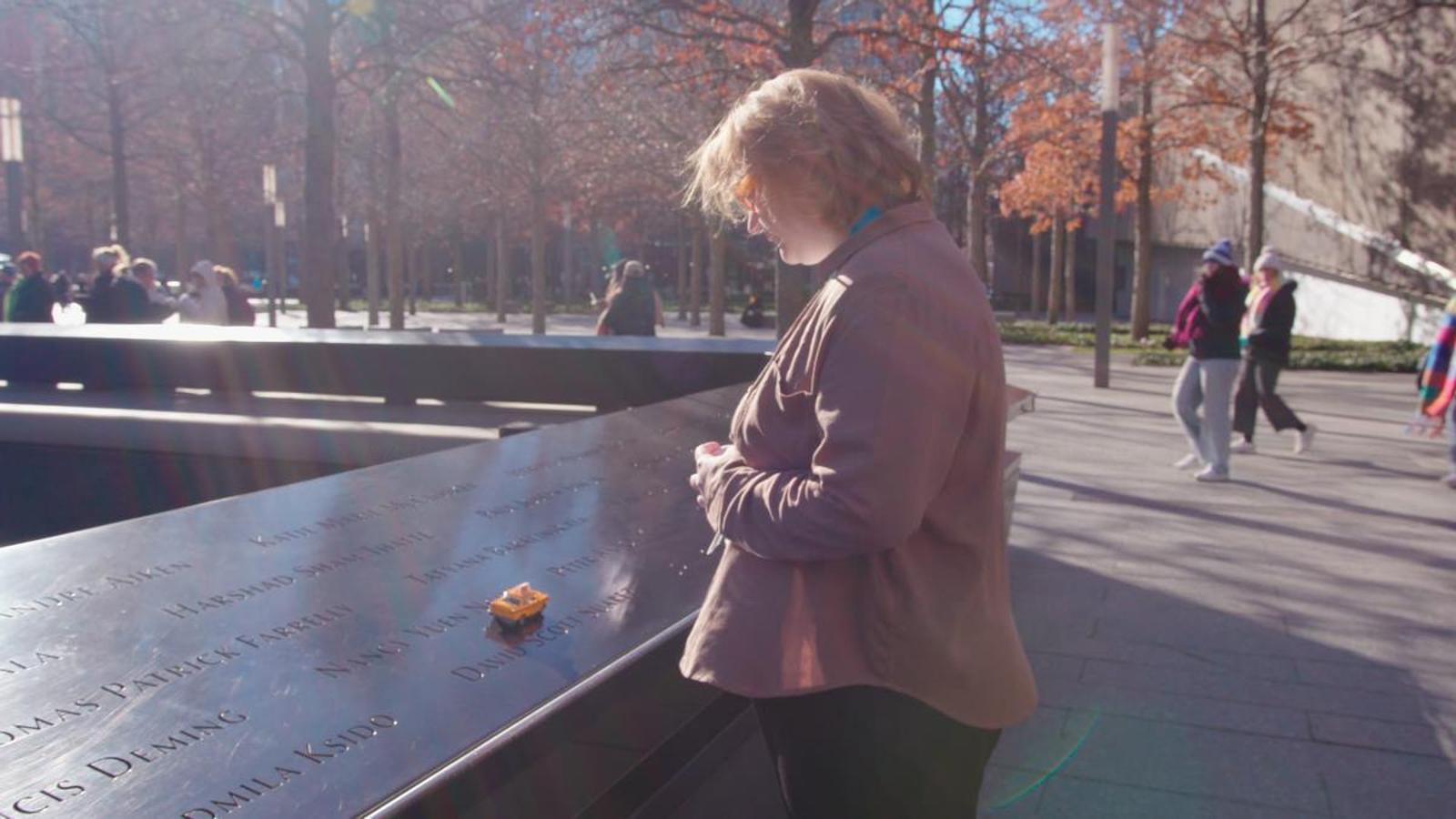
"In a way, with Tania's character, there was a continuity with what we did with Oswald. In a charismatic and immoral sphere, they worked in the same way, and this kind of contrast seemed very magnetic to me. In Oswald's case, he used lies to get money, and in Tania's case, to gain a sense of belonging and esteem," explains Maíllo. The documentary, scripted by Markos Goikolea, features the participation of several 9/11 survivors, who recount how they met Tania and how she infiltrated among the victims of the attacks. For a year and a half, the documentary team spoke with associations to find these witnesses. Based on their information, "The Survivor " recreates Head's character through an actress (Hannah Becker).
"When we were investigating, we realized that Tania used the same elements that we develop in cinema when constructing a character. She created a fiction based on a plausible biography and rehearsed. That's why it was very comfortable for us to explain the construction of a fictional character through an actress who simulated her. It's a very attractive game of mirrors," highlights Maíllo. The documentary's objective, he adds, was to "go beyond the morbid" and approach the facts through a more anthropological and sociological perspective, citing other cases of false traumatic experiences such as, for example, Enric Marco. "What interested me most was exploring how a mask is constructed and how others accept it. Tania's story of overcoming, and the fact that she had her own light, were absolutely necessary at that moment. American society bought her story without questioning it much," reflects the filmmaker.
The motives for a lie
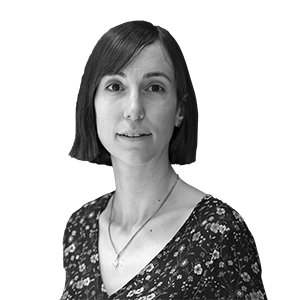
The survivor delves into deception through interviews with philosopher Joan García del Muro and psychiatrist Jean Kim, who coined the term "9/11 sign" to refer to people who impersonated 9/11 survivors. "It's a fact that partakes of universality. We all lie constantly, in big or small ways, when telling our anecdotes. Why do we do it? There are certain personalities that, by victimizing themselves, create a space where they are adopted and heard," points out Maíllo. To trace Tania Head's story after her lie was revealed, the documentary team also counts on the participation of Marta Forn, a former journalist for La Vanguardia" who discovered the impostor's real identity. Head is actually Alícia Esteve, a woman born in Barcelona and daughter of businessman Francisco Esteve i Corbella.
"Tania is a very mysterious character, a reclusive woman who is always disappearing. For many years, Marta Forn has been very obsessed with the case," says Maíllo. Through the journalist, the documentary manages to get closer to the protagonist by accessing people in her circle. However, Esteve declined to participate in the film. "We immediately understood that it was not necessary to interview her, and that it could even be counterproductive from the point of view of her health – points out the filmmaker–. We are not journalists, and we don't want to ruin her life again. That's why we hide information such as what she is doing or where she works. We have the feeling that she has paid an enormous price for those events."
