Carlo Ginzburg dies, the great historian who looked where no one looked
He defended that the past had to be traced like a detective would to find what power had erased
-
CAT -
CAST
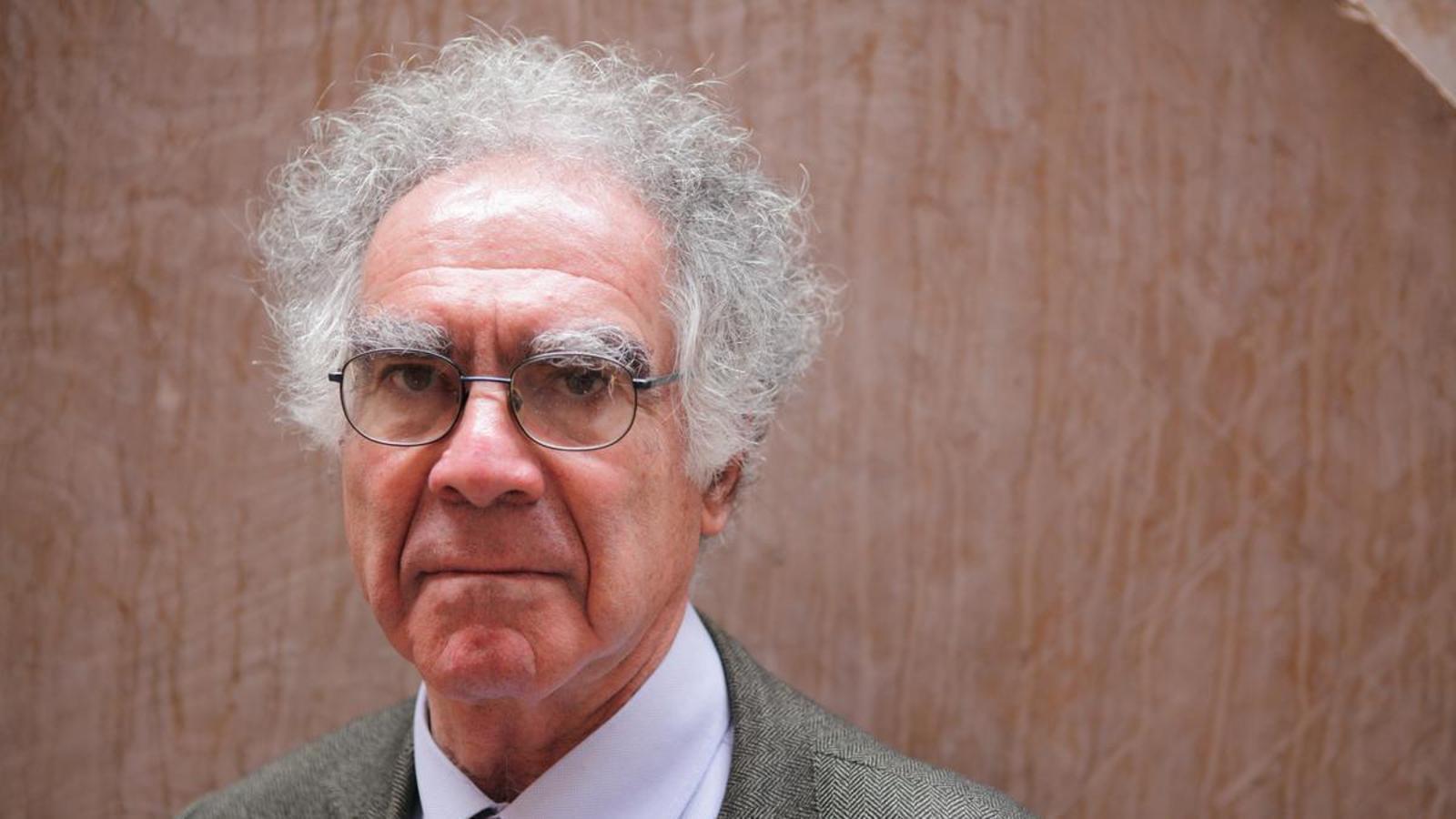
BarcelonaThe Italian historian Carlo Ginzburg has died at the age of 87, as reported by the newspaper Corriere della Sera. Born in Turin in 1939, Ginzburg was a meticulous teacher, with an insatiable curiosity, who revolutionized historical studies. He grew up in a home that strongly fueled his vocation. His father, the philologist, journalist, and editor Leone Ginzburg, was a prominent anti-fascist who died tortured by the Nazis in 1944. His mother was the writer Natalia Ginzburg, author of seminal works of Italian literature such as Family Lexicon. The historian would confess years later that his mother's passion for literature, combined with the stories he heard as a child about the persecutions and repression of the war, was decisive for his future.
Ginzburg found new paths that showed that traditional historical methodology is often not enough, and he made available to scholars a mass of documents that no one had analyzed before. "If someone were to ask me what is the meaning of history, I would say it is learning not to take reality for granted," he explained in an interview with ARA. With microhistory, he demonstrated that the lives of anonymous and marginalized figures could help to better understand the past. He published a work that made history: The Cheese and the Worms. The Cosmos of a Sixteenth-Century Miller (1976), published in Catalan by Curial. The book demonstrates that the daily lives and ideas of ordinary people also influence and form part of major historical processes. It narrates the true story of Menocchio (Domenico Scandella), a miller from Friuli born in 1532 who could read and write and fiercely defended his own cosmological and religious theories. For this reason, he underwent two heresy trials by the Inquisition and was eventually sentenced to death and burned at the stake.
Ginzburg puts forward the thesis that Menocchio's thought did not come solely from the books he read, but that these readings brought to the surface much older popular and pre-Christian beliefs, transmitted orally from generation to generation. The author directly uses the notarial records of the Inquisition to recreate the dialogues, allowing the reader to grasp firsthand the protagonist's emotions, doubts, and contradictions when facing the inquisitors. Another major study by him in this vein is "The Benandanti" (1966), published by the University of Valencia. It is a profound investigation into the meaning and origin of popular witchcraft through the statements of those accused by the Inquisition, and offers an indispensable immersion into the peasant society and beliefs of the time.
A Sherlock Holmes of history
For Ginzburg, the historian was like a detective searching for evidence. He explained this in books and essays such as Radici di un paradigma indiziario (1979), Miti emblemi spie. Morfologia e storia (1986), Storia notturna. Una decifrazione del sabba (1989), or Il giudice e lo storico. Considerazioni in margine al processo Sofri (1991). The historian compared his work to the method of Sherlock Holmes, created by Arthur Conan Doyle, or to that of art critic Giovanni Morelli, who discovered pictorial forgeries by focusing on how painters drew the most involuntary details, such as fingernails or earlobes. It was necessary to look where no one else looked, tracing the past to find the clues that political or religious power had wished to erase. In the case of the book about the controversial judicial trial against his friend, the journalist Adriano Sofri (leader of the left-wing organization Lotta Continua), he explained that while a judge needs to close the case with a quick verdict of guilt or innocence, the historian has the obligation to constantly review their conclusions and keep the doubt open.
Regarding his academic career, he earned a doctorate in philosophy from the University of Pisa in 1961 and subsequently taught at universities around the world. He was a professor of modern history at the University of Bologna and held the Chair of History of Modern Europe at the University of California, Los Angeles (UCLA), between 1988 and 2006, before returning to Italy to teach at the Scuola Normale Superiore di Pisa. In late 2020, Ginzburg participated in the 10th-anniversary celebrations of ARA with a joint talk with essayist and novelist Siri Hustvedt, titled "Can we imagine tomorrow? The narratives that build the future" and framed within the cycle "IN TRANSIT: Debates for a change of era," curated by the newspaper and Arcàdia.
Ginzburg continued to defend his way of looking at the past and history until the very end. He always remained committed to intellectual debate, published essays, gave interviews, and regularly participated in conferences. Until the very end, his great obsession was the defense of historical truth in the face of the rise of fake news, and in his latest interventions, he argued that history has an unavoidable moral duty to the real facts.
