Audrey Magee: "Fascism does not install itself overnight; it is a slow, almost imperceptible slide"
The Irish writer publishes 'The Commitment', a raw novel about the complicity of civil society with Nazism
-
CAT -
CAST
BarcelonaWhen the Irish writer Audrey Magee (Enniskerry, 1966) was 18 years old, she went to live in Germany for a few months. "I had grown up with a very simplistic Anglo-American view of the war and of Germans: the idea that everything that had happened was because 'they were German,' as if it were an inherent condition and not the result of a political structure," she explains. It was the beginning of an idea she would mull over until she wrote her first novel, The undertaking, which has been translated into Catalan by Josefina Caball and published under the title El compromís (Periscopi / Sexto Piso). Living among Germans dismantled her prejudices: “I realized that they were extremely kind people, who had no horns or devil's tail.” It was the 80s and there were things that the author of La colònia (Periscopi) recognized because they were shared. "There was the silence that I understood perfectly because I had grown up with it, and the silent reproach of children who had inherited the legacy of the Holocaust," she says.
Some time later, Magee accompanied an American Jewish friend to visit the Dachau concentration camp. As they found the monument closed because it was a Monday, they decided to walk around the perimeter of the concrete walls and barbed wire. There they met a sixty-year-old neighbor who was tending her garden. The conversation was very tense because the writer's friend reproached the woman for her passivity during the war. "She defended herself by saying: 'What could I do? I was a child and I didn't know what was happening.' And he replied: 'Of course they knew, it was raining ash!' – the writer recalls –. It made me think a lot about the nature of innocence and whether we really have a choice when we say we don't have one,” she assures.
The definitive push to write the novel was a dinner at a restaurant in West Cork run by a Japanese cook and her German husband. The man, about seventy years old, confessed to her that he had been a fighter pilot on the Russian front, that he hated war, and that he had married a stranger just to get a honeymoon permit in exchange for ceding her a pension. With these elements, she began to articulate the uncomfortable questions that are glimpsed in the text: "How does fascism work? Does it work because we have no alternative or because we make small decisions along the way that end up feeding the system? Fascism doesn't install itself overnight; it's a slow, almost imperceptible slide," states Magee.
What would we do?
The protagonists of The Commitment are Katharina Spinell, a young woman living in Berlin, and Peter Faber, who is fighting on the Russian front with the Nazi army. Like the marriage Magee knew, they marry for convenience. Katharina and her parents benefit from Nazi Germany: they keep clothes, jewelry, and even a spacious apartment that had belonged to a Jewish family. Her life contrasts with the brutality of the war that Peter is experiencing. The moral counterpoint is Mrs. Sachs, a neighbor who refuses to participate in the system and therefore renounces all the comforts she could derive from it. The writer does not pass moral judgment, she simply makes the characters dialogue, and acknowledges that most of us move in a dangerous "gray zone". "Writing the book forced me to analyze where I would place myself on this spectrum. I asked myself if I would have the courage to live like Mrs. Sachs. I want to think so... But what if my son died of cold and I didn't have a winter coat? Would I take one plundered from a Jewish family? Probably, yes," she reflects.
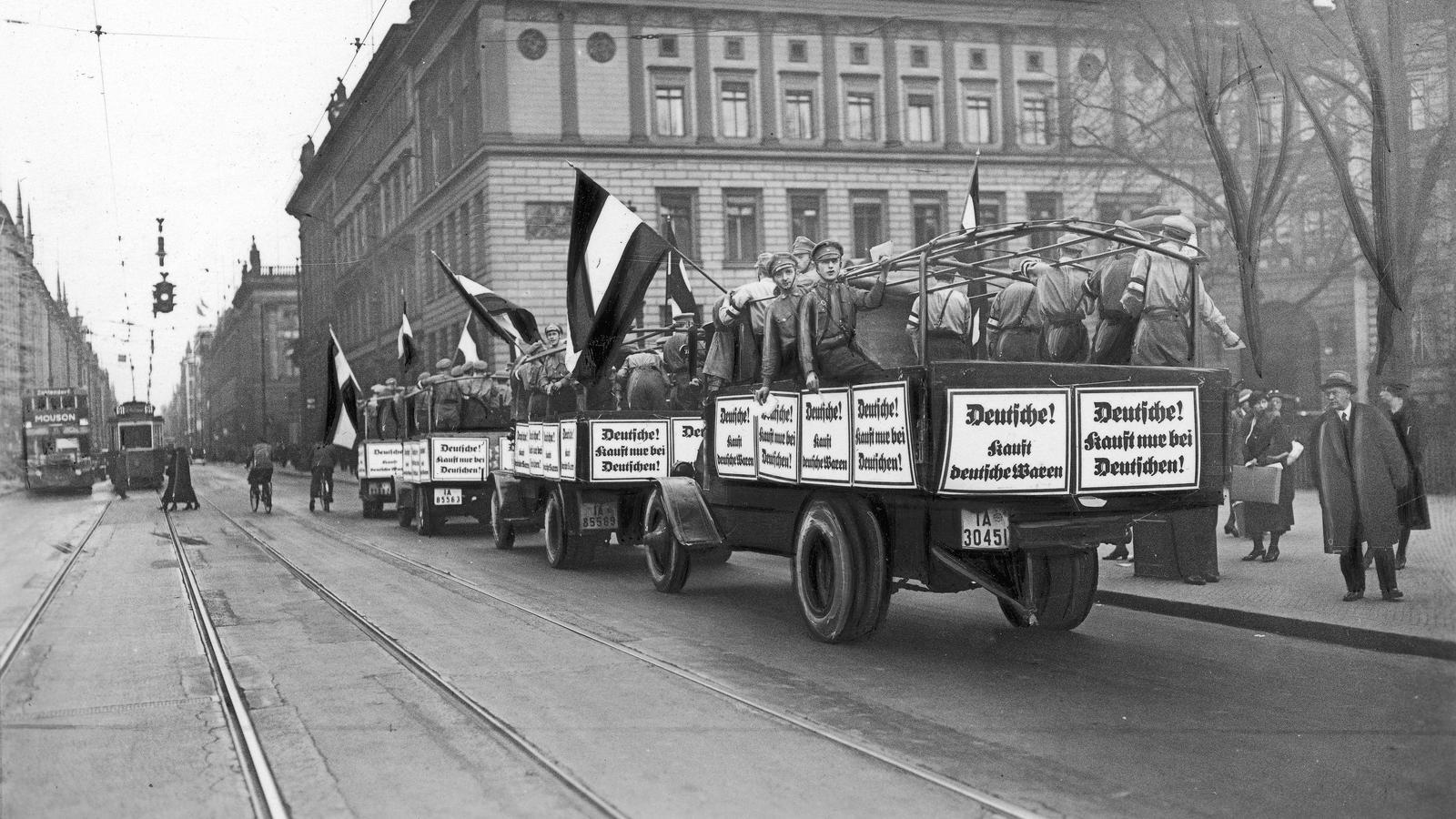
This daily complicity is, according to the author, what makes fascism so effective. "Fascism attracts those who seek social advancement that they could never have aspired to in a democracy – she explains–. People close their eyes because they want what is offered to them. Katharina wants the chocolate cake, the designer clothes, the luxury apartment, and the status," she points out. She is also a woman who endures everything because she is a mother. Today we could find parallels: "Hitler and Goebbels pointed to the Jews; nowadays, the common enemy is usually immigrants," she warns. From here, the system rewards and socially promotes those who act against this group.
Each person must assume their responsibilities
In the United States, the writer sees a drift towards authoritarianism that began with the control of the judiciary and the rhetoric of social division between an "us" and "them." "Once you pit people against each other, you gain control," she states, citing historical examples like Henry VIII in Ireland or the genocide in Rwanda. Similarly, she compares current American immigrant detention centers to the early stages of concentration camps: "Obviously, there are no gas chambers, which came later, but the initial dynamic of detaining and confining entire groups is very similar." The novel's war chronicle is extremely raw. After covering conflicts in Bosnia and Northern Ireland as a journalist, Audrey Magee recalls that her male colleagues were interested in the specifics of ammunition or tanks, while she "could only focus on the mangled corpses."
When she presented the novel in the United States, the public reproached her for the rawness of a redemption-lacking ending. The author, however, defends it: "There can be no redemption for the Holocaust; that is Germany's legacy. Once you get on that merry-go-round, you have to take responsibility for the final outcome you helped construct. It's very interesting to see how each of the novel's characters responds to this burden: who is capable of facing the truth and who prefers to pretend nothing happened. Some continue with their lives cynically, and others are completely marked. Responsibility towards others is something that should be valued from the very beginning," she argues. Managing or ignoring the Holocaust is an issue that Germany is still grappling with today.

