Alicia Giménez Bartlett: "Of Petra Delicado I like that she does not want to have a feeling of guilt and prioritizes freedom"
The writer and her character coincide in the vital moment, both have been widowed and they face it with rage
-
CAT -
CAST
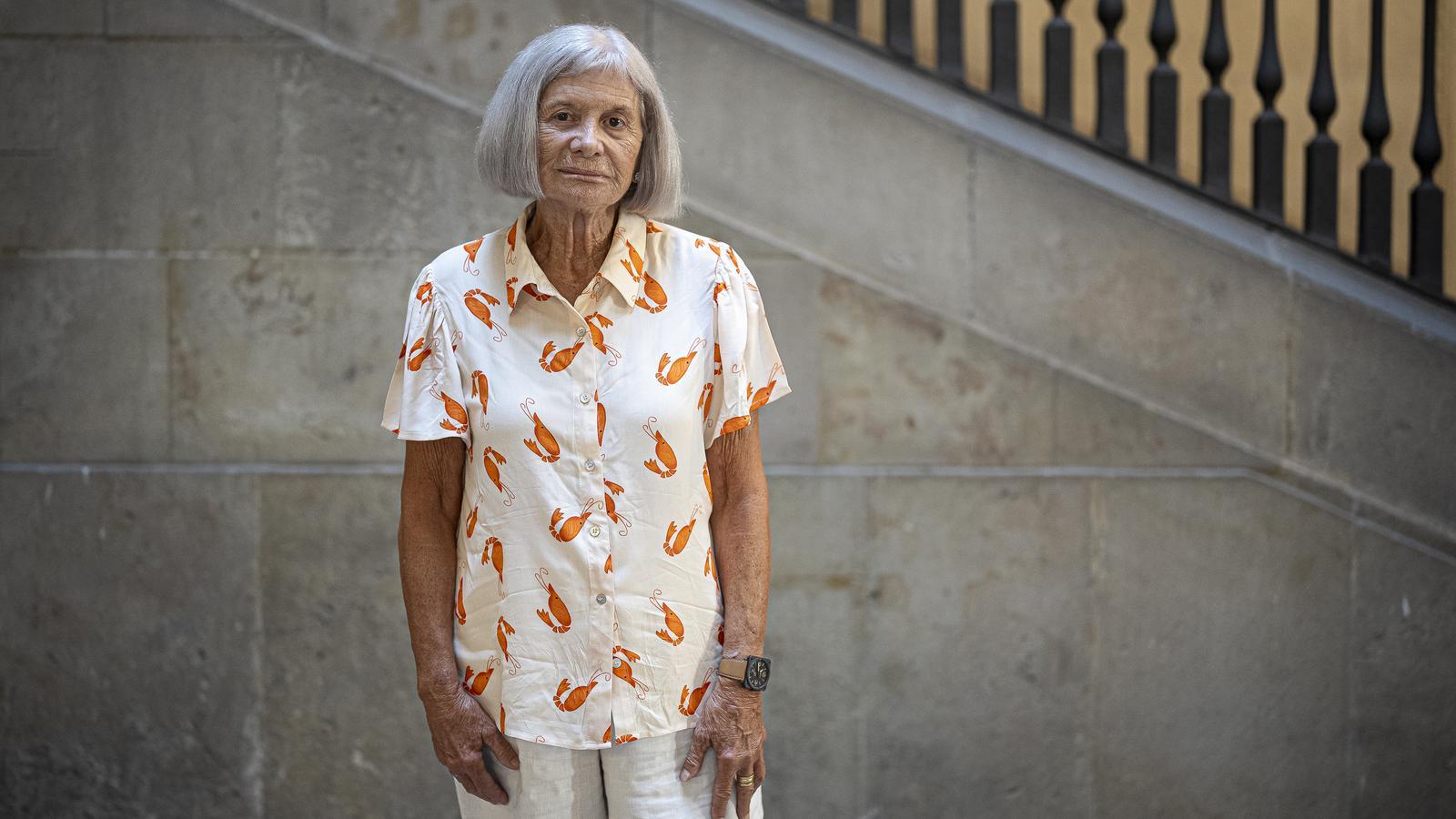
BarcelonaAlicia Giménez Bartlett (Almansa, 1951), the great lady of crime fiction, returns with a new intrigue starring the iconic inspector Petra Delicado. She, who is one of the first female police officers in Spanish literature, having been born in the pages of Ritos de muerte (1996) thirty years ago now, faces grief and the power of the Church in Bajo el cielo infernal (Destino).
The new novel has certain parallels with the author's life. After the accidental death of the inspector's husband in the previous installment, Giménez Bartlett admits to having used fiction as a personal escape route. "The death of Petra's husband coincides with that of my husband, and it was a way of channeling those feelings, mainly of anger, that I felt," she explains.
The feeling of anger and rebellion fits perfectly with the character of Petra Delicado. “More than sadness, it is a deep sense of injustice. In Petra's case and in mine, it is rebelling against a premature death. Petra's husband dies accidentally; mine was not like that, but he was 73 years old. Nowadays, a 73-year-old person is not old,” says the writer. For Giménez Bartlett, the best way to combat the emptiness of loss has been constant activity and work. "I don't know how grief is managed; I still don't know. In my case, by working and writing; in Petra's, by searching for the culprit of a murder," she explains.
On this occasion, the police investigation moves the action to the La Mina neighborhood, in Sant Adrià de Besòs, and to a group of vulnerable young people who turn to the church in search of help. "The Church is a very powerful institution and often forgets its task. It is necessary to bring dignity and life to people before bringing souls to heaven," the author states. In this sense, she highlights the difficulty of penetrating ecclesiastical structures and the hypocrisy of certain estates. "The seal of confession is inviolable to a judge. It is brutal. A priest can know who the murderer is and nothing happens, he does not have to say it," she laments.
Pioneer of the crime genre
A pioneer of crime fiction with a female voice, Giménez Bartlett explains what her beginnings were like in a traditionally male genre. "There were few of us. There was, for example, Maria Antònia Oliver, but she quit after two or three novels, and then I was left alone," says the author, who recalls the role of her agent, Carme Balcells, in her persistence. Giménez Bartlett was coming from publishing an academic work on Virginia Woolf when she felt the need to explore new paths: "I said: Gosh, how boring, right? I feel like doing something fun," she explains. Without prior experience in the genre, she tried her luck: "Carme Balcells told me: 'Did you have a good time? Well, write another one'," she adds.
Although the author has won major awards, such as the Planeta and the Nadal with other works, she acknowledges the crucial role of her most iconic character: "Petra has given me translations into many languages and a lot of popularity". One of the traits that most fascinates readers is her emotional independence. "The first thing Italian readers like is that she goes guilt-free, without feelings of guilt," she says. According to Giménez Bartlett, this attitude contrasts with the pressure that many women currently face. "I have friends who live with constant suffering: if they are at work they think about the children, and when they are with the children they suffer for work. Petra does not want to have this feeling of guilt, she prioritizes freedom and is brave," she affirms.
Finally, the author claims authenticity over superficial sentimentality in moments of pain or loss. "I detest sentimentality. I believe that sometimes a swear word can express a feeling very well, even a loving one," she asserts. Regarding the future of the character who has accompanied her for decades, the author is clear about what the limit will be: "In any case, I would write one more farewell novel. If there comes a point where I realize I am repeating myself, it is better to cut it off and that's it".
