Antoni Gaudí died with 3,000 pesetas in the bank and the house in Park Güell
Gaudí named three trusted heirs and a substitute to reveal his will, which from now on is public
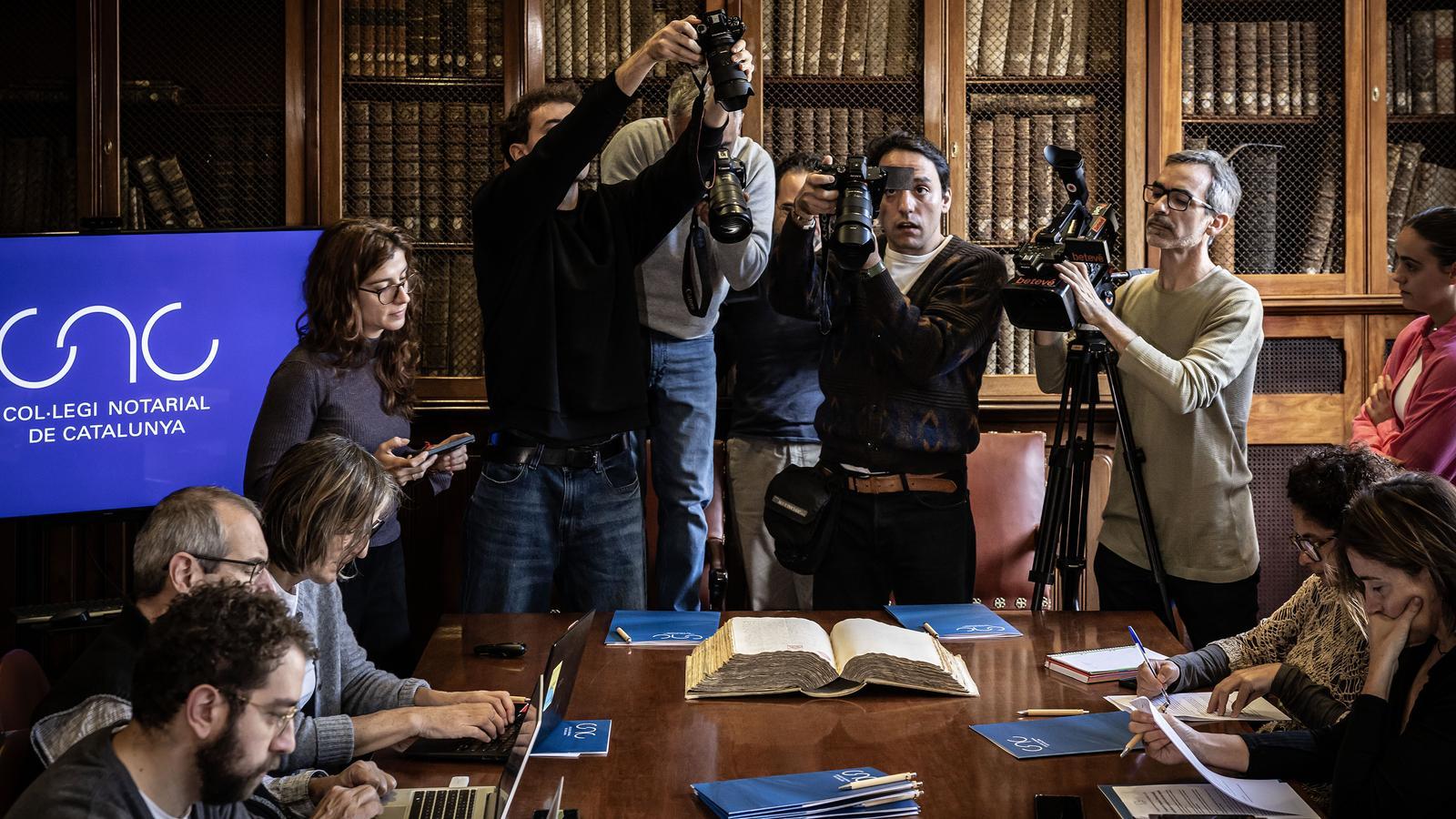

BarcelonaAt the time of his death, Antoni Gaudí had 1,870.08 pesetas in a current account at the Bank of Spain and 1,121.54 pesetas in a Caixa de Pensions savings book. In addition, he owned his house in Parc Güell, which was valued at 45,000 pesetas, from which a 2% charge in favor of the Güell family had to be deducted. Today it may seem like a modest inheritance for a famous architect like Gaudí, but it must be taken into account that Gaudí had sold his assets to dedicate the proceeds to the works of the Sagrada Família. A century after the reading of Gaudí's will, the text has become a historical and public document, which can be consulted at the Historical Archive of Protocols of Barcelona of the Association of Notaries of Catalonia.
Its content is not new. The former director of the Gaudí Chair, Joan Bassegoda Nonell, had located documents at the Tax Office in Reus and at the Archbishopric of Tarragona, and described Gaudí as a “millionaire” in an article published in La Vanguardia in December 2000, in which he calculated that the assets at that time were equivalent to 13 million pesetas. At today's exchange rate, the 3,000 cash pesetas would be equivalent to 8,500 euros, but Gaudí would certainly be a millionaire due to the value of the property in Parc Güell.
Copies of Gaudí's inheritance had already been received by the Construction Board of the Sagrada Família and the Friends of Gaudí association. It is a document issued by the Ministry of Grace and Justice, which appears signed by the head of the General Registry of Last Will Acts, who at that time was Manuel Azaña Díaz –who ten years after Gaudí's death, in 1936, would become president of the Second Spanish Republic–. As time goes by, subsequent documents related to Gaudí will be available for consultation.

The history of Gaudí's will dates back to the Malta fever he contracted in the summer of 1911. The illness forced him to abandon the works of the Sagrada Família and move to the Hotel Europa in Puigcerdà to try to improve thanks to the healthy Pyrenean air. He made the trip accompanied by his friend, the doctor Pere Santaló Castellví. "He made the will on October 9, 1911, but we do not have the original of the will because it burned inside the Puigcerdà archive during the Civil War. However, since the inheritance deed was signed in 1926, the notary who signed it did see the copy of the will and reproduces it in the inventory, which is why we know what the content of this will was," states the technical director of the archive, Antoni Albacete. On the other hand, Bassegoda pointed out in his article that six shares of the Riudecanyes reservoir were omitted by mistake in the inventory. For this reason, on January 13, 1928, the vicar of the archdiocese of Tarragona, the Reverend Manuel Borràs Farré, on behalf of the executors, asked the Tarragona real rights tax liquidator for the amount of these rights to "proceed with the assignment of the shares to the archbishopric".
As Antonio Albacete says, this deed is the "negative of the will". When Antoni Gaudí died, on June 10, 1926, he had no descendants who could inherit his assets. His will, however, presented a legal peculiarity: it did not directly designate the people who were to receive the inheritance, but instead named three trusted people and a substitute. These people had to communicate, after his death, what his last will had been. The three trusted heirs were the priest of the Sagrada Família, Gil Parés; the doctor Pere Santaló, and the architect and collaborator Francesc Berenguer. Domènec Sugranyes had been named substitute for Berenguer for the works of the Sagrada Família and also appeared as a substitute in the will.
The wish they conveyed to the notary Lluís Rufasta was to allocate Gaudí's estate to the works of the Sagrada Família. When Gaudí made his will in 1911, his niece was still alive. According to the hypothesis presented this Monday at the Association of Notaries of Catalonia, Gaudí would have intended to leave her a part of the estate. Since she died in 1912, the architect would have communicated to his trusted heirs that everything should be allocated to the Sagrada Família.
