Joan Anton Català: “At 65 years old I am at the best professional moment of my life”
At 46 years old he left a great job and became self-employed in the middle of the financial crisis
-
CAT -
CAST
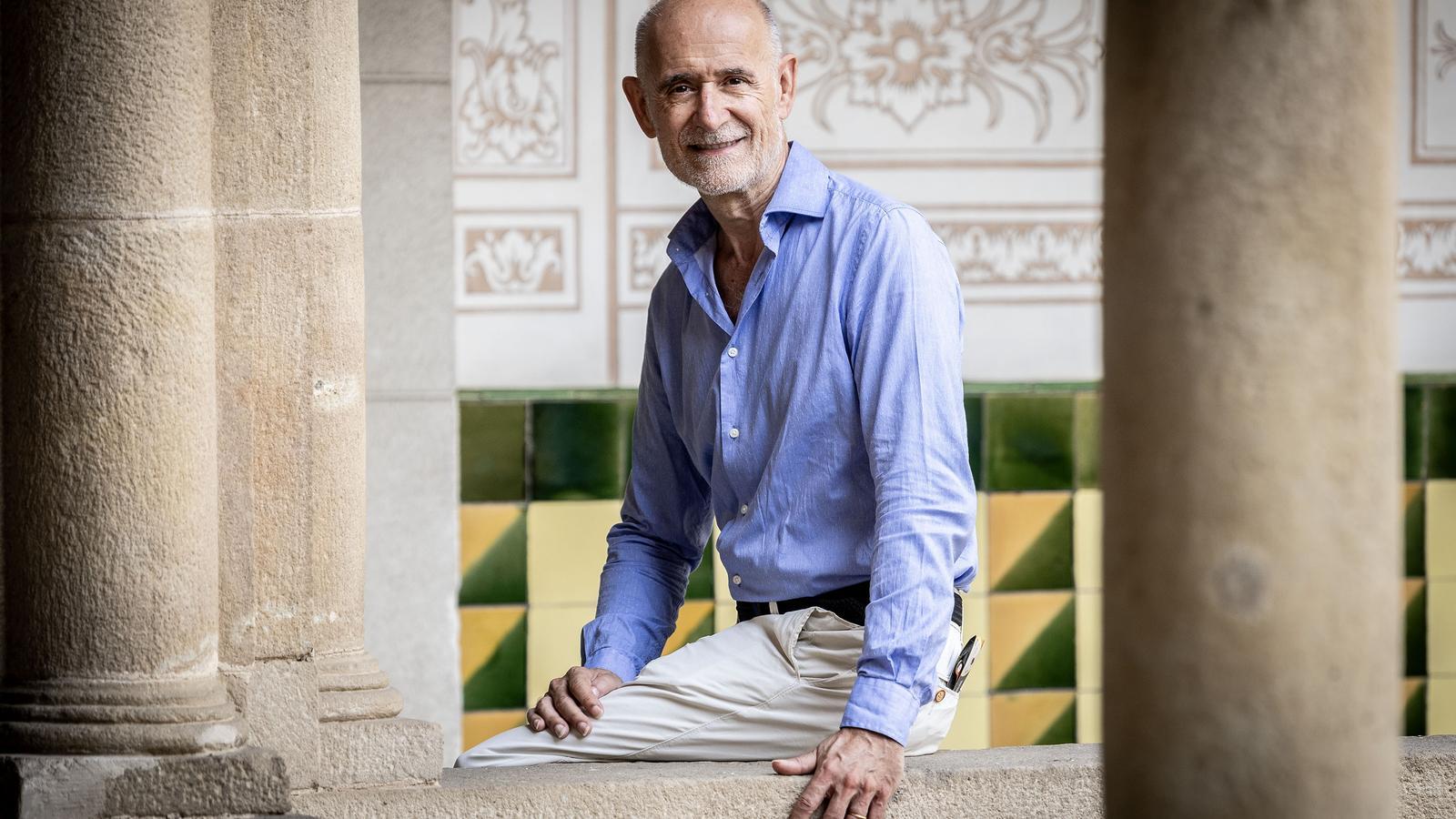
Science communicator Joan Anton Català (1961) was already reading books about science at just 9 years old: "In fact, I built my first telescope, which was a cardboard tube." And, before starting his degree, he created his own laboratory. It is no surprise, then, that he studied chemistry and earned a master's degree in quantum chemistry.
To pursue his PhD, he had to move to Barcelona and pay for it himself: "I was born in Tarragona, in a humble family," he explains in statements to Empreses. In the morning he worked and in the afternoon he did his PhD: "Over time I realized it was impossible to keep up that pace." "My professional career was going very well," he explains. So he abandoned his studies and entered fully into the world of information technology, eventually spending nearly 25 years in large companies, until occupying executive roles in major multinationals.
The big change came in 2008. At 46 years old, he left the job he had – director of people for Catalonia, Spain, and Portugal with 4,500 people under his charge – and became self-employed just as the financial crisis was breaking out. "If I had known what was coming, perhaps I wouldn't have done it," he admits. He created a small consultancy firm.
"From the first day I founded the company, I decided not to grow in personnel," he explains. He did not want to have employees who depended directly on him in a context of crisis and opted for independent collaborators. During the first few years as a freelancer, the worry about making ends meet was constant: "I want my company to work, therefore, I have to constantly pour money into it and I have to rescue it and rescue it again."
The scientist explains that his family has always been thrifty and that having the cushion he had generated in previous years allowed him to face the business adventure with more margin. Even so, his way of managing money also involves separating the personal sphere from the professional one: "Because when I say that I am suffering, it is only in the business part, the family part not at all."
In 2015, after seven years at the helm of his consultancy firm, his family suggested he combine his business experience with his passion for science, which until then had been a hobby. During this time, Català had completed a master's degree in astronomy and astrophysics. "Take science and see how you can combine it with the business world," they recommended at home. Thus, Space to Grow was born, a product that takes executives to astronomical observatories and uses the universe to reflect on issues such as marketing or strategy.
The consultancy also became a key piece in being able to dedicate himself to science communication. The business income gave him the freedom to select the projects he wanted to work on: "I start to have time, I travel less, and I write my first science communication book, which no one wants to publish for me. I go to different publishers to knock on doors, but in the end, I self-publish it, and I decide to spend a bit of money making 200 copies." "With the book in hand, I start breaking ground, I go to Catalunya Ràdio, where Mònica Terribas was working at the time," he explains. The gamble gave him visibility and ended up opening doors for him in the media and with publishers.
Reclaiming science communication
With more than 10 books published, Català is an expert in scientific dissemination: "But if I had had to make a living from scientific dissemination, I wouldn't be here." It is often assumed that the disseminator is a university researcher who does dissemination as a complementary activity. He, however, has wanted to claim it as a profession: "It has not been easy to pave the way, especially without role models and even less so in Catalan." He has found his own niche, explaining science in a rigorous way and far from sensationalism.
The construction of this personal brand has also had an economic return regarding his company, where he continues to work. As he became known as a disseminator, he also gained more renown when it came to giving conferences.
And it is precisely this feeling of having built his own trajectory that explains why he currently considers that he is in the best moment of his working life. "I believe, I can state now that I have just turned 65, that I am at the best professional moment of my life," he states.
