The spa adventure in the regions of Tarragona

-
CAT -
CAST
The history of spas is closely linked to the use of medicinal waters and the evolution of ancient bathing spaces into new centers for health, rest, and summer holidays. They were also a new economic activity and a true industry, which knew how to turn the properties of the waters into a business linked both to the stay of the bathers and to the commercialization of their products. Some establishments even went as far as bottling their waters to market them. A part of these establishments had their origin in springs known for centuries, while others were born as a result of the expansion of the spa culture that, during the second half of the 19th century, spread throughout Europe.
In our regions, one of the oldest examples is Fontcalda, in Gandesa. The place, linked for centuries to the sanctuary and pilgrimages, already attracted people who came there to take baths and seek relief for various ailments. In the 19th century, the site was gradually transformed into a thermal establishment. Municipally owned and operated through leases, at the beginning of the 20th century it experienced a period of greater splendor. The Civil War, however, interrupted this activity.
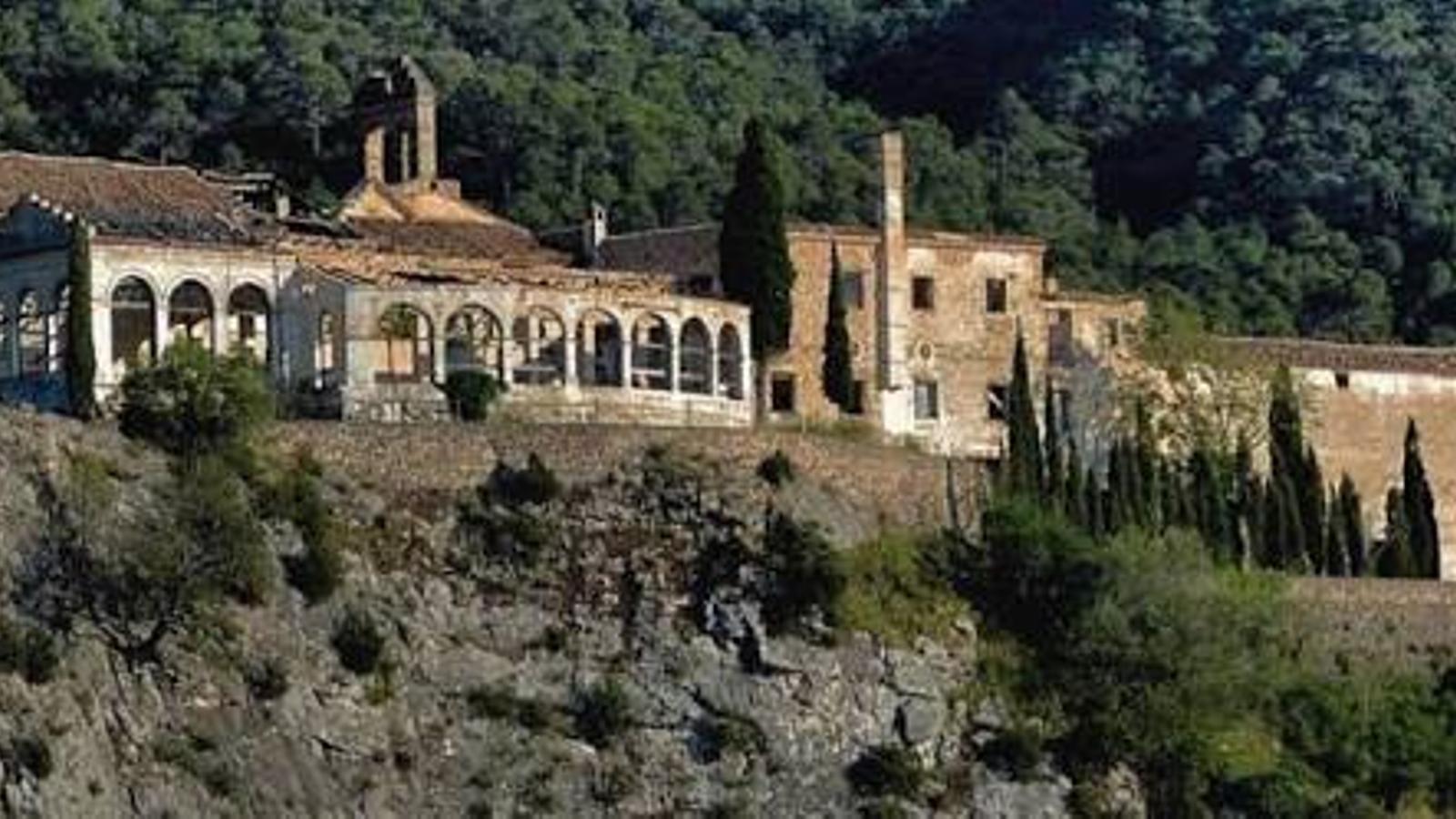
The great boost of the new spa industry would reach Cardó. The former convent of the Discalced Carmelites was converted in 1866 into a spa on the initiative of the Tortosa businessmen Barberà, Cento, and Abarcat. The medicinal waters were declared of public utility in 1887. The establishment gradually acquired a larger dimension and, at the beginning of the 20th century, it became an important summer resort center, with a hotel and various services. During the Civil War, Cardó was converted into a hospital for the Republican army. After the conflict, it recovered its activity and operated until its definitive closure in 1967. The commercial exploitation of the springs through water bottling is later. Different companies began this activity starting in 1974, turning the waters of Cardó into a product intended for consumption outside the spa. In 1981, the exploitation passed into the hands of Nestlé, and subsequently other companies participated, until the bottling activity stopped. Already in the 21st century, the Pascual Group planned the rehabilitation of the complex to convert it into a five-star hotel with a new spa. The project, which managed to overcome various administrative procedures, was ultimately not executed.
In the Conca de Barberà, the ferruginous waters of Les Masies de l'Espluga de Francolí generated another important spa hub. From the mid-19th century, the presence of springs rich in iron and manganese favored the construction of hotels and establishments to accommodate bathers. Pere Antoni Torres Jordi promoted the Vil·la Engràcia complex, which would become one of the main summer resort centers in the area. The project gradually incorporated new buildings and services until, in 1910, it was transformed into the Gran Hotel Villa Engràcia.
Rocallaura, although it administratively belongs to Lleida today, is part of the historical area related to the waters of the Conca. The first project for the spa began in 1908, but the works were interrupted in 1916. Finally, the facilities were inaugurated in 1924, after an expansion of the existing farmhouse by the Vilanova Marquès family. The interest of the pharmacist from Reus, Arturo Punyed, in spa projects and bottled mineral waters led him to invest in Rocallaura and to market the Agua de Rocallaura, a brand he registered in 1925. At the same time, he also planned the construction of a new high-performance spa, works that the Civil War halted. Today, however, that project by Punyed is already a reality. Punyed's activity in this field was not limited to Rocallaura. He also created the water brand Hivérica and participated in projects in Amer, where the exploitation of the water from the Font Picant had led to the commercialization of the Aigua Amer Palatín. Subsequently, the Hotel-Balneari Amer Palatín was built there. The waters were marketed.
Another major project was the Vallfogona de Riucorb Spa. Father Miquel Piera and his brother Antoni promoted the construction of a modern establishment in 1901. The waters had been declared of public utility in 1903 and the establishment went on to consolidate itself as a summer resort center. Between 1913 and 1916, communications were improved and chalets were built, while between 1921 and 1936 the complex experienced a new stage of modernization and expansion.
On the coast, Coma-ruga represented a different evolution. The mineral-medicinal springs of the area began to be exploited at the beginning of the 20th century through bath establishments. In 1919, the company Bellamar, S.A. was incorporated, which began to urbanize the area, and the following year the Coma-ruga Terrassa Hotel was inaugurated, with bath facilities. The Trillas family, linked to various hotel and spa establishments in the area, would later have a prominent role in the development of Coma-ruga. In 1946, the brothers Joan, Sebastià, and Andreu Trillas incorporated Brisamar, S.A., which would promote the great urban transformation of the center and contribute to turning it into a first-rate tourist destination.
Finally, there are also thermal waters in Montbrió del Camp, although their spa exploitation is much more recent. In 1988, the Andorran businessman Domènec Torm acquired the old estate of Horta Florida and promoted a new thermal project. The new center, known today as Termes Montbrió, was inaugurated in 1996.
