Aging, loneliness and dependency: what needs to be changed in the Catalan social model?
The Third Sector Table demands better funded, more flexible and less fragmented public services
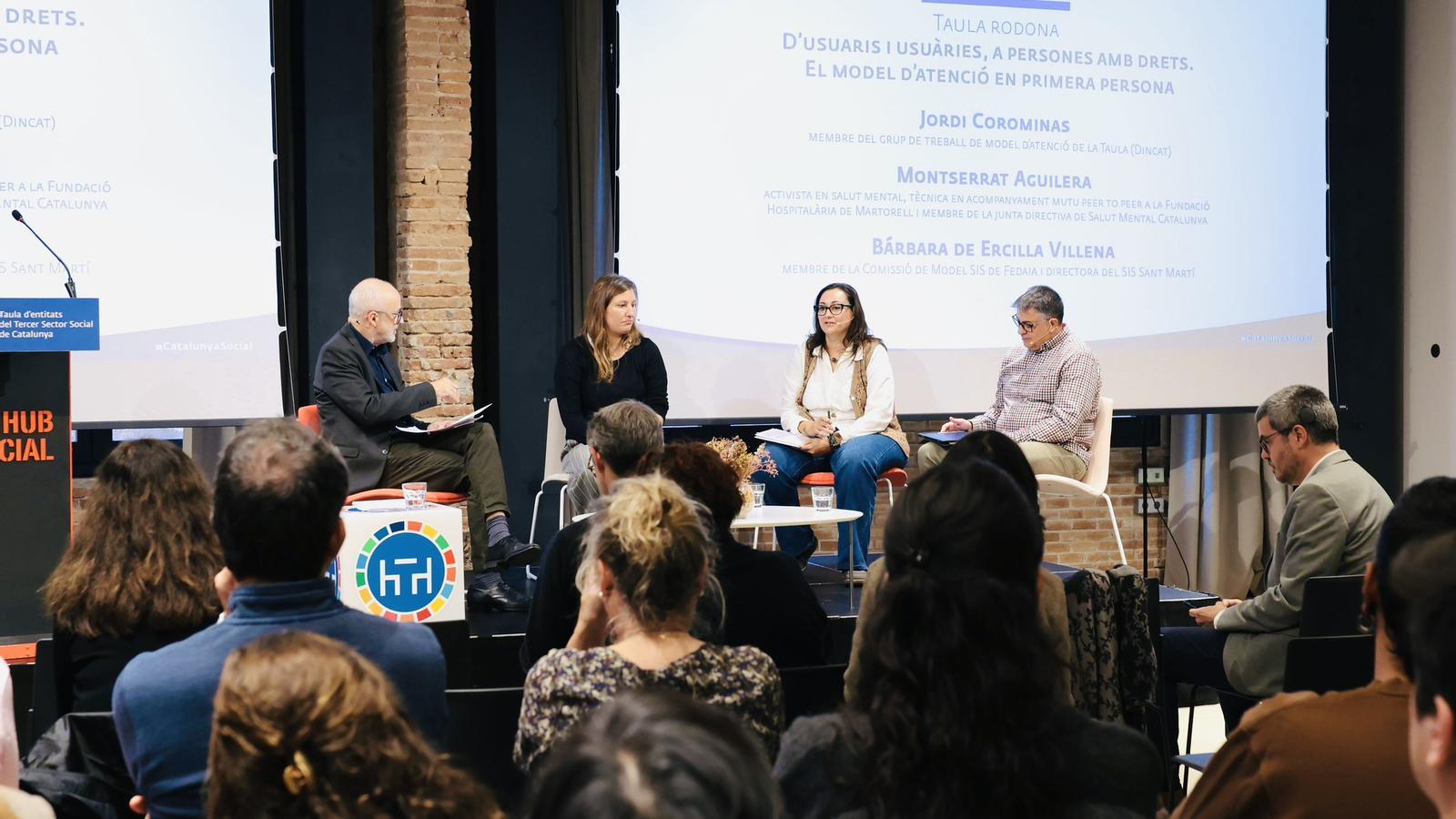
BarcelonaThe social and demographic change in Catalonia is pushing towards an increase in the aging population, with more chronic illnesses and situations of dependency, but also towards an increase in unwanted loneliness, and, if there are no urgent changes, the difficulties in undertaking life projects – for example, in the area of housing – will only increase. Faced with this scenario, the Table of Third Sector Social Entities of Catalonia demands “a profound change” in the model of care in social, health, and educational services so that they can offer “more flexible and comprehensive responses” to citizens.
“What we defend is that services should adapt to people and not people to services,” said the president of the Table, Xavier Trabado, this Tuesday, who added: “Citizens are not passive users or recipients; they must have the capacity to make decisions about their lives, without renouncing the rights, aid, or support that institutions must guarantee.”.
During the presentation of the dossier From cared-for people to full-fledged citizens: the transformation of the care model in Catalonia, prepared by the Chair of Social Services of the University of Vic, the Table points out that the current system drags on structural problems such as the lack of funding, territorial inequalities, and the lack of coordination between services and administrations. As Trabado has explained, public rates still do not cover the real cost of services, there is an excess of bureaucracy, and the working conditions of professionals have not been sufficiently reviewed. In this sense, the document urges the Generalitat to guarantee “stable and sufficient” funding for the entities and to improve the working conditions of professionals, and also to review and simplify the portfolio of social services, currently with 47 different types of aid.

One element that has received attention during the presentation is the need to overcome the “fragmentation” of resources. The Board proposes improving coordination between social, health, and educational services, prioritizing shared information systems, and also with other areas such as housing and employment, to prevent people from having to go from one service to another without obtaining a joint response. Therefore, it advocates that it is necessary to “share information, plan support in a coordinated manner, and guarantee the continuity of accompaniment”. In fact, one of the goals of the single window between primary care centers (CAPs), nursing homes, and social services is to prevent people from having to repeat procedures or provide the same data multiple times.
The key role of the third sector
The entity also demands progress in deinstitutionalization and expanding alternatives so that people can live independently in their own homes or in community settings. In this sense, they defend the need to reinforce proximity services and home care, to guarantee access to personal assistance, and to promote supported housing. "The goal is for people to be able to maintain ties with their environment and participate in community life without having to renounce the supports they need," they indicate. To do so, the entity underscores that accessibility in physical, cognitive, sensory, and digital environments must also be universal.
The Table vindicates the role of the third social sector in this transformation and notes that entities provide knowledge of the territory, proximity, the capacity to create ties, and social innovation. For this reason, Trabado has called for shared and horizontal governance between the Generalitat, the municipalities, and social entities, with participation in the definition and implementation of public policies. "This transformation cannot be done by anyone alone. It requires a horizontal and co-responsible alliance between the Generalitat, the municipalities, and social entities," he concluded.
