One hundred years of a market

-
CAT -
CAST
The same year that Antoni Gaudí learned —too late— that one had to be careful when crossing a street in Barcelona, in Cambrils we started buying in a covered market. It was 1926, and the coincidence is no metaphor, but it is not entirely innocent either: that year Catalonia was beginning the end of one era and opening another, and Cambrils, in the manner of El Camp, too.
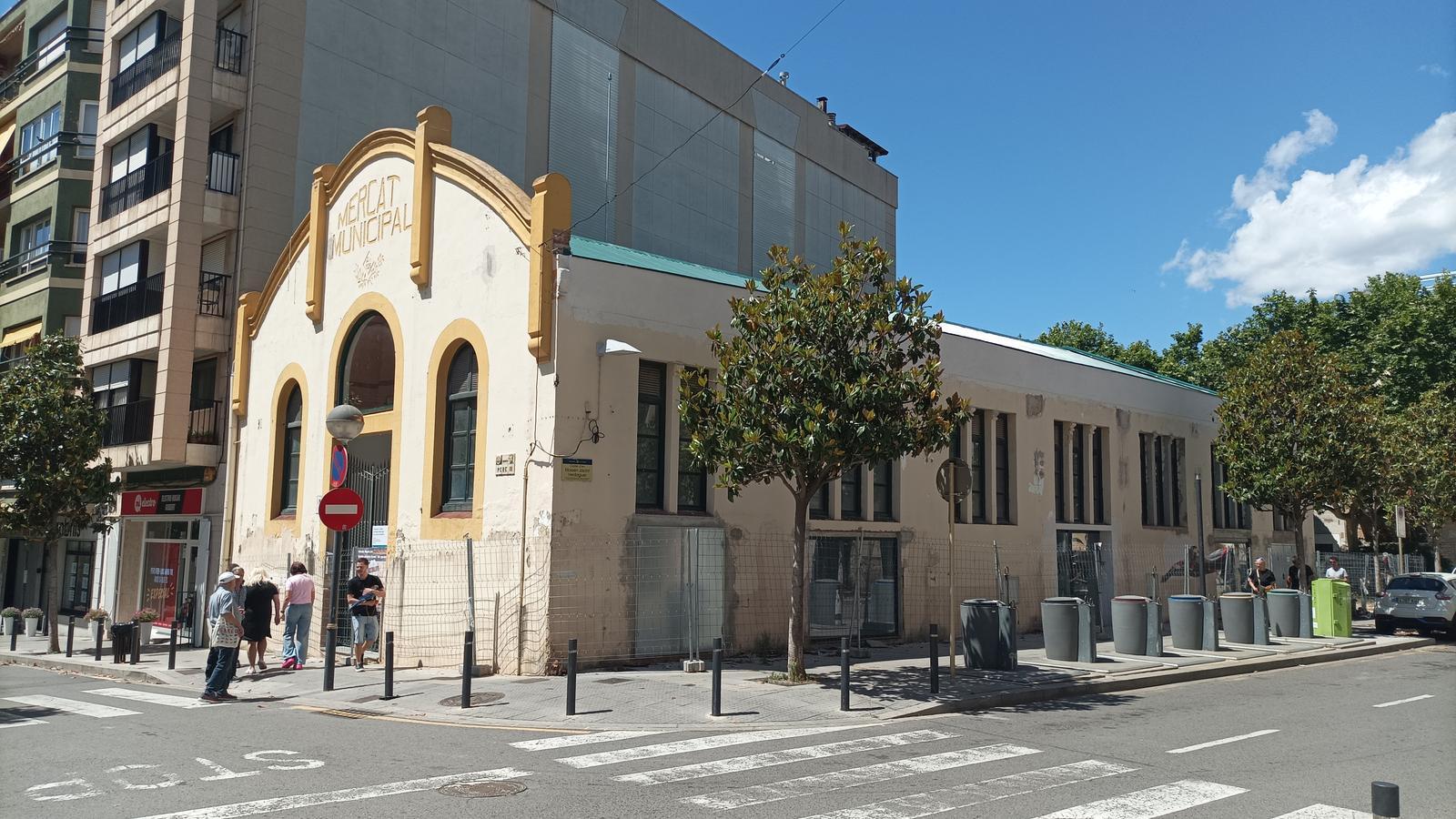
The decision to build it had been made in 1922 by a City Council that wanted to provide the town with a dignified space where the products of the land and sea would find stable buyers. The initial project was modified in 1923 by the architect Josep Maria Pujol de Barberà, the same one who, with his works, left his mark on many corners of our region. The resulting building is a good example of the civil Noucentisme of the Tarragona region: rectangular plan, gable roof, main facade with three semicircular openings and a crowning with a sinuous profile and four pinnacles. Included in the inventory of architectural heritage, it has withstood a century of urban changes and transformations.
For decades it was the daily meeting point of the inland Cambrils, the one that remains when the season ends. The fish stalls, the vegetables from the garden, the meat from the surrounding farmers. Much more than a commercial facility: the place where the territory made itself present in the form of product, where the farmer and the fisherman gave a name and face to what ended up on the table.
A relationship between the land, the sea, and the table that became closer due to the market's proximity to the cellar. An axis that is still very present and must be an opportunity for the future.
Now the market celebrates its centenary with closed doors and scaffolding in place. Since October 2024, it has been undergoing the most profound renovation in its history: a large glass window on the rear facade, a new access from Jacint Verdaguer street —which during the dark years of Francoism had to have another name— and eight stalls for fresh produce and gastronomic tasting to connect the centenary building with the culinary vocation that defines Cambrils today. Unforeseen problems with the roof extended the deadlines, and the reopening, with the bidding for the stalls underway, is expected by the end of the year.
A hundred years is a long time for a building, and also for a town. The market has seen generations, wars, dictatorships, tourist booms, and crises pass by. It has closed and reopened. And now, as the scaffolding comes down and the workers finish the final finishes, the question is not whether the market will be ready for its centenary. The question is whether Cambrils will be ready for the market.
