Why do we show our butts but not our breasts?

-
CAT -
CAST
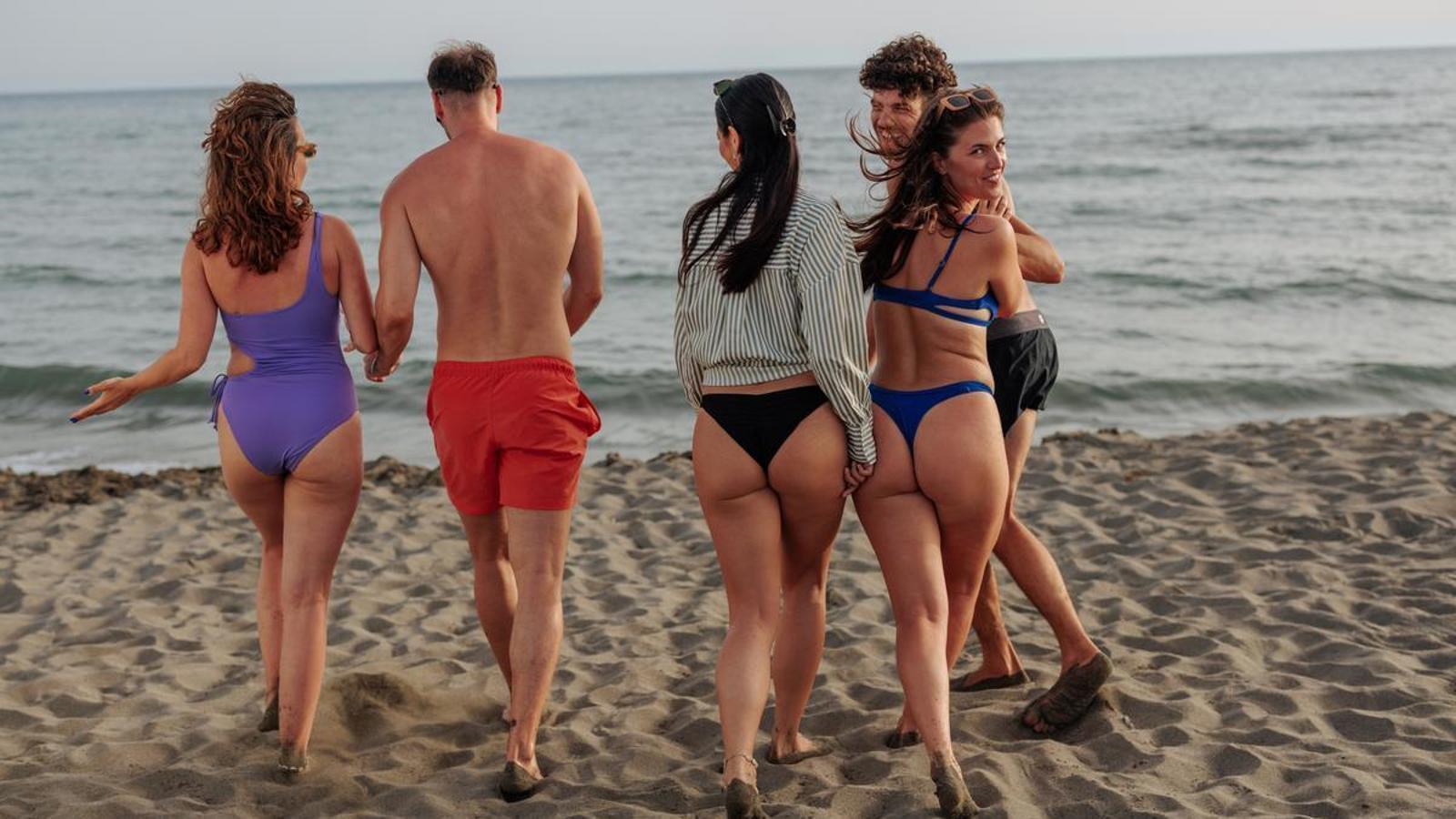
Lately, when I try to buy a bikini, I have to face the search and capture of an increasingly difficult piece to find: one that covers my entire buttocks. While the part that covers the breasts is not problematic, when we get to the bottom part, it seems that we only have at our disposal the minimum expression of what a panty should be. Among the available options, the thong is quite present, which mysteriously disappears between buttock and buttock, given the apparent comfort of the user, and front panels so minimal that I myself wonder how it is possible to fit the entire pubic area into such a narrow strip without it protruding from either side. Suddenly, wanting a panty that generously embraces the buttocks and lower abdomen has become almost an extravagance. It is paradoxical that this occurs in parallel with the clear retreat of the topless, caused by the increase in aesthetic pressure and rising conservative values but, above all, by the threat of camera phones, capable of forever archiving your breasts on social media without your consent. But why do these fears, which have caused the liberation of women's breasts to recede, not have the same effect on the buttocks?

What is important to be clear, however, is that the thong is not born overnight, but has a long history, with different uses and meanings. Contrary to what we might think, its origins are neither feminine nor Western. A garment that covers the genitals and leaves the legs and buttocks in view is one of the oldest forms of men's underwear, present in a good number of ancient cultures and which, from the West, we have categorized under the generic name of loincloth. But it would be too bold to say that the current thong derives directly from this garment, since, although it has clear formal links, the functions are almost opposite. While the former had the function of covering the genitals, the latter is born with the function of revealing the buttocks.The limits of privacy
One of the clear antecedents of the modern thong is the g-string, a stage prop from the American burlesque shows of the twenties that, rather than covering up, was used to simulate nudity in stripteases, at a time when they were subjected to increasing pressure and persecution by the authorities. During the seventies, the beaches of Copacabana and Ipanema became true laboratories for swimwear experimentation. The Brazilian swimsuit pioneered the reduction of textile surface area, with legs so high and cut that they paved the way for the thong to make its appearance in 1973. The decisive step in its incorporation into Western fashion came with designer Rudi Gernreich, who in 1974 revolutionized the fashion world with the thong. Inspired by the fundoshi of sumo wrestlers, it was a swimsuit that left the buttocks exposed but was unisex, intended for both men and women. The cornerstone of Gernreich's proposal was, under the decade's desire for rupture, to contribute to the liberation of the body, both physically and morally. A very different approach from the paths it has ended up taking: the sexualization of the female body.Showing breasts and buttocks carries the same risk of suffering the scrutiny of a sexualizing gaze. But what is true is that buttocks have undergone a more intense process of visibility that has normalized their social acceptance. It is not that breasts are more sexualized when shown, but because they have not yet reached the same degree of exposure, they continue to be perceived as more intimate and, therefore, more vulnerable when exposed. The question is not what is more sexualized, but where we establish, at each moment, the moral boundary between what is acceptable to be seen and what is not. And, despite the apparent freedom we seem to have when choosing clothes, fashion, by offering –or eliminating– options, contributes to determining which areas of the body we consider desirable and normal and, at the same time, to establishing the limits of what we consider intimacy.
