Carla Simón: "When the filming of 'Summer 1993' ended, I was crying for two weeks"
Director of 'Summer 1993'
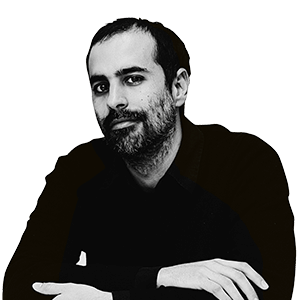
-
CAT -
CAST
BarcelonaThe experts consulted by ARA have spoken: Summer 1993 is the best Catalan film of the first 25 years of the 21st century. To celebrate the milestone, one March morning at the Filmoteca de Catalunya, the newspaper brought together part of the team that made the film a reality: director Carla Simón and actresses Bruna Cusí and Paula Robles, who was four years old at the time of filming. Actors David Verdaguer and Laia Artigas could not be there due to professional schedules, but a few days later they also reunited to remember an experience that marked them all.
Summer 1993 has been chosen by 200 experts as the most important Catalan cinema film of the last 25 years. Needless to say, it is also a film much loved by the public. How do you value having made a work that means so much to so many people?
— Carla Simón: Initially, it is an honor to be at the forefront of this list and I am very excited, because I think for us it is also a very beloved film. It is dizzying that it means so much to people. When it premiered, we had the feeling that it was opening something, many journalists said so. But until time passes, you don't know if the feeling lasts. It has been exactly ten years since we were closing the casting for the film, and in the summer it will be ten years since we shot it. Perhaps it did mean something to many people. One factor is that there were not many films portraying the nineties, which was the childhood of many people. It also has to do with the naturalism of many filmmakers who were looking for another way to work with actors. It was not the only film, but it is often put as a reference.
— Bruna Cusí: In these ten years I have worked on many other things and Estiu 1993 was often a reference for these films. Carla, you founded a kind of school, especially here in Catalonia, but also in Spain. You have paved the way for many young female directors, there are many women who have followed you because thanks to you they felt that they could do it too. Making Estiu has marked my life and my career. I had only shot a very independent film, Ardara, and also Incerta glòria, which seemed like it was going to be the film of the year, and suddenly Estiu appeared, which was the film of the year. Thanks to Carla, I learned film acting and how to find that almost documentary naturalism that favors on-camera performance and that I have continued to seek and investigate in other projects. But my school was Estiu. And you, Paula? What do you remember about Estiu?
— Paula Robles: I especially remember what they have told me, or some moments that have nothing to do with it.
— C.S.: It's just that you were four years old, three and a half when we met you. My son is now three and a half and sometimes I think about everything you managed to do at three and a half...
Paula, when you think about the movie, what image comes to mind?
— P.R.: The swimming pool. The minigolf. And also the lettuce scene.
— C.S.: Yes, because Laia had to take it from you and you didn't like people taking things out of your hands.
— P.R.: And I don't like it now either! I remember my fear of toads. But they don't scare me anymore. In fact, I have a friend who is afraid of them and one day I dressed up as a toad and chased her.
Carla, have you ever explained that Paula had an extraordinary sensitivity. And that one day, rehearsing a scene that is not in the movie, she started to cry.
— C.S.: Yes. It was a scene where David was called to be told that his sister had AIDS. Paula, David, and Bruna had spent a lot of time together as a family, doing things like dancing, playing, telling stories... And that day, upon receiving the call, the atmosphere changed and David became sad. And Paula said: "But let's put on music, let's play...". But no one paid attention to her. Suddenly she started to cry, because she had absorbed the emotion, and we all stayed... Wow. And we felt so bad that, to change the mood, we pretended to celebrate a birthday.
Bruna, Carla, what image comes to mind for you?
— B.C.: The rehearsals marked me. Since I hadn't done cinema before, those rehearsals of looking for the antecedents and the previous universe of the character with the other actors seemed natural and logical to me, but afterwards I realized that they are not at all common. Few directors follow this line, and those who do, like Javier Macipe, have Carla as a reference. I also remember the filming a lot. The fact of filming with children meant that we worked fewer hours a day, but at the same time there were many waiting times. I remember David lying on the ground, many nights in Olot, Sant Feliu de Pallerols... In memory, fiction and reality mix.
— C.S.: Regarding the filming of Estiu, I have a very similar feeling to the one the movie leaves you with. I remember very happy moments from rehearsals, but the filming was very hard. So much so that I can't say I enjoyed it. It was one blow after another trying to push that forward. While I was filming, I felt nothing, I was surviving trying to capture what was written and what I wanted to explain. But when the filming ended, I spent two weeks crying to understand what had happened. First experiences are very intense, even more so when you explain something very personal.
— B.C.: I remember one day your sister Berta came to the shoot, and since she wasn't under the same pressure as you, she had a kind of catharsis seeing David and me and the girls representing that. Carla, you told us that you had this story well understood, but, apart from the pressure you might have felt for it being your first shoot and the lack of confidence that part of the crew had in you for being a novice director, deep down we were structuring your life and you weren't giving yourself the space to live this emotional part.
— C.S.: It's just that I didn't have it. In my head there was something that were my memories and my childhood that had materialized in you and in some locations, which were very similar but not exact. And inside me there was a frustration for not being able to portray exactly that. After filming I needed some time to embrace what we had done and understand that it was not exactly my story.

Carla, at what point did you realize that the film you had survived a harsh shoot was not just another film for others?
— C.S.: I remember when my editor Anna Pfaff and Meritxell Colell saw one of the first edits and they told me: "Stop eating your head. You have something very valuable here, all you have to do is work on the editing". I was a bit blinded by the trauma of the shoot, so it was an important moment for me, because they were people I trusted. At another screening, Celia Rico, Mar Coll and Valentina Viso came, and Mar told me: "This film will be important and will do very well. Don't worry." I also remember I was editing with Anna and Ginesta Guindal called us, crying. And Anna said to her: "But what's happening, Ginesta?". And it's that she had just seen the film. It was then that Anna and I realized that we almost had the film.
— B.C.: I remember being moved by the dossier they gave me for the casting. A dossier! I identified a lot with the story, perhaps because I'm from the same generation. I was supposed to do a play with Miguel Ángel Blanca, and I said no to the play to do "Estiu". But he already knew the project and told me: "Of course, Bruna, you have to make this film. It's going to be a hit!" I don't know how, but I was absolutely sure. And when I really realized that it was something very strong was at the screening at Berlinale. The subsequent discussion, the emotion I felt and the questions they asked the children made me realize that what we had done was beautiful.
— C.S.: That day at the Berlinale was very intense. During the screening, I was only worried because the sound wasn't finished, and suddenly, the lights came on and everyone was crying. Until you share it with the audience, you don't realize what you've created.
You once said that on that day you felt for the first time that a film of yours provoked in others what cinema had sometimes made you feel.
— C.S.: Yes. My love for cinema comes precisely from those moments of brutal emotional and artistic connection with what you see on screen, a kind of ecstasy that runs through your body. You have an almost grateful feeling towards that person who made you feel this or who revealed something to you. And that day, when those spectators shared their experience, I felt for the first time that I too had been able to offer that to someone.
Paula, when the movie premiered and you were five years old, you spoke with ARA and said that when you grew up you wanted to be an actress and a Zumba instructor.
— P.R.: [Laughs] I didn't remember! No, not anymore. Now I'm more into science, and I'd like to work in a laboratory and maybe do research.
Nine years ago you said you had seen the movie three times and that you liked it, but that there were things you didn't understand. What was it like to see the movie as an adult?
— P.R.: I thought it was very well done. As a child there were things I didn't understand, like the beginning. But as an adult I understood things better and put it all together better.
If you had to choose a scene from the movie, which one would it be and why?
— C.S.: One of the moments when I did connect emotionally is when the grandparents leave. It was one of the few scenes that had actually happened in reality: when my grandparents left it was a drama. And I had slept very little that day. In Estiu I learned that on a shoot you have to sleep, because if you don't sleep you don't shoot the same. And the night before I had to stay up solving things and I didn't sleep. Laia had a complicated acting I was blocked and things weren't working. I normally threw the lines they had to say to the girls, but that day I acted with her, I screamed just like Laia and I felt it with her. And it was a moment that stayed with me a lot. Another moment I remember very well is the last scene. The first time we shot it, it wasn't Laia who cried, but Paula. And since we had to leave that house, we repeated it in a sports hall where we recreated that room on set. It was a mess, but there it came out and everyone was emotionally connected. But if I think about it, the scene with the grandparents affected me more emotionally.
— B.C.: Because when repeating the final scene there was a lot of pressure for it to turn out well. What was being asked of Laia in that scene was of a very high interpretative level, because she had to start jumping happily and, during the scene, have the breakdown and cry, which is a quite virtuous thing. One moment I remember is when I clean Laia's wound, because it was one of the first in which I began to enjoy the connection with her. And perhaps it has to do with the process that Marga's character goes through, which is learning to love a girl who is not hers. Adoption goes in both directions. In fact, Carla sometimes told me not to be too affectionate. I also remember very well one day when I was walking towards the chickens and Carla told me: “Bruna, you are walking for the camera, as if you were aware that you are filming us”.
— C.S.: It's curious because I don't remember this.
— B.C.: I had like a click. I realized I was putting too much energy into it and that, to work in this naturalism, I had to do even less, lower the energy to my feet and do it from relaxation. I had never worked like this before, and it changed the way I worked on other shoots, because I think a lot about that phrase: "It's as if you were aware of the camera". For me it was a chip change.
It's nice because it's as if Carla continued to direct you.
— B.C.: It's just that he keeps directing me! I always used to ask Carla to tell me if she wanted it more or less intense, and now I always ask the directors the same thing, I'm always looking for how to regulate.
— C.S.: David and I always joked about my range of words to say the same thing: "smaller", "more intimate", "weaker", "speak to yourself"... All to avoid saying: "You are overacting". But telling an actor they are overacting is very aggressive.
And how was the casting of the girls? Did you keep in mind how they fit in?
— C.S.: Yes. First we did separate castings, and with Paula we saw that she was doing so well that we said: "Let's try it with her".
— P.R.: My parents explain that all the children in the casting wanted to leave there and were crying and that I came in as if nothing had happened.
— C.S.: You came in as if you had known us all your life. And you understood the game, you understood that it wasn't real. Many children didn't understand it. At three and a half years old, it's not easy. We asked you to lie and you did, and at that age, that's a very high level. And the day we put you with Laia, the dynamic we were looking for was created exactly: you admired her and followed her because she was older, Laia told you what you had to do... There were some slightly cruel things, but it was immediately clear that it could work.
— B.C.: Paula was a happy child, a contented tummy who was always making up stories, singing, inventing words... But she also set very clear boundaries about when we were rehearsing and playing and when we weren't. “Now you are not my mother. Now you are. Now I am Paula. Now Anna.” And since in the scenes we had I was a mother who preferred Laia and even scolded her, Paula didn't want to see me, she ran away from me. On the other hand, both of them were in love with David and gave him little glances... I took it very badly. And it has taken ten years for me to recently realize, when revisiting the rehearsals, that Marga's relationship with her daughter must have been equally conflictive at that moment. The arrival of a new daughter is always difficult.
