Murcia: a desert turned into an agricultural powerhouse with a dangerous techno-climatic gamble
Between innovation and water scarcity, the intensive farming model transforms southeastern Spain into Europe's vegetable garden, but jeopardizes its future
-
CAT -
CAST
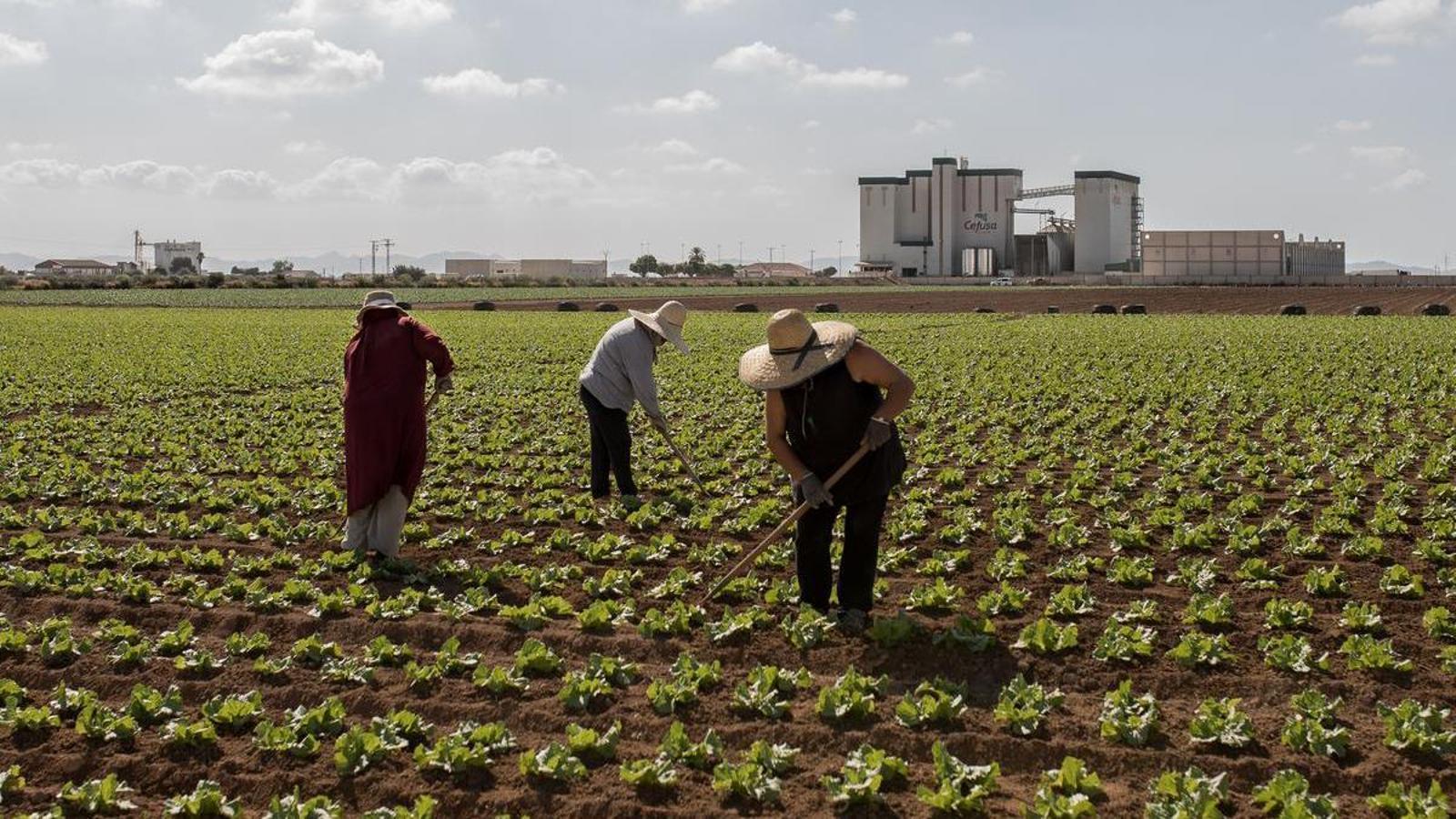
Southeastern Spain, one of the driest areas in Europe, has established itself as one of the continent's main agricultural hubs. Despite having a climate marked by minimal rainfall and long periods of drought, this region has become the heart of the so-called “european vegetable garden.” Thanks to state policies, desalination plants, artificial reservoirs, and complex water transfer systems between river basins have been built, allowing vast previously unproductive areas to be irrigated.
Carmen is descended from a traditional farming family from Campo de Cartagena and has firsthand experience of the changes in the region's agriculture: "The few people who continued to cultivate the traditional farms ended up abandoning them or renting them to large companies." Carmen continues: "Today Campo de Cartagena is full of greenhouses and monocultures, and intensive agriculture has replaced the varied crops we used to grow with my grandfather."

This is how the territory has gone from traditional agriculture, linked to natural rhythms and seasonal crops, to a large-scale intensive model, based on greenhouses, monocultures, and continuous harvests. In this semi-desert landscape, transformed by human intervention, millions of tons of fruits and vegetables are produced each year, mainly destined for export to Northern Europe.
This productive evolution is based on increasingly sophisticated technologies: precision irrigation systems to optimize water use, sensors and algorithms that monitor crops, plant genetics that allow the development of varieties more resistant to heat and water scarcity, and digital platforms that track every step of the production chain. José Cos Terrer, a researcher at the Murcian Institute of Agricultural Research and Development (IMIDA), has been working on the crossbreeding of fruit varieties for more than a decade: "Spain is a climate change laboratory," he says. "Everything we select is prepared to survive extreme conditions."
However, what at first glance seems an agricultural miracle is becoming increasingly fragile: climate change, with constantly rising temperatures and extreme weather events, threatens the sustainability of the model. Water resources are dwindling, and existing infrastructure, designed for already surpassed climatic conditions, struggles to guarantee productive continuity. The entire system is at a point where technological innovation seems more a reactive response than a tool to prevent the worsening of the environmental crisis.
While technology attempts to respond to the demands of an increasingly competitive market, the side effects of this model are growing strongly. The soil is progressively impoverishing and aquifers show increasingly worrying levels of contamination. However, annual agreements with large food distributors continue to increase, driving the pressure towards more intensive industrial production.
During the last few years, international investment funds have initiated a massive process of acquiring agricultural land, concentrating vast areas in few hands. This phenomenon, added to the growing weight of agro-industrial lobbies, reinforces a model oriented almost exclusively towards exploitation. The consequences are evident: the erosion of the rural fabric, the worsening of working conditions, and the fall in purchasing power of small and medium-sized farmers, who struggle to remain competitive and find themselves increasingly marginalized. On the outskirts of Lorca, a province of Murcia, greenhouses mark the boundary between desert and intensive agriculture. Pipes, plastics, and cables extend in a geometric pattern that dominates the landscape. Sebastián, a lifelong farmer, remembers what this place was like before the greenhouses: "Before, there was only mountain and esparto grass here, now it's all tomatoes, but the water is less and less."

This is a problem that affects Spain, but also other Mediterranean regions, where rising temperatures and, consequently, the unit price of agricultural products, have become a central theme of public and political debate. Explaining how cultivation is carried out in one of the driest areas of the continent anticipates the challenges that a large part of the Mediterranean will face. In this context, it is essential to reflect on the extent to which technology will be able to compensate for an increasingly hostile climate and what the human, ecological, and social cost will be of maintaining an intensive production model in such extreme conditions.
