Strait of Hormuz and Gulf blockadeIran's closure of the Strait of Hormuz, a transit route for a fifth of global oil and liquefied natural gas supplies, has driven up crude prices. Reopening the strait is a priority for the United States and Iran's main point of leverage, but it could take time. The blocking of Iranian ports by the United States is affecting the country's exports and state revenues. Lifting it is one of Tehran's main objectives. A critical issue could be the extent of the withdrawal of American forces.The nuclear issueThe United States accuses Iran of wanting to build a nuclear bomb. Iran has always denied this, always stating that its atomic program is for exclusively peaceful purposes. The focus is on uranium enrichment, which generates fuel for nuclear energy, but can also produce material for a warhead.Ballistic missilesA prominent US demand before the war was that Iran limit the range of its ballistic missiles so they could not reach Israel. Iran has always maintained that its right to conventional weapons is non-negotiable and that it still possesses a large arsenal.Sanctions and frozen assetsThe Iranian economy has been harmed for years by sanctions, which contributed to nationwide unrest in January. Tehran urgently needs sanctions to be lifted and tens of billions of dollars in Iranian oil revenues frozen in foreign banks to be released. It also claims war reparations. The United States has resisted this, with Donald Trump harshly criticizing former President Barack Obama for returning some of these frozen assets to Iran as part of the 2015 deal. Some media have reported that the latest draft agreement would include an investment program for Iran.LebanonIran has repeatedly stated that Israel's war against Hezbollah in Lebanon must be part of any agreement. Israel and Lebanon agreed to a ceasefire last month, but both Israel and Hezbollah accuse each other of repeated violations, and the Israeli army is intensifying its campaign in southern Lebanon. Israel would oppose any agreement between the United States and Iran that limited its ability to act in Lebanon.
Trump remains prisoner in the Iranian labyrinth three months after starting the war
The memorandum that Tehran and Washington are debating is only a step forward that postpones the key point of the conflict

-
CAT -
CAST
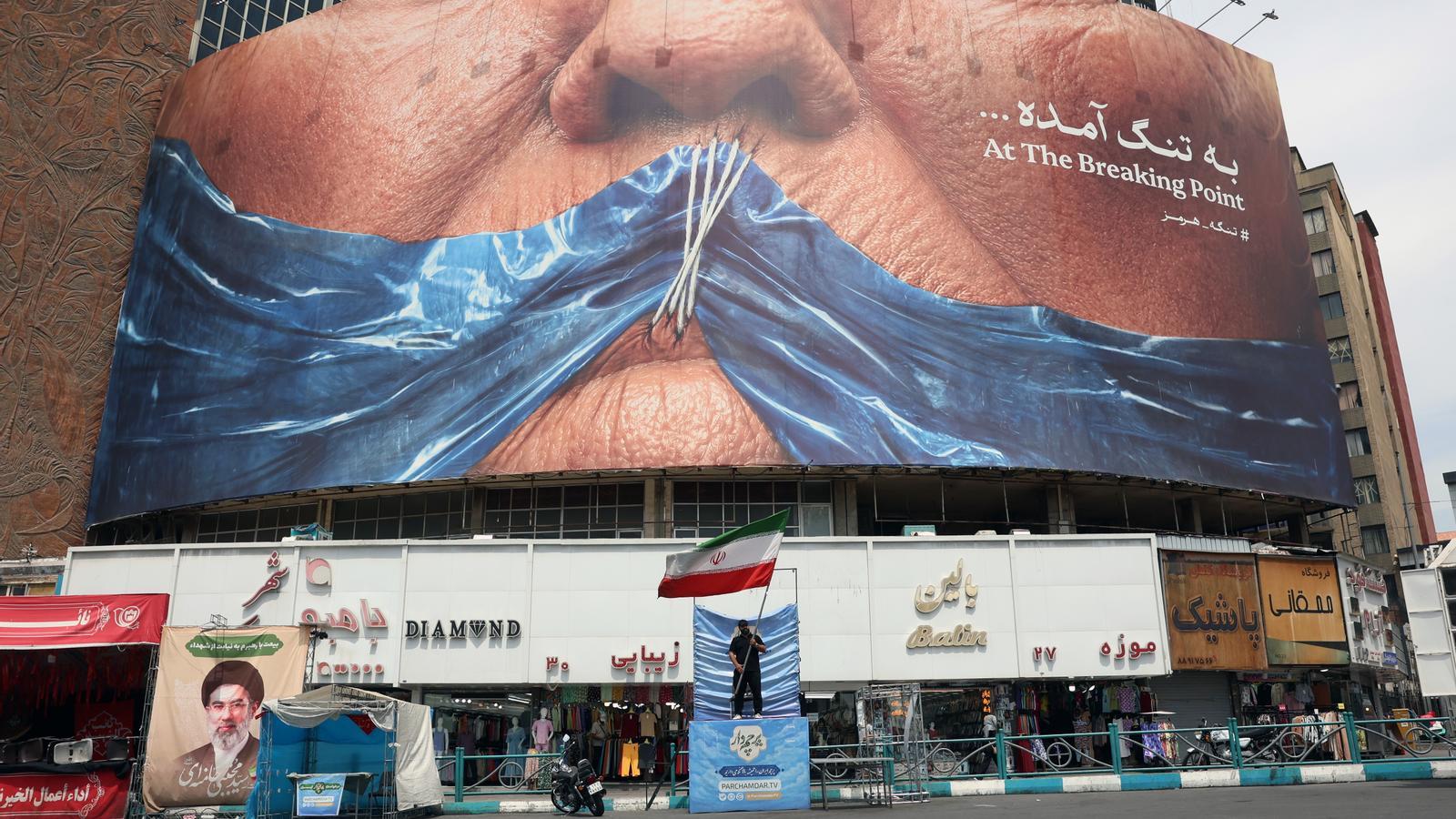
LondonThe fact that Iran's war has become a headache and a difficult dead end for Donald Trump is demonstrated by the continuous ups and downs of this past week. The United States has broken the ceasefire twice, and Iran has responded with skirmishes that both sides have described as "defensive actions". In parallel, a memorandum of understanding is circulating between Tehran and Washington that, for the moment, is not bearing fruit. The result is a climate of optimism and pessimism that shakes the price of oil, and which both Trump and Vice President J.D. Vance fuel with statements that often cancel each other out. Meanwhile, the Strait of Hormuz is tightening its grip on the global economy.
In this context, Trump published a long message on his social network on Friday in which he presented as a done deal what are only the preliminary points of discussion already known. As usual, he did so with a tone of total victory that does not correspond to the reality of the negotiation. He stated that Iran would definitively renounce nuclear weapons, that the Strait of Hormuz would be opened immediately, and that the US would jointly destroy enriched uranium. But the most significant passage came at the end, when he announced that he was heading to the crisis room to make a "final decision", a formula that, in the midst of war, functions as a gesture of internal strength and as an implicit warning to Tehran that Washington is prepared to escalate if there are no concessions. Hours later, he emerged without any final decision being made. The indecision is dragging on.
Everything suggests, therefore, that the pact will not come easily. This is the belief of diplomat Mark Lyall Grant, permanent representative of the United Kingdom to the UN between 2009 and 2015. "I think there will be an agreement, but it is very unlikely that it will be reached in the next few days," he stated to ARA on Thursday. He recalls that Trump himself admitted it implicitly when, at a meeting of his government on Wednesday, he let slip –"with his usual informality"– that he is not particularly concerned about the midterm elections and that he can wait for Tehran to eventually yield.
Will Iran concede? According to reports from Axios and The Guardian, negotiators from both countries reportedly reached an agreement last Tuesday on the aforementioned sixty-day memorandum of understanding to extend the ceasefire and open talks on the nuclear program, the real crux of the conflict. Tehran would have given the green light, but the final approval from Trump would be missing, who would have asked for a couple of days to reflect on it, but, it seems, they were not enough. However, to think that the nuclear issue can be resolved in two months is, at the very least, naive: the 2015 agreement, concluded during Barack Obama's second term, required years of negotiation.
Three months after the start of a warFurthermore, Tehran demands tangible measures first – such as the release of frozen assets – before resuming talks on its nuclear program. This was made clear on Friday at noon, in a message on X in Persian addressed to the internal audience by Mohammad Bagher Ghalibaf, head of the Iranian negotiating team: "Concessions are not obtained through dialogue, but with missiles; we do not trust in guarantees or words: only facts count. No step will be taken until the other party acts." Ghalibaf also recalled that "the winner of any agreement is the one who is best prepared for war from the next day."
Kirsten Fontenrose – former member of Trump's National Security Council during his first term and current researcher at the Atlantic Council –, anticipating this comment, but almost sensing it hours earlier, summarized the complexity of the moment on Thursday: "It seems that both sides want, at the very least, to extend the ceasefire, but neither is willing to make concessions, and both are dedicating most of their efforts to operations to pressure the other side."
Mark Lyall Grant adds a key element to understanding the current situation: "Trump does not want to bomb Iran again; this tactic has failed. And it is evident that the Tehran regime is not about to collapse."
A dead end
Three months after the start of a war that was supposed to be settled in a few weeks, negotiations are moving in a much narrower space than in 2015. Iran has advanced technologically, the sanctions system is more complex, and the regional context is much more volatile since October 7, 2023, when Hamas attacked Israel. The red lines – uranium enrichment for Tehran, and sanctions and verification for Washington – have hardened, especially since Trump abandoned the JCPOA, the agreement with Obama that limited uranium enrichment to 3.67%, the stockpile of material, and the number of centrifuges, under strict inspections by the International Atomic Energy Agency (IAEA). It is no coincidence that Barack Obama insisted that the pact "is not based on trust, but on verification".

Iran would now have some 500 kg of uranium enriched to 60%, plus 118 kg to 20%, according to the latest IAEA assessment, from June 2025. Tehran prevented inspectors from accessing it the following month, after joint airstrikes by the United States and Israel against its facilities in 2025. Enrichment to 90% – the military threshold – would require only days or weeks of work if the facilities remain operational.
From any perspective, the offensive launched by Trump and Netanyahu in late February has failed with respect to the initial objectives. "They promised to destroy Iran's military capabilities and the regime remains standing," recalls Toossi. Not only is the Strait of Hormuz closed, with enormous consequences for the global economy, but the American arsenal has also been significantly reduced. "The war has been a real strategic catastrophe for the United States," the analyst states.
Meanwhile, Iran maintains its enriched uranium and, according to sources cited by the New York Times and
The Wall Street Journal, retains 70% of its ballistic missiles and between 70% and 80% of its drones and launch platforms. "What has Washington achieved with a war sold on lies very similar to those of Iraq? Nothing. Just a monumental dead end," Tossi reiterates.
In this context, the current talks seem to respond more to the urgent need to avoid an even greater escalation than to the real possibility of a fundamental agreement. Washington insists that any understanding will have to definitively limit Iran's nuclear capacity, while Tehran continues to demand material guarantees before making a move, and publicly claims that concessions have only been made under military pressure. All this paints a scenario in which neither side can afford to abandon negotiations, but neither is willing to bear the political cost of a significant concession. The result is a precarious truce, sustained by the mutual need to buy time, but without any guarantee that the conflict will not erupt again.
