The best news of the classic for Barça
Despite the defeat on the pitch, the club celebrates having achieved the record for turnover in a football match

-
CAT -
CAST
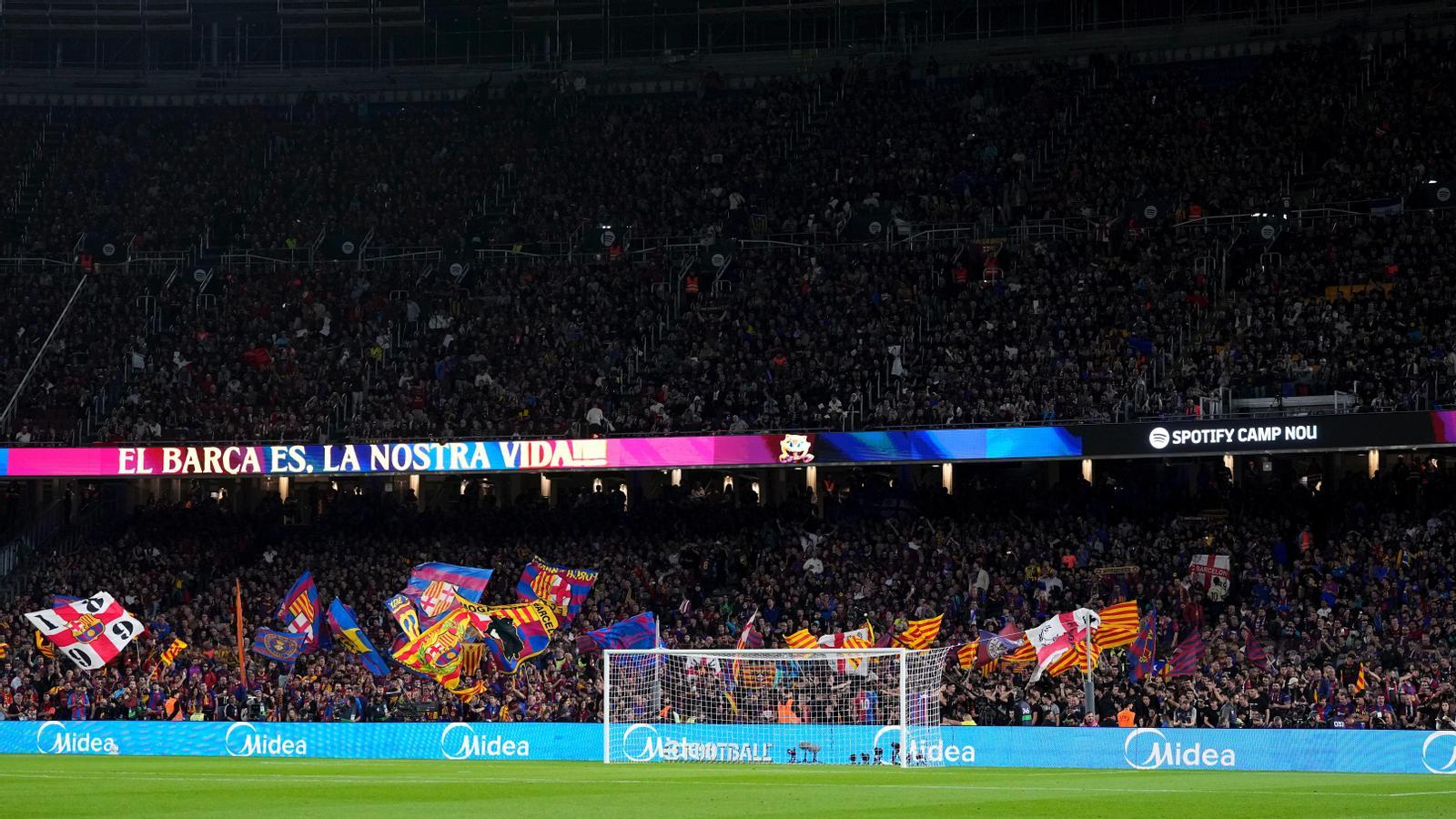
BarcelonaIt was close to midnight. The Camp Nou stands had been empty of fans for some time. Only the media, club staff and some members of the Barça dressing room were still at the stadium. On the other hand, there was movement on the esplanade, next to the Palau Blaugrana, where a large VIP tent had recently been set up. Music, laughter and a good atmosphere. It didn't seem to matter much to them that Real Madrid had won the Clásico. Probably, very few were unconditional followers of the blue and garnet team, even though they were dressed from head to toe in jerseys, scarves and all sorts of Barça merchandise.
The sporting Clásico was won by Real Madrid. The economic Clásico, by Barça, with a record turnover on a match day: 19.1 million. That is 2.6 million more than the last Barça-Madrid (May 2026). Figures that are also accompanied by other turnover records. At the Camp Nou store, more than 700,000 euros were raised on Saturday and on Sunday, the match day, for the first time in history, 800,000 euros were exceeded in a single working day. In addition, Tyler, the Creator, the rapper who served as the advertising hook for this Clásico, also became the artist who allowed the most revenue to be generated both in the stores and in e-commerce.
Perhaps the fans consider it a minor fact, since nothing will return the grief of losing to their biggest rival, but these revenue figures are crucial for the Blaugrana machinery to continue functioning. The club maintains the society model and cannot capitalize itself as easily as public limited sports companies (SADs). With television rights stagnant and sponsorships hitting a ceiling, the only way to increase turnover is through the exploitation of the stadium. The main reason for the Camp Nou's existence, apart from modernizing the facilities, is that it offers many more services and can catapult revenues. And it is already doing so, even though at the moment only 62,000 seats are available.
The board of directors knows that they are taking all sorts of unpopular economic measures, but they defend that they are essential to carry out the remodeling of the Camp Nou without losing competitive muscle. The most visible one is the pricing policy. If the turnover record was broken in the Clásico, it is because the tickets had an average price of 984 euros (excluding 10% VAT). They had never cost so much. In last season's Clásico, in which Barça ended up being proclaimed League champion, the average price was just under 900 euros. Regarding VIP products, the average price was 2,727 euros per seat, reaching up to a maximum of 6,000. It is a lot of money, taking into account the average purchasing power of Catalonia.
The ghost of reselling
The Camp Nou had the best attendance of the season, with 62,055 fans. An almost full house. But, apart from the 500 Real Madrid supporters who were in the upper part of the north goal, there were many who were not lifelong 'culers'. Simple tourists or spectators who had come to enjoy the show, leaving the result aside. Of the total tickets, around 38,000 correspond to season passes and 24,000 to seats for sale and commitments. The club, which has prepared a report to which ARA has had access, details that 86% of the seats were occupied by members and companions –including season passes– and that only 14% corresponded to the general public. However, the perception in the stands was different, and numerous fans denounce that the number of tourists was higher.
This is due to resale, a phenomenon that the club tries to minimize, but which remains very present despite having established mechanisms to avoid the buying and selling of tickets between private individuals. "The business should be done by the club, not the fan. And unfortunately, it is not few who do it," points out an authorized voice of Barça. In fact, in the weeks prior to the classic, numerous flyers were distributed among the people walking around the Camp Nou, where they were invited to contact a phone number via WhatsApp if they wanted to get tickets. Therefore, it is highly probable that a part of this 86% of seats that belonged to the social base ended up in the hands of third parties.
The other cause for controversy was visibility. In matches where attendance is lower, the ticket allocation system guarantees that everyone can see the pitch well. But on Sunday, that could not be the case. Barça had already warned that it was putting tickets with reduced visibility on sale, warning buyers before payment. However, some season ticket holders, who still do not have a fixed seat, were also affected and made their dissatisfaction evident on social media.

