The surprising solution to an endemic evil of the new Camp Nou
Barça will not be able to fix the visibility problems until technology allows the advertising hoardings to disappear

-
CAT -
CAST
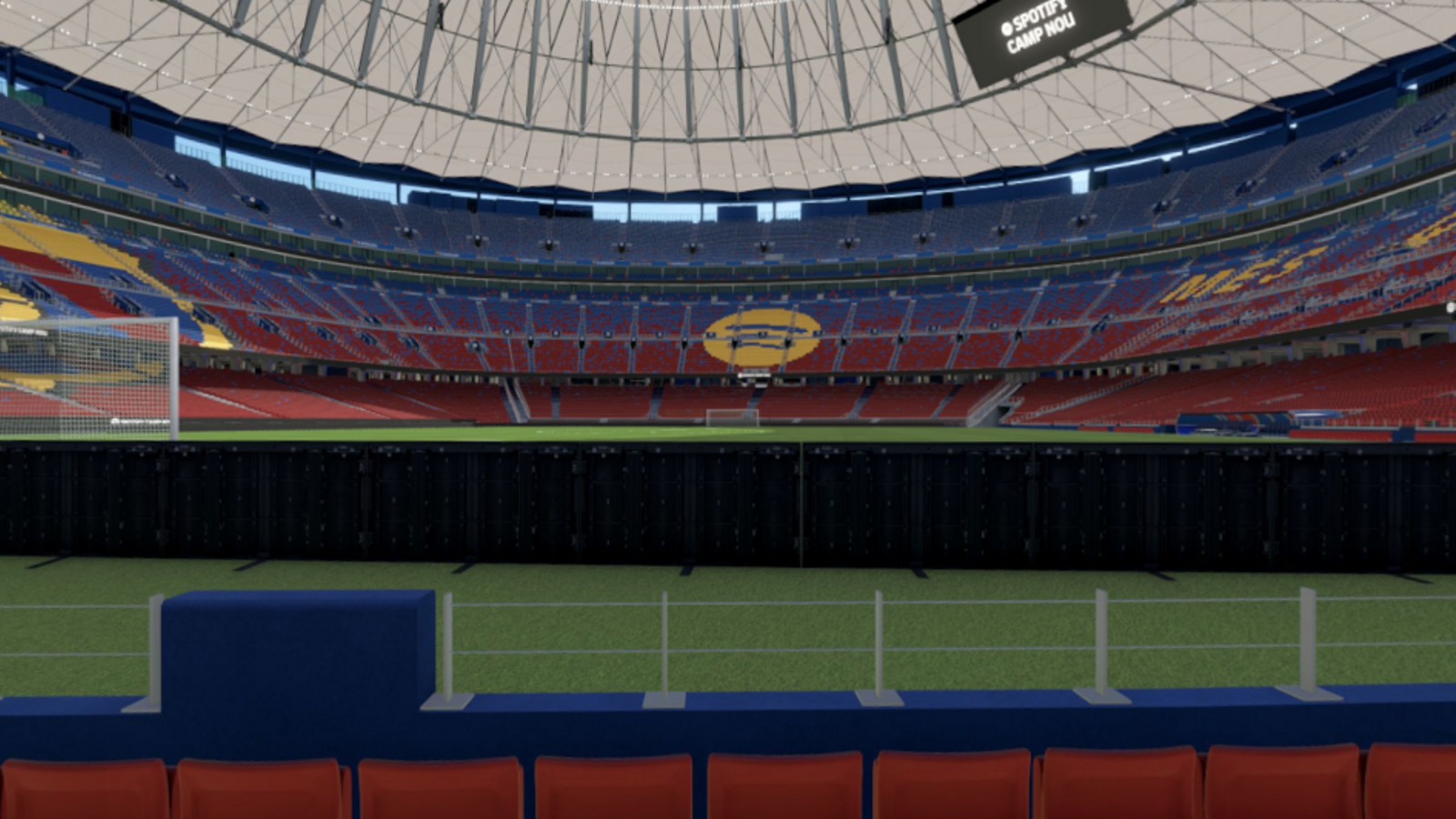
BarcelonaIf anyone wants to go on Sunday to see the classic and still doesn't have a ticket, they should know that they will have to pay at least 1,000 euros to get one. After the first ones sold out, Barça has put a second batch of tickets on sale in different areas of the Camp Nou. The cheapest ones, which sold out on Thursday, cost 1,109 euros in the lower part of the goal, behind the goal. But they come with an asterisk: they are of restricted visibility. A part of the pitch is covered due to the advertising hoardings.
These visibility problems in the stadium's first tier are endemic. In 1994, the club, under the presidency of Josep Lluís Núñez, carried out a major renovation to lower the pitch by a few meters, eliminate the moat, and thus gain some seats in the lower part of the Camp Nou. But there was one thing no one had counted on: the static advertising hoardings. Once they were installed, the first rows were left unable to see part of the pitch. And the problem was aggravated behind the goals, as it directly affected the most decisive action in football: the goals. Three decades later and with a renovation in between, the problem remains, waiting for new technologies to solve it in an indeterminate future.

The first renovation project for the Camp Nou provided, precisely, for a radical modification of the first tier to improve its inclination, thus following FIFA recommendations for the construction of new stadiums or the renovation of old ones. However, Joan Laporta's board redid the plans in 2021, arguing that many seats would be lost in the lower part of the stadium and that they did not want to "send 12,000 season ticket holders to the third tier." In general terms, the decision was applauded by the social base, although it had two trade-offs: that these visibility problems in the lower part of the stadium could practically not be corrected and, also, that the cost of the project skyrocketed, since the entire upper tier had to be rebuilt.
"The improvements we were able to make are minimal, and we could not resolve the visibility of the goals," points out an authorized voice from Espai Barça, noting that they were very conditioned by the second tier, a work that is protected by the City Council and, therefore, could not be touched. "Núñez pushed so hard that we had no margin," they add. They are referring to the possibility of lowering the pitch an additional meter, a proposal that had to be discarded immediately because, had they done so, it would have been the seats in the corner of the second tier that would have been left without seeing part of what happens on the pitch.
400 orphaned seats at the Camp Nou
In this way, there are 400 seats that remain orphaned and are not usually marketed, except for big days like a classic, in which the demand is so high that they are also put on sale. At Barça they clarify that the conflict is at both goals, but in the south, where the animation space is now located, the front seats are still occupied because the members of this space are in the habit of watching the match standing up.
"Technology will fix all of this," assure Blaugrana sources. And the fact is, in the same way that digital resources are already used in live images, the future project is for all advertising on the fields to also be computer-generated. "In the future, the television U will disappear. We could have chosen not to install the seats, but if we didn't do it now, we wouldn't have done it later," they insist at the offices, where they assure that, in the overall scope of the renovation, the difference between installing these chairs or not was "minimal."
"When these fences are removed, the view will be perfect from row zero. And since they will be at pitch level, they will be very valuable seats, as close as possible to the players. In the future, we will be able to market them at a very good price," they indicate in the offices. But, when will that be? It is a doubt that no one dares to answer. "Maybe in a year, maybe in ten. We don't know," they admit at the club. The decision is in the hands of the television stations and the clubs, when they agree to implement this system, which, beforehand, requires an initial investment. Barça is in a certain hurry, although the rest of the teams, very little.

