The Barça of the 1,000 millions
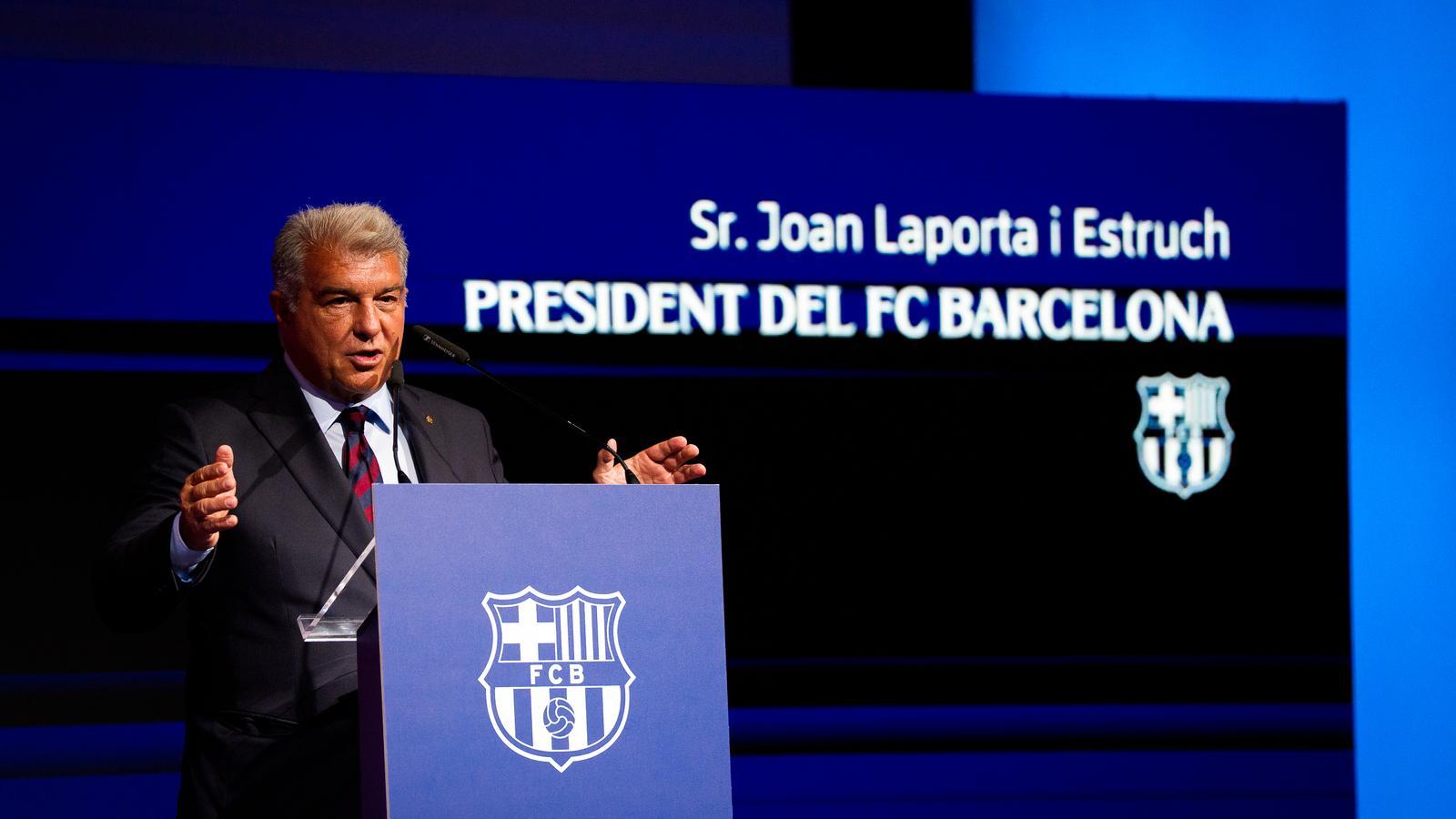

BarcelonaBarça has exceeded 1 billion euros in revenue for the first time. The return to the Camp Nou, the growth of Barça Licensing & Merchandising, and the strength of the brand confirm its commercial potential. The debate should not be limited to celebrating the turnover. The question is: what remains of these 1 billion and what value are we capable of creating with this money?
The club presents an EBITDA of 149.8 million, but it must be interpreted: player amortizations are part of the business. After amortizations, impairments, and other charges, the operating result stands at 49.6 million. Furthermore, it is weighed down by 114.2 million in financial expenses, 86.2 of which are linked to Espai Barça.

The most relevant figure, however, is cash. The cash flow from operating activities was negative, at -74.4 million. 93.9 million in interest was paid, and 354.4 million net of new financing came in. Despite this, the treasury was reduced by 91.5 million.
This does not mean that a loan pays a payroll. If the business does not generate enough cash, it is necessary to sell assets, anticipate income, or take on more debt. A club that invoices more than 1,000 million should not normalize this.
Generating more cash does not depend only on the Camp Nou. Barça has millions of followers and an emotional connection that few brands can replicate. But digital monetization still does not add value, and some projects have caused significant impairments. Digital, content, data, e-commerce, and fanengagement must be global and recurring businesses.
La Masia is much more than a source of capital gains: it is a sporting, economic, and strategic asset. The market value of Lamine Yamal, Cubarsí, or Fermín does not appear on the balance sheet because accounting regulations do not allow for the recognition of internally generated value, unlike the cost of a signed player. But even if it could be incorporated, it would not solve the equity problems: it would improve the accounting snapshot, but it would not generate cash or reduce debt. It would dress up the balance sheet without changing the financial reality.
To convert this value into cash, it would be necessary to sell. And then, how would we replace these players and at what cost? The capital gain would be immediate, but it would be necessary to take on new transfers and salaries, possibly in exchange for players of less sporting and identity value. Presenting, therefore, the latent value of La Masia as the solution to the club's equity problems is demagogic: it does not generate cash or reduce debt, and to convert it into liquidity, it forces the sale of essential assets.
Selling players trained at La Masia can only be rational when they have no path to the first team. The concern arises when transfers stop responding to a sporting or strategic decision and become a recurring necessity to balance the books. Then, the club stops monetizing talent and begins to decapitalize itself to sustain ordinary operations. La Masia is not a reserve to fix the numbers, but a competitive advantage. It is necessary to protect and empower those who sustain the competitiveness, identity, income, and future value of Barça.
Creating value also implies avoiding destroying it. Barça Produccions has accumulated an impairment close to 162 million: without a viable business model capable of generating cash, value is not created.
The Espai Barça will be the main economic decision of the coming decades. It can generate about 250 million annually in additional revenue, but how much of this money will turn into EBITDA and free cash flow after costs, investments, interest, and debt amortization? Even more so when nearly 300 million additional are needed to complete the main works.
Execution also forces us to review decisions. According to published information, Limak was the worst-rated in the preliminary technical report. It was chosen, among other reasons, for the deadlines and the cost. The deadlines have not been met and the club has not explained the contractual consequences. It is necessary to reflect on the awarding, the criteria applied, and the subsequent control.
Transparency and accountability are essential. The assembly of delegates cannot be a remote procedure or validate decisions already taken from a distance. It must be the space for representation, debate, and control by the members.
Economic sustainability is the condition to preserve the club's ownership in the hands of the members and for Barça to decide its future without yielding what defines it or mortgaging its future. This debate should not pit optimists against pessimists, nor supporters against critics of the board. It should serve to build a stronger, more solvent, and independent institution.
Barça has shown that it can generate revenue like the biggest ones. Now it is time to show that it can also manage like the best ones. Because it does not just need to grow. It needs to grow well.
Marc Ciria was a pre-candidate for the presidency of Barça in the 2025 elections
