From Curaçao to Cape Verde: the 'underdog effect' of the World Cup
Cape Verde, Curaçao, and the DR of Congo are some examples of countries that have won the hearts of the World Cup public, and there is a psychological reason
-
CAT -
CAST
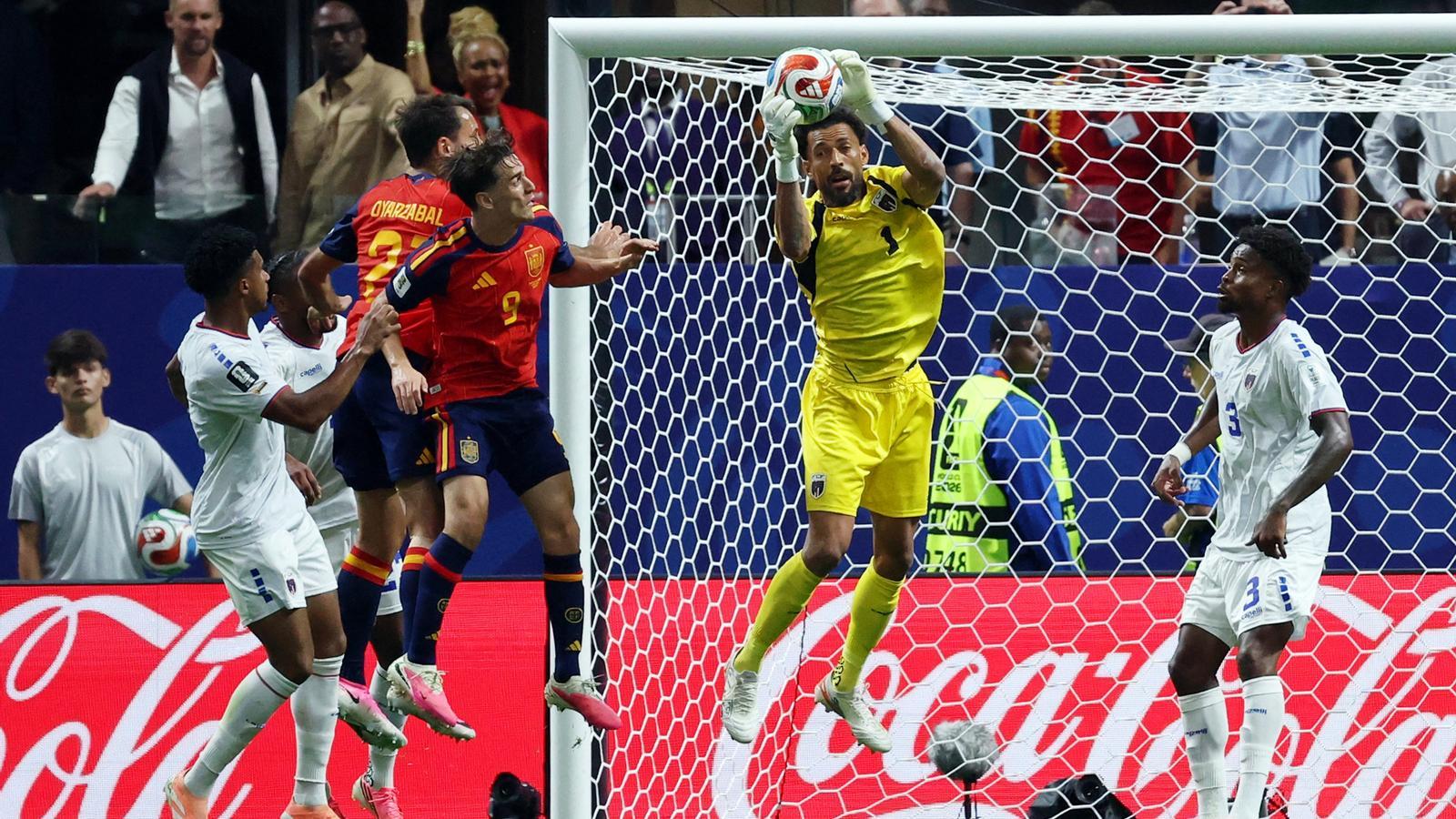
BarcelonaThe World Cup starts with a group of favorite teams that, by probability and statistics, have more options to reach the decisive phases. But the unpredictability of the top football competition usually gives rise to stories of resilience that end up captivating the public. Although Curaçao and the Democratic Republic of Congo have already been eliminated in the round of 32 and Cape Verde faces an almost impossible duel against the reigning champion, Leo Messi's Argentina, there is still one last chance for epic to prevail over predictions. A last David against Goliath.
The three teams have received, beyond their results, the support of the public and social networks. It is what is known as underdog effect: “the natural tendency to seek justice or balance”, according to Andrés Díez, sports psychologist and former professional player. Díez explains that this support responds to a double logic. On the one hand, FOMO, the need to be part of a viral phenomenon, as happened with Tim Payne, a New Zealand player who became popular thanks to a campaign launched by an Argentine influencer. On the other hand, there is identification with the weaker party. People tend to sympathize with those who compete under unequal conditions, whether due to resources, tradition, or the quality of their squad.

Furthermore, supporting a small team has a very low emotional cost. While the defeat of a powerhouse generates frustration and debate, the victory of a modest team provokes a much more intense emotional reward, because "the most normal thing is that it loses".
The role of social networks
Although this phenomenon has existed for decades, Díez considers that social networks have been decisive in amplifying it. This, however, makes it difficult to distinguish “to what extent it is empathy and to what extent it is wanting to be up to date”. Behind it there is also a deeper human need: belonging. “We need to feel part of a group,” he explains. The underdog effect is not exclusive to sport. It also manifests in other areas, such as politics and business, when a part of society supports actors perceived as weaker, even above the so-called useful vote.
A phenomenon with decades of history
Xavier Pujadas, professor of sports history at Ramon Llull University, places the origin of this phenomenon in the mid-20th century, although it consolidated with the expansion of mass sports and major international competitions. According to Pujadas, this scheme of favorites and underdogs, of Davids and Goliaths, is common in both football and other sports. Empathy arises when teams or athletes who do not fit the usual profile of winners achieve great results despite competing at a disadvantage.
From Algeria to Emma Raducanu
Pujadas recalls several paradigmatic cases. One is Algeria in the 1982 World Cup, when they surprised everyone in their first participation in the final phase only twenty years after independence. Greece also stands out in the 2004 Eurocup, when they won the title against all odds, beating the host, the Portugal of Figo and Cristiano Ronaldo. Among the most recent examples are Leicester City's Premier League in 2015-16 with Claudio Ranieri and Girona's 2023-24 season, which finished third in the League and qualified for the Champions League for the first time.
Outside of football, Pujadas points to the case of Emma Raducanu. The British player conquered the US Open in 2021 at just nineteen years old, being number 150 in the world rankings and without dropping a single set in the entire tournament. One of the great stories of overcoming that exemplifies the underdog effect.
