The World Cup of surprises: the smallest selection touches the sky
Curaçao, thrashed by Germany in their debut, draws against Ecuador showing their optimism and talent

-
CAT -
CAST
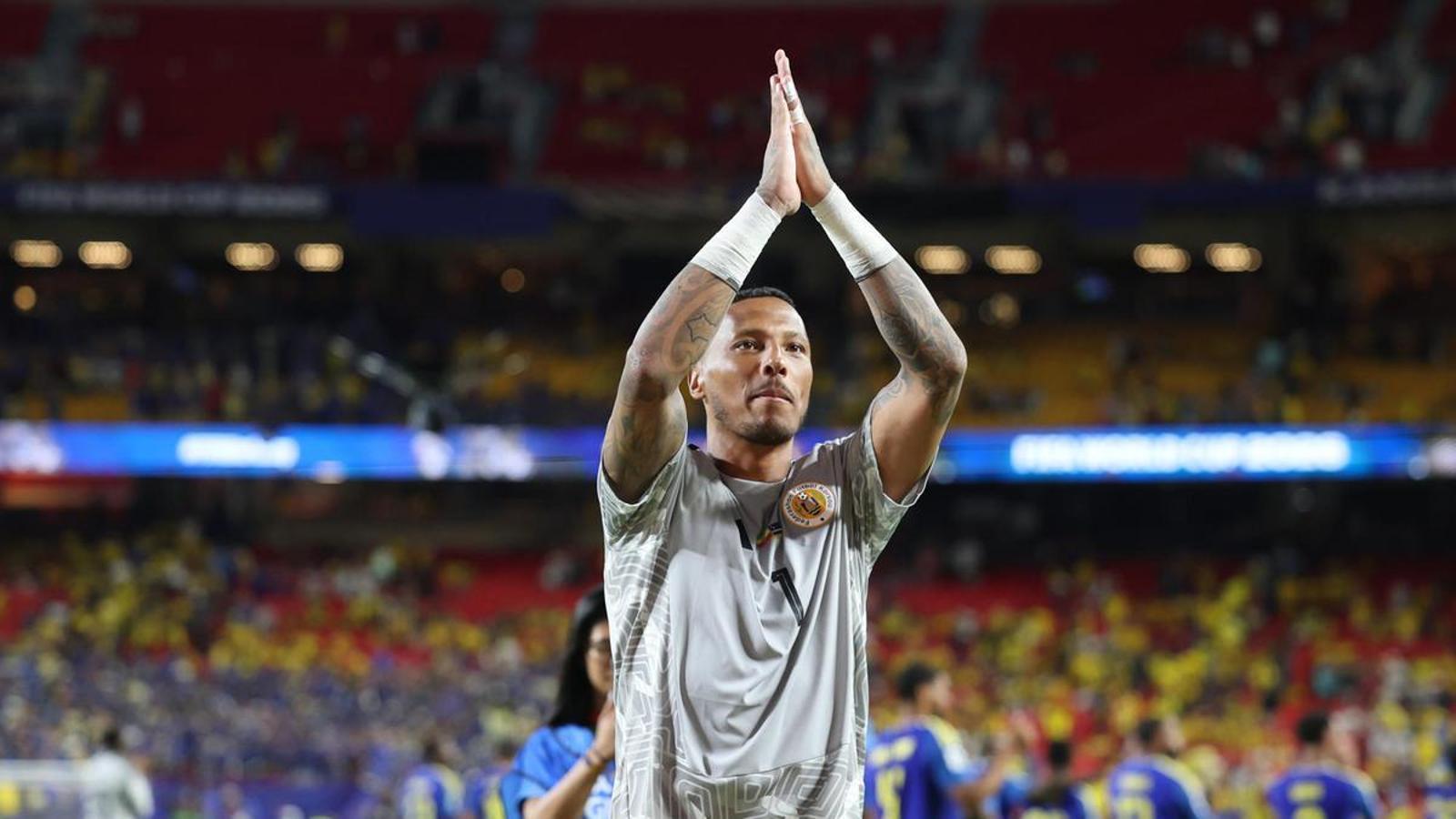
BarcelonaAn old bus from the 60s, the kind that takes children to school, was arriving at the Florida Atlantic University campus in Boca Raton. Inside the vehicle, music was playing at full volume. Rhythms of soca, tumba or seú. The rhythms that are played on the Caribbean island of Curaçao. The smallest selection in World Cup history debuted in the final phase, being thrashed 7-1 by Germany, but they haven't lost optimism. "Just being here is already a success. We will enjoy every minute," said player Leandro Bacuna before playing his second match against Ecuador. The players have once again used this bus, which they have painted blue, like the team's jersey. Inside, they have put palm leaves, and decorated it in tribute to the buses you can find on the island, rundown second-hand vehicles bought by the local government. It has brought them luck, as they have drawn against Ecuador in a match where they had some clear goal opportunities. The hero, however, has been the veteran 37-year-old goalkeeper Eloy Room, who has become the goalkeeper with the most saves in a World Cup match, with 15 meritorious performances.
With a population of 158,000 inhabitants, this Caribbean island off the coast of Venezuela, which is administratively dependent on the Netherlands, had already caused one of the biggest surprises in the qualifiers by overcoming teams with some tradition such as Costa Rica, Jamaica or Guatemala. "We've been doing good work for years, but being at the World Cup is a dream come true," says Gilbert Martina, president of the Federation. A squad where only one of the called-up footballers, Tahith Chong, was born on the island. The rest are citizens of the Netherlands, children of immigrants who moved to Europe to seek a better life. Therefore, in essence, the success is thanks to players who are not part of these 158,000 inhabitants. Curaçao is a small paradise for a vacation, but tourism doesn't provide jobs for everyone, and for decades, many young people from the Dutch possessions in the Caribbean moved to Europe, whether they were born in Aruba, Suriname, or Curaçao. Suriname achieved independence, but the rest of the territories are still part of the Kingdom of the Netherlands. Against Ecuador, in fact, the Dutch king was in the stands cheering in the team's blue jersey.
"People always see us having fun and dancing. We are all together. But as soon as the referee blows the whistle, we only have one thing in mind: achieving a result," explains Leandro Bacuna, the captain. "We are Dutch who have grown up in good clubs. But we are proud of our roots. We grew up in houses where Caribbean music was listened to with traditional dishes from there at dinner. Being able to represent the land of our parents excites us," he added. When Curaçao arrives at the stadiums or goes out to train, they do so listening to rhythms from their island, like songs by the popular singer Kevv. Their good humor and Caribbean rhythm, added to being the smallest team, has caused a surge in requests to go on vacation to Curaçao, as explained by the island's tourism department. And many fans follow them, aware that we may never see them in a World Cup again.
A special coach
And all this, with a veteran of the benches training them. The Dutch technician Dick Advocaat, a wanderer who had won leagues with PSV and managed national teams like the Netherlands, Russia, or Serbia, was chosen two years ago to lead the national team and achieved good results. But once they had already qualified, he resigned from his post, as he prioritized taking care of his daughter, who was suffering from an illness. Fortunately, his daughter has been recovering and Advocaat was able to return to his position, becoming the oldest coach of all time to manage a match at the World Cup. In 1994, when the World Cup was held for the first time in the United States, he was managing the Netherlands. Now he has returned with Curaçao.
A young selection, created just in 2011 after a key political change. In 2010, an entity called the Netherlands Antilles was dissolved, which brought together a lot of Caribbean islands owned by the Netherlands since they were snatched from the Spanish in the 17th century. Curaçao and Sint Maarten became constituent nations within the Kingdom of the Netherlands, along with Aruba, which had already separated from the Netherlands Antilles in 1986. This opened the door for them to have an official selection, as the Dutch government allowed it.
Kluivert, key
In the early years, the selection played with footballers born on the island. But the Federation decided to start calling up Dutch professional footballers with roots on the island to raise the level. Dutch football cannot be understood without the children of these Caribbean territories. Men like Gullit, Rijkaard or Hasselbaink were sons of immigrants from Suriname. In the Kluivert family, the father was from Suriname and the mother from Curaçao, and for this reason Patrick Kluivert was the coach of Curaçao a few years ago. In fact, when the former Barça player was chosen to lead the selection, he encountered a strong debate: many citizens of Curaçao did not entirely approve of only European players being called up, even if they were sons or grandsons of their neighbors. Kluivert ended the debate by organizing a friendly match between local and European players. The Europeans were thrashed 6-1. That was the moment the debate ended.
Curaçao mixes players who play in mid-table European first division clubs with others who have ended up in remote destinations, like Gervane Kastaneer, a former Castellón player who now plays in Malaysia. Players who as children may have dreamed of playing in a World Cup with the Netherlands, as Quinten Timber and Jorrel Hato, called up by Koeman, two players with roots in Curaçao, are doing. Those who have boarded Dick Advocaat's bus have done so with good rhythm, good humor, and enjoying the moment. When the 7-1 defeat against Germany ended, instead of complaining, they wanted to appreciate the journey taken until then. And they moved their hips dancing to Caribbean rhythms, preparing for the second match. And in this one, they have already achieved a point. A point they celebrated by dancing in the locker room accompanied by the Dutch monarchs.

