Dreams come true at the World Cup: the 40-year-old out-of-contract goalkeeper who stopped Spain
Cape Verde's selection shines with a player recruited thanks to a LinkedIn message
-
CAT -
CAST
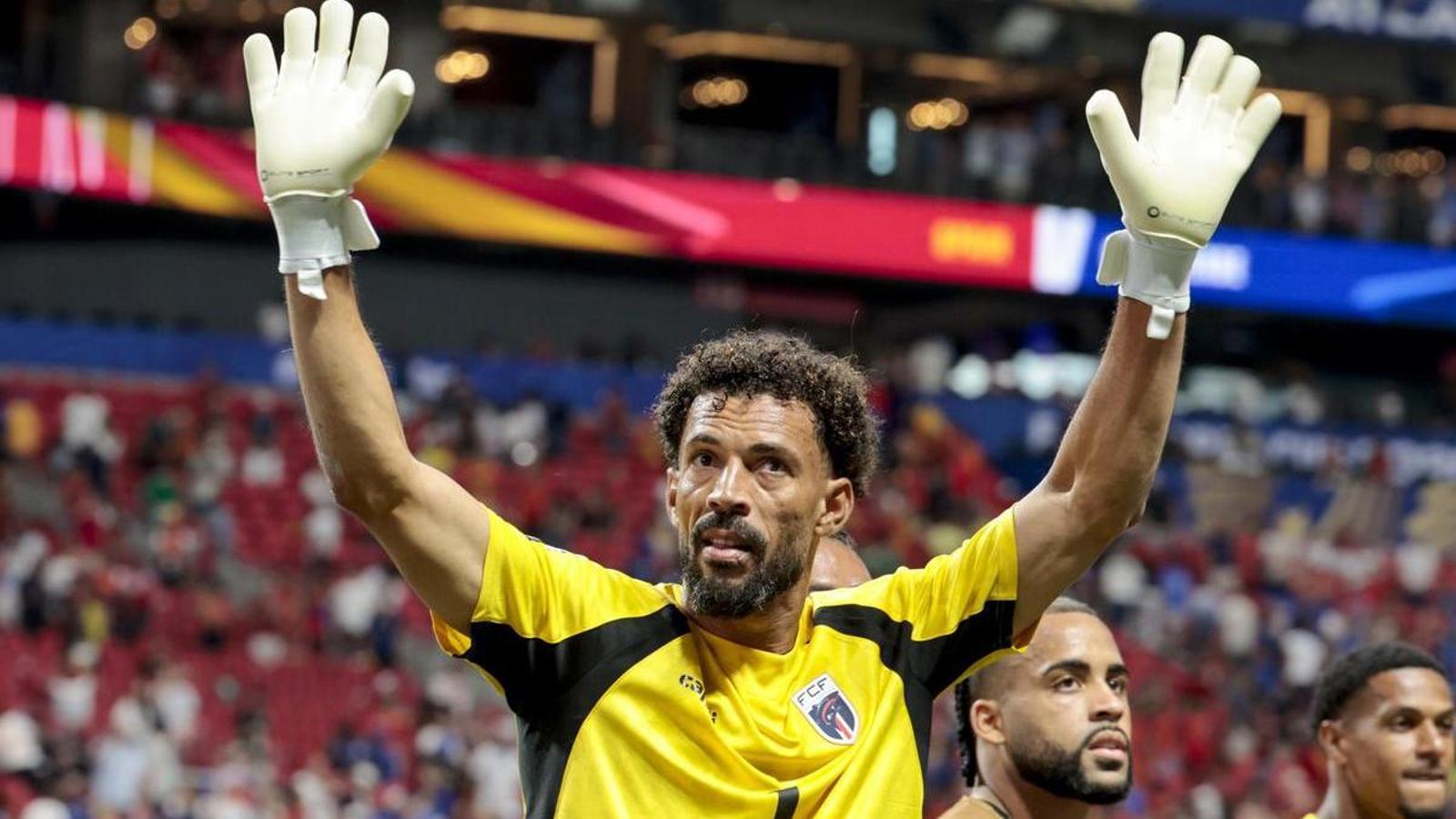
BarcelonaIt was supposed to be Spain's and Lamine Yamal's day, but it was Josimar Dias Vozinha's, a nickname that in Portuguese sounds very similar to "grandmother". It was a fairy tale. One of those stories that, if a screenwriter invented it to make a television series, many would say it's impossible to believe. Sometimes it seems that in this modern football full of money where the rich get richer and richer, it's not possible for a 40-year-old man without a team to shine against Lamine Yamal, Ferran Torres, Pedri, and company. But at the Football World Cup, luckily, these things still happen. No 40-year-old goalkeeper had ever managed to finish a World Cup match without conceding goals. Vozinhaachieved it.
Born in Mindelo, the second largest city in Sao Vicente, Vozinhamanaged it.
Born in Mindelo, the second largest population in Sao Vicente, Vozinhawas born during the World Cup won by Argentina. Who knows if this year in Cape Verde some child will be named Vozinha, after his prodigious performance against Spain.

Vozinhawas a goalkeeper destined to play on the fringes of top-level football. Following that invisible thread that connects lands that were once part of the Portuguese empire, he ended up stopping balls in Angola. Lands united by a tragic past, as millions of slaves left here centuries ago. Now, players emerge who want to escape poverty at all costs. Far from the eyes of many Europeans, many footballers from Angola, Cape Verde, and Mozambique move from place to place, aspiring to make the definitive leap to European football. In Angola, Josimar, who until then was known by that name, did quite well. But when he arrived in Angola, there was already a Josimar on the squad, so he started going by Vozinha, a nickname his friends had given him.
Vozinhaseemed unlikely to ever reach Europe. He was approaching 30 when he was discovered, who knows how, by a Moldovan team. There he saw snow for the first time. And he was cold. He tried to leave Chisinau by any means necessary. A pilgrimage began through modest European clubs in Cyprus, Slovakia, and finally Portugal, trying to save money and enjoy football. His last destination was Chaves in the Portuguese Second Division, where a few days ago his contract was not renewed. In the very year he had reached the sky by qualifying for the World Cup for the first time with Cape Verde, he found himself jobless. His performance against Spain, however, will surely change everything. In life and on social media: in Brazil, another land where Portuguese is spoken, some journalists became enthusiastic about his saves and, when they discovered he had few followers on his Instagram profile, they asked Brazilians to follow him. And so it was. When at the end of the match he was interviewed by a Brazilian journalist, she showed him live that he had over a million followers. Within a few hours, it was two million, and by dawn, it had already surpassed four. His mother, however, could not see it live, affected by Donald Trump's government's restrictions on African national teams.
"We worked hard to achieve it. We knew we were playing with one of the best teams in the world, but we also know our quality. We are very happy", he explained at the end of the match to the DAZN microphones. At 40 years old, he had just inscribed his name in the history books of Cape Verdean football and left Spain with a slap in the face. Vozinhahad debuted in 2012 with the national team, just at a time when the federation had begun to recruit footballers born in Portugal who were sons or grandsons of Cape Verdean immigrants. A generation of players trained in Europe who raised the level of football in this archipelago. But in goal, it was always him. Surrounded by other players with surprising stories.
With 600,000 inhabitants, Cape Verde is the third smallest country in World Cup history, only behind Curaçao and Iceland. Independent from Portugal in 1975, it joined FIFA in 1986. At first, they never managed to win, until they decided to start looking for Europeans with roots in the archipelago in 2010. It was a success. And all this, without much structure. In fact, the coach, Lucio Antunes, spent hours in front of a screen searching web pages and social networks for possible leads to find players who could be called up. And it was like this that in 2018 he discovered Roberto Lopes, a player, son of a Cape Verdean and an Irishwoman, born in Dublin, where he played football. Seeing this name, Antunes investigated if he had roots in Cape Verde. And he decided to contact him by sending him a message via LinkedIn. Later, Lopes said: "I didn't see the message, I didn't pay attention to many messages I received on social media. But a few months later he wrote to me again and this time I did open the message. And I couldn't believe it." Thus was born the "LinkedIn project," with which other members of the Federation began to use social networks to locate footballers throughout Europe with Cape Verdean roots. Thus, of the 26 called up for the World Cup, 14 were born outside Cape Verde.
They are players with modest careers who delivered the most beautiful performance of their lives against Spain. Players like Ianique dos Santos Tavares, who at 38 years old has had a great year, as he won the Portuguese Cup with a Second Division team, Torreense, and is now at the World Cup. Players who have seen it all, but who in Atlanta experienced a day they will never forget: they left Spain by a hair's breadth in a match in which they only committed one foul. The magic of the World Cup is this: discovering players you wouldn't otherwise discover, and whose names you will remember years later. In 1990, people discovered the Cameroonian Omam-Biyiki, and in 1994, the Saudi Saeed Al-Owairan. In 2026, Vozinha and his teammates have been discovered.
.
