Deco's method in the Barça transfer market
Discretion, lightning trips and the complicity of the players: this is how the sporting director has managed the summer
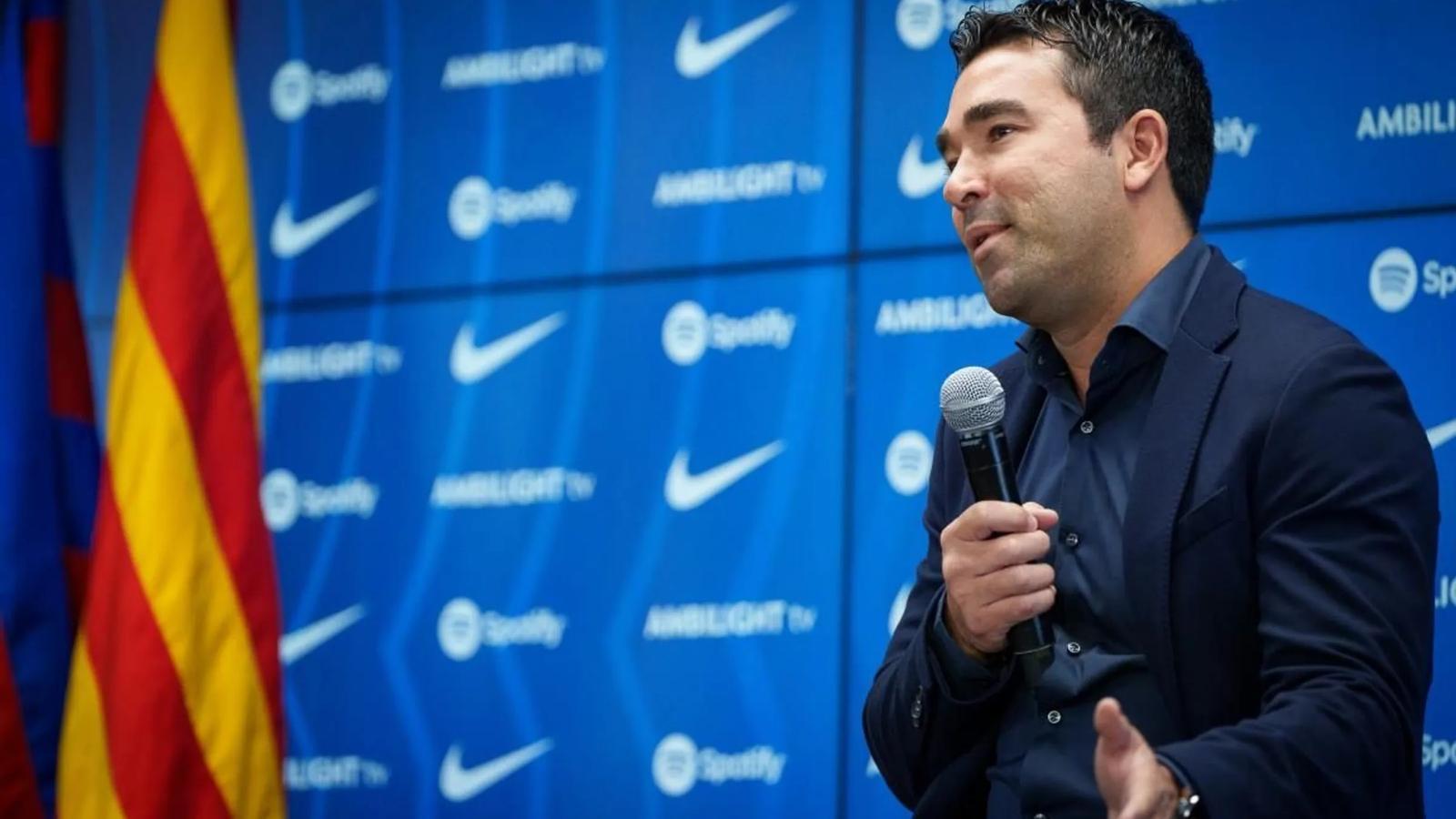

BarcelonaBarça has closed a demanding transfer market with a good grade. Demanding, because at the end of this season the club will have to return to Montjuïc, where it will stay for at least six months until the roof of the new Camp Nou is finished, and this means that income will drop again: it will be necessary to assume the rent of the Olympic Stadium once more and income from ticketing will fall. In conclusion: it will return to being outside the 1:1 rule and difficulties in signing and registering players will return. This has turned the summer market —with the extension of the winter market— into a decisive transfer window for this season and the next.
The sporting director Deco, who since this summer has also been in charge of the management of signings (and sales) for Barça Atlètic, has been the great protagonist —together with the shadow power of Alejandro Echevarría— of rebuilding and rethinking with Hansi Flick. Barça's start to the season is exciting and the fans are enthusiastic —you only need to feel how the Camp Nou breathes and how players like Gordon or Rodri have been received—, while Raphinha's good performances in the attacking line have appeased the great suspense of the market: not incorporating the number nine that Flick was demanding. The frontal opposition of the general director of Atlético de Madrid, Miguel Ángel Gil Marín (with the necessary support of the Apollo fund), to selling Julián Álvarez to Barça has forced Deco to activate a plan B.
The alternative to Julián is Gabriel Jesus, a footballer with an accredited track record in the Premier League, but who had stopped counting for Mikel Arteta after he suffered a serious knee injury in January 2025 that kept him out of action for almost a year. His agents had offered him to various clubs in Europe throughout the summer, but it was a week ago when Deco activated this option after Flick gave it the green light.
"It was a market opportunity and it was within reach," they say to ARA from Barça. "Market opportunity" due to Jesus' price—10 million euros fixed plus four in variables—and also "within reach" because the player's desire to come to Barça was decisive. In fact, the Brazilian was earning 16 million euros gross at Arsenal and has had to accept a salary reduction, although he will continue to receive a generous wage at 29 years old.
Speed and discretion
The speed and discretion with which the Jesus operation was executed have been the latest example of how Deco has managed the market. In short: lightning trips playing at misleading people about the reason for the travel (with the complicity of the club's official sources), some market opportunities and, above all, ensuring before negotiating with the clubs that he had the conviction of the player to wear the blue and garnet jersey to try to scrape together some millions in the transactions, although it has not always worked.
The market began with the incorporation of Gordon. The club had the option to buy Rashford for 30 million, but the high salary of the footballer was a hurdle. It was suspected that Deco had traveled to England to ask about Joao Pedro, from Chelsea, but the objective was another. Gordon was liked by both the sporting director and the coach and is three years younger than Rashford (25 compared to 28), besides earning less. The former Newcastle player cost 70 million plus 10 in variables, but from Barça it was considered that Gordon, besides fitting in better with Flick —he is more hardworking, for example, in the pressure— was also an asset easier to amortize and to resell to the Premier League in case he does not work out in Barcelona.
The operation with Karim Adeyemi was also swift. In this case, it is a signing requested by Flick, who already knew the player and Barça could afford the transfer (22 million plus seven in variables) because Dortmund was willing to sell him, since his contract was expiring in 2027, while Jesse Bisiwu (eight and a half million) was considered a "market opportunity with future potential" because he also had one year left on his contract with Bruges. Cancelo, for his part, receives a good salary, but has arrived free of transfer fee after parting ways with Al-Hilal.
The signing that was not in the initial plans and that has shaken the market the most is that of Rodri. The midfielder had been an object of desire for Real Madrid. Before negotiating with City, Barça needed to know that Rodri was willing to prioritize the blaugrana option. A first meeting in Begur, taking advantage of the footballer's stay on the Costa Brava to attend the wedding of his friend Dani Codina —a Barça employee—, was significant. Then came the negotiations with City, which squeezed up to 60 million fixed, 11.5 in easily achievable variables and 5 million more linked to winning the Champions League.

The departures folder concluded with Casadó's loan to Dépor at the last minute. This has been the most clumsily managed operation. The club had valued him between 30 and 40 million, amounts that only Saudi Arabia was willing to pay, and, in the end, he leaves on loan with Barça assuming a large part of his salary and with a purchase option of 30 million that the Galicians will hardly activate. There was more success in the loan of Araujo to Liverpool and the sale for almost 50 million of Ferran to PSG in the last year of the Valencian's contract.