"Being a professional athlete is harder because of social media"
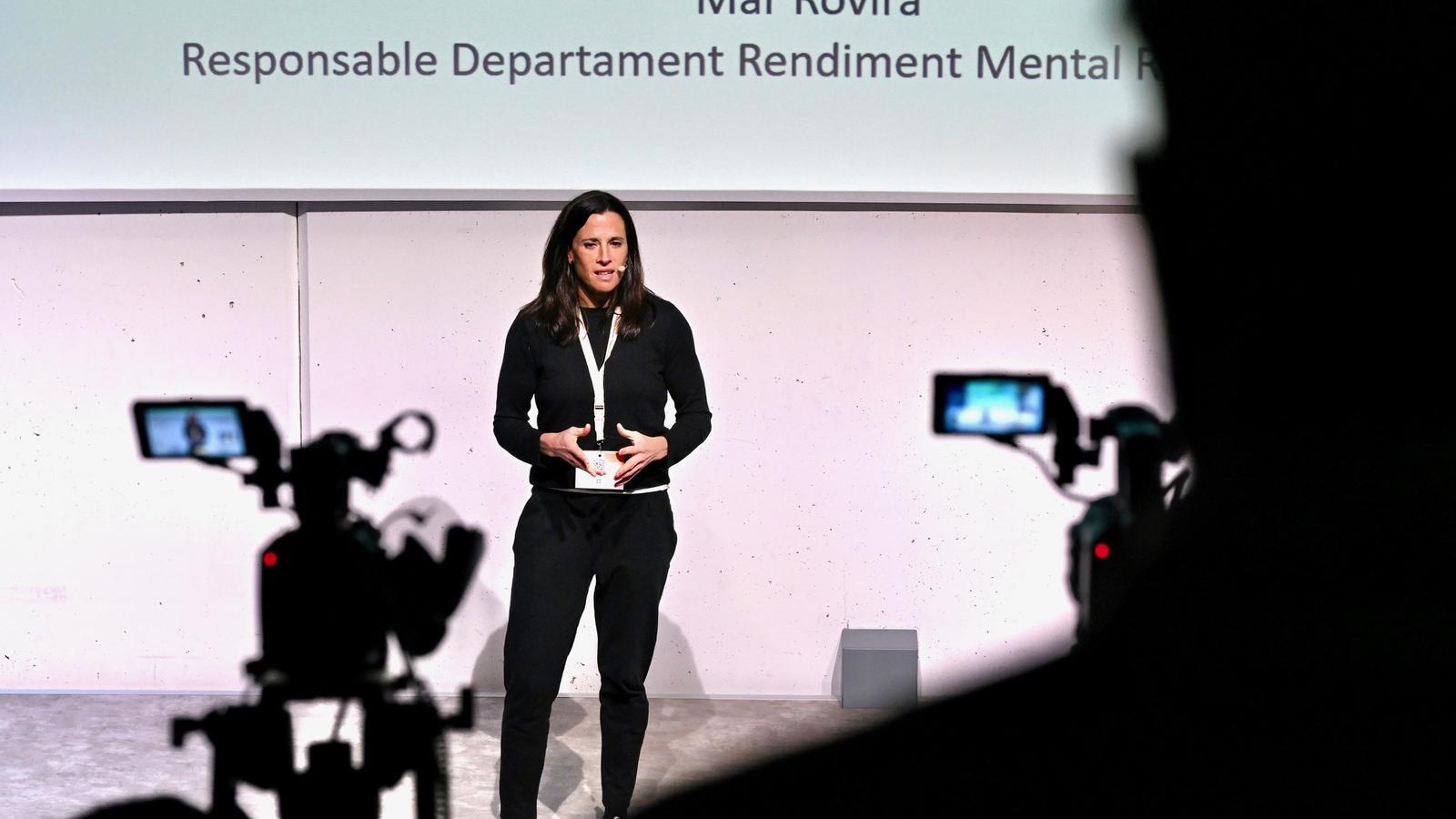
Mar Rovira, sports psychologist for Ricky Rubio or Espanyol, warns about the need to take care of mental health

-
CAT -
CAST
BarcelonaA little while after being eliminated in the second round of the WTA in Bogotá by the Russian Anastasia Tikhonova (1-6, 6-4 and 3-6), the tennis player Marina Bassols went on her social networks. While still digesting the defeat, the blanenca, 26 years old, read a handful of messages with death threats. "Get yourself good life insurance and a lawyer because I'll kill you when you get home", "I've paid a cartel to kill you", "I will assassinate you, I know where you live" or "You are officially dead".The situation that Bassols, who is ranked 203 in the WTA rankings, experienced is not an isolated case. Elite athletes have had to get used to living with fierce criticism, derogatory messages and death threats. Some of the messages come from fans unhappy with their performance, but others from people who have lost money on a sports bet.
“Being a professional athlete is now more difficult due to social media. When we talk about managing pressure, they now have a component that didn't exist when I was an elite athlete, which is what everyone else thinks of them. This is clearly summarized on social media, which has become a stressful factor at levels we can't even imagine. This often causes them to get confused and makes it much more difficult for them to manage this part,” analyzes Mar Rovira, a sports psychologist who a few years ago made a living as a professional basketball player. Her advice to elite athletes is not to look at their mobile phones after a bad performance.Rovira, who was key in Ricky Rubio's mental recovery, leads the mental performance department at Espanyol, an initiative named El Niu. “I work in a very transversal way because I really like amateur sports, which keeps me very connected to the essence, but I also manage professional sports, which accounts for almost 80% of what I do. I move through stages because I've done a lot of basketball, motorsports, swimming, or tennis. I also handle refereeing, which is very interesting, and now I'm very focused on football,” she says. “I don't understand performance sports as a discipline that can be separated into boxes. The mental, physical, technical, and tactical aspects are all connected. When you work with an athlete to reach the elite level, you have to integrate all the important factors. It's not a matter of percentages but rather that everything is integrated and everything is important,” recalls Rovira. Before, athletes felt that going to a psychology specialist was admitting a weakness, but that has changed a lot in recent years. “In my early years, I had to do preliminary work to convince athletes. That has changed, but I still notice differences between disciplines. In football, it's still a bit difficult, and many hide it because they don't want people to see them as vulnerable. In fact, there aren't many sports psychologists integrated into coaching staff. I'm very lucky because Espanyol does have this role within the first team's coaching staff, but it's not the norm. There's still a lot of work to be done for players to understand that just as there's a technical or physical coach, there's a mental coach. All we want is for both the player and the team to perform,” she summarizes.Success does not exempt from discomfort
There are players who have sporting success, but who have stopped their sporting career or have sought help because they were having a bad time. In fact, 49% of Olympic athletes have trouble sleeping and 33.6% of elite athletes suffer from anxiety and depression. “Clubs should try to introduce a mental health team, a series of resources that any player can have within their club when they see that something at a mental level is not working. For this reason, there must be a great deal of confidentiality, reference professionals and a lot of education. Athletes must be explained at what point they should realize that something is not going well and even do preventive work,” he recommends.“Having money does not exempt you at all from having mental problems. What does one thing have to do with the other? Earning a lot of money is something circumstantial, a consequence. The problems of anxiety or depression that an elite athlete suffers are the same as those suffered by any person on the street. The only thing that changes are the circumstances that produce them. Athletes ask me why this is happening to them if they have everything. They live it with a great sense of guilt,” recalls Rovira.

