The surprising story of the World Cup's most special stadium
The Azteca of Mexico, venue of the 1970 and 1986 finals where Pelé and Maradona shone, will kick off this year's event

-
CAT -
CAST
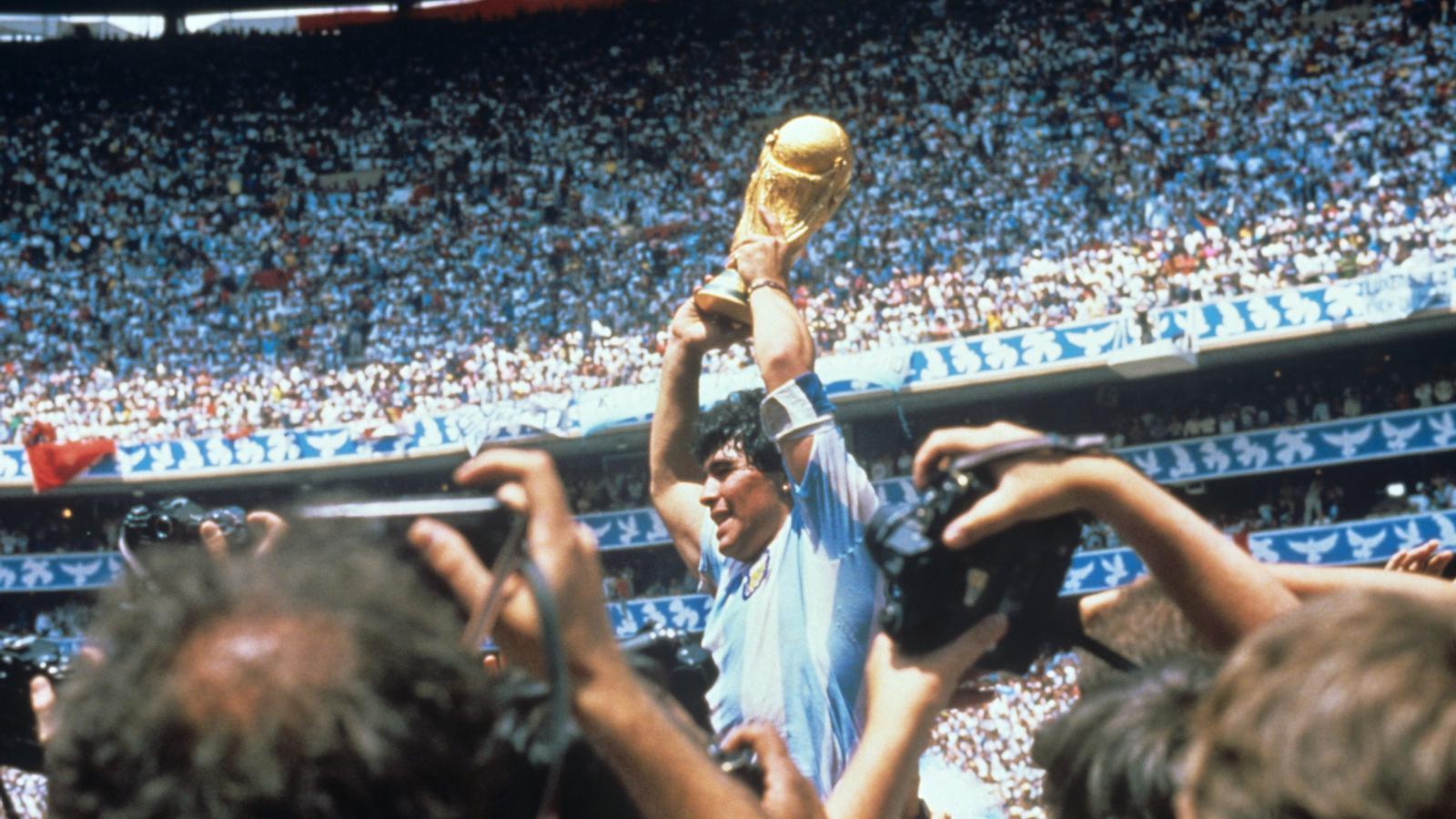
BarcelonaOn June 11, millions of people will be paying attention to everything happening at the Azteca Stadium in Mexico City. For the third time in its history, this venue will host the opening match of a World Cup, in this case the duel between Mexico and South Africa. Never before has a stadium been the venue for three different World Cups, although this year it will not be able to host the final, as it will take place on July 19 at the MetLife Stadium in New Jersey. In a modern 21st-century World Cup full of newly built stadiums with commercial brand names, the Azteca connects with the past. A stadium with its own personality, now that all modern stadiums look alike. The venue in the south of Mexico City has undergone a major renovation to adapt it to modern times, although it remains the stadium where in 1970 Pelé led the most beautiful team of all time and where in 1986, Maradona touched the sky with Argentina. A stadium to which songs have been dedicated, which appears in films, and which hides a surprising history, as to build it, one man was on the verge of losing everything.
The stadium was built in the Santa Úrsula Coapa area in 1966, intended to be "the best stadium on the planet" according to Emilio Azcárraga Milmo, majority shareholder of the Telesistema television network and promoter of this stadium. The money obtained from loans to build it was his. If some of the most memorable World Cup matches have been played on the pitch, such as the one when Maradona scored a brilliant goal and another controversial one against the English in 1986, the stands have witnessed a history of Mexican power, as the stadium belongs to the Azcárraga dynasty. In fact, two of the great Mexican temples, the Basilica of Guadalupe and the Azteca stadium, were paid for by members of this family. And in both cases, they did so by asking the architects to build structures designed for live television broadcasts. While the Azcárragas built the Virgin's temple without hesitation, it was different with the football stadium, causing a family schism.
Emilio Azcárraga Milmo always used his second surname to differentiate himself from his father, Emilio Azcárraga Vidaurreta, a descendant of a family with Basque roots and creator of the television channel Telesistema. Vidaurreta had gone from selling shoes to owning a radio station, before understanding that the future would be television with a channel to make soap operas for a female audience. At that time, the son was a young man with pockets full of money who neither studied nor worked, moving between Europe, the United States, and Mexico from party to party. When the Telesistema channel was inaugurated, he showed up still half-drunk and without a shoe. He was a lost cause, and in fact, his father proclaimed that the heir to his fortune would be his daughter's husband, not his son.
But the son matured. And he understood better than his father that football could be a great business. First, he bought one of the most popular clubs in the country, Club América. Then he decided to join forces with the Federation's bid to bring the 1970 World Cup to Mexico. And then he proposed building the best football stadium of the time, which was key to allowing Mexicans to win the right to host the World Cup. Without the family's support, Azcárraga looked for solutions to pay for the stadium. Firstly, he involved the owners of Atlante and Necaxa, other historic clubs in the city, with the promise that they could also play as locals at the Azteca. The three clubs created a company responsible for building the stadium and organized a public architecture competition won by Pedro Ramírez Vázquez, who had designed the acclaimed National Museum of Anthropology. But Azcárraga Milmo knew the project was too ambitious and the budget kept on soaring. So, he copied a Brazilian idea for the installation of private boxes that would be sold to large companies and families for a period of 99 years. Despite everything, Azcárraga Milmo accumulated so many debts to build the stadium that his house was even repossessed, which finally caused the rest of the family to enter the project more to save family honor than because they believed in it. This is how the Azteca could be finished.
The Azteca was one of the first football stadiums designed more for those who watch from home than for those who fill its stands. Curiously, the first match at the stadium was a disaster, a friendly on May 29, 1966, between Club América and Torino, an Italian team. The president of the nation, Gustavo Díaz Ordaz, was late, he was late because a meeting came up and upon arrival, everyone was booed, as the fans had to wait two hours. The 1970 World Cup was a great success. The first to be broadcast in color television, with Brazil winning with an exciting game. Azcárraga Milmo emerged victorious, as in a few years, his father died and the man who was supposed to inherit the companies, his sister's husband, died in a plane crash: the empire was his.
In 1982, Colombia renounced organizing the 1986 World Cup for economic reasons, and the Mexican businessman was key for the event to be held in his country again. He put so much money into it that Azcárraga Milmo demanded that the World Cup logo be as similar as possible to that of Televisa, the channel he had created. Not even the earthquake that caused hundreds of deaths in 1985 stopped the World Cup project, which would end with the triumph of Diego Armando Maradona's Argentina. After 25 years controlling Mexican football, Azcárraga Milmo died in 1997 from pancreatic cancer. Now, the companies, including the Azteca stadium and Club América, are led by his son, Emilio Azcárraga Jean. His dream was to bring a third final to the stadium, but he has to settle for an opening match. The Azteca will host a total of five matches in this World Cup, making it the stadium that has hosted the most World Cup matches, with a total of 24.
