Albert Tort: "We want the whole of Catalonia to be a digital hub in southern Europe"
Secretary of Telecommunications and Digital Transformation of the Government of Catalonia
-
CAT -
CAST
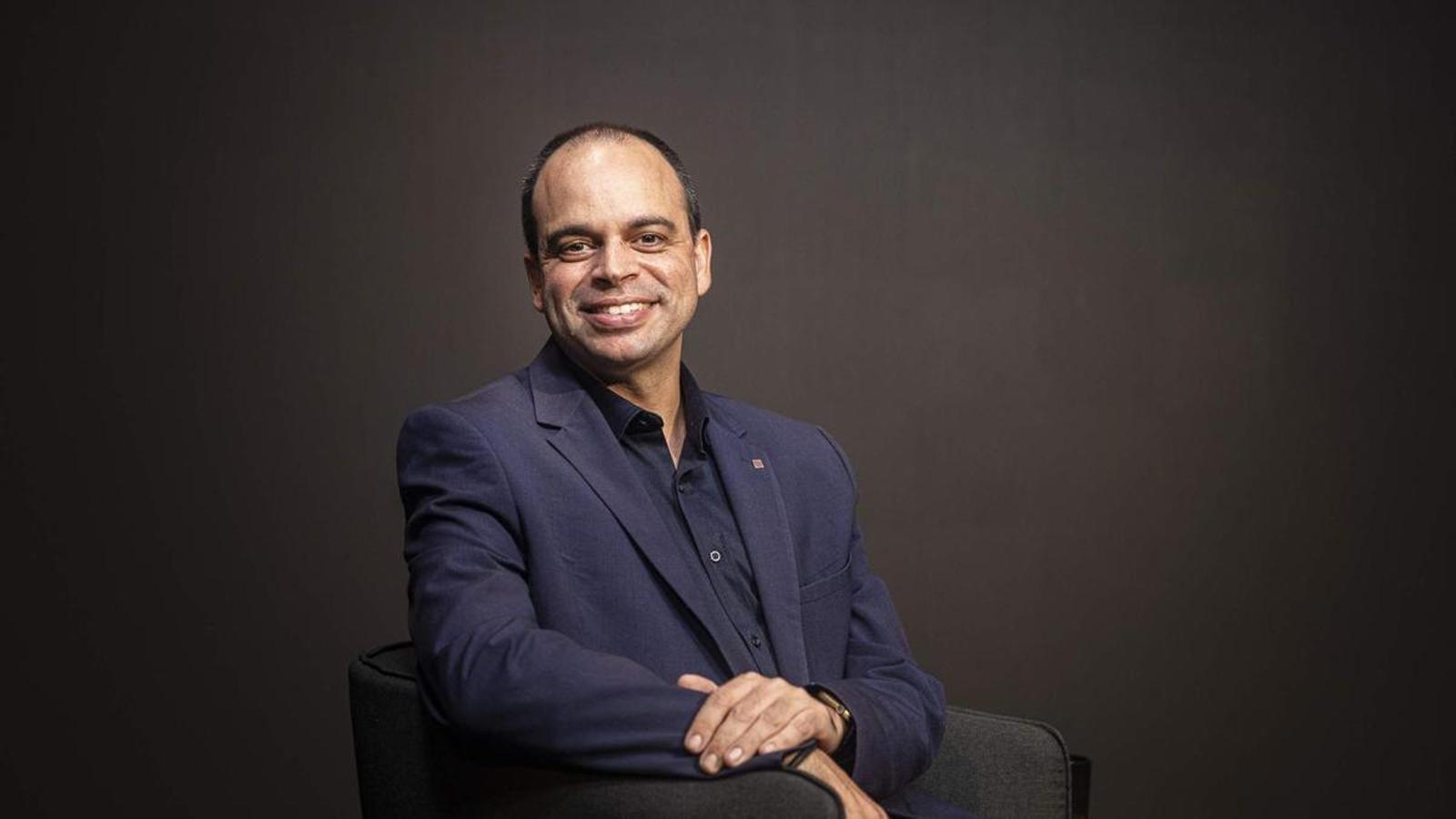
Albert Tort, Secretary of Telecommunications and Digital Transformation of the Government of Catalonia, argues that infrastructures are essential for digital transformation. For this reason, the public administration is working to implement 6G with satellite communications, promote high-level data centers and cloud services, and advance quantum computing throughout the territory.
At what point is Catalonia in its digital transformation process and what are the main challenges it faces?
— We are fully immersed in it, and it is an exciting challenge because strengthening public services is key at a time of enormous social, technological, environmental, and geopolitical transformation that we are living through. And for this reason, we have activated a continuous race: public fiber optics to connect the country's public services, communications with quantum encryption, Sovereign Public Cloud services, strengthening of cybersecurity, a digital shield, resilient infrastructures, a new model of citizen attention that includes new mechanisms such as video attention and the new gencat.cat combined with in-person and omnichannel attention, the AI Gigafactory candidacy, or the caTgirem program to improve and simplify day-to-day procedures. We have a lot of work to do, but reforming the administration has become an authentic government policy in Catalonia
Digital infrastructures –fiber, 5G, data centers, and cloud– are increasingly decisive for the economy and public services. What priorities should Catalonia have so that this connectivity reaches the entire territory and also constitutes a basis for innovating and reinforcing the technological sovereignty of Catalonia and Europe?
— The enablement of digital infrastructures in advanced computing and communications is essential for digital transformation and therefore represents a country-wide challenge. For this reason, we continue to deploy a publicly-owned fiber optic network, connect public services to it, promote a connectivity improvement plan everywhere, return to building telecommunications towers, and think beyond: towards 6G with satellite communications, with the promotion of high-level data centers, cloud services, and quantum computing. Infrastructures are the foundation for the active and responsible adoption of AI, to process huge amounts of data, and to do so with greater technological strategic autonomy in Catalonia, Spain, and Europe, with more internal capabilities, fewer dependencies, and advancing towards higher resilience and digital sustainability in all areas of our society: health, mobility, public services...
How can it be ensured that digitalization also reaches small and medium-sized enterprises and municipalities furthest from large urban centers?
— Technology must serve to shorten distances and reduce inequalities, also in access to technology, which today is key for small, medium, and large companies, and for all of Catalonia. Infrastructure is needed, but also training, support, talent, and digital knowledge throughout the territory. It is necessary that institutional involvement and public initiatives, such as the commitment to the gigafactory in Terres de l'Ebre, training, incentives, and talent, are not concentrated only in the Barcelona Metropolitan Area, but rather create a network throughout Catalonia.
With the expansion of artificial intelligence, how can we move towards more efficient public services without losing sight of transparency, security, and accountability in the decisions that affect people?
— I like to talk about the sum of intelligences. AI can help us detect needs, personalize services, reduce repetitive tasks, and make better decisions. At the Generalitat, we already have more than 150 innovation projects with AI and 50 solutions in production, but the responsibility remains with the people. AI must expand the capabilities of professionals, not replace their judgment. The more a decision can affect a person, the more transparency, human oversight, and the ability to explain it we need. In Catalonia, we defend the active, ethical, and responsible use of technology and AI, with humanism.
What does Catalonia need to consolidate itself as one of Europe's main technological hubs and compete in an increasingly demanding international environment?
— We want the whole of Catalonia to be a digital hub in southern Europe. We have the ingredients and initiatives underway to take firm steps: a strong ICT sector, talent, research, start-ups, industry, and a privileged position for digital infrastructure. Now we need to move forward in terms of functioning as a true ecosystem. This means breaking down barriers between research, business, administration, and territory, and committing to an ambitious public-private partnership. Being leaders is not about accumulating projects: it is about turning knowledge, talent, and infrastructure into value, here and for society as a whole.
What role can GRAUSTIC play in accelerating knowledge transfer and facilitating collaboration between administrations, companies, and professionals in the technology sector?
— Precisely breaking down barriers, empowering co-creation and jointly guiding the positive purpose of digital transformation. GRAUSTIC is a meeting point for companies, administrations, universities and professionals from very diverse backgrounds. And this is increasingly valuable because technology is no longer just a sector: it cuts across health, culture, education, industry or public services. The Diada allows us to mix perspectives, step out of our day-to-day and ask ourselves how we can use technology to do things better and contribute to a better society.
How do you imagine the digital Catalonia ten years from now? Which technological advances should have the most direct impact on people's daily lives?
— I would like that in ten years' time we speak less of technology as something separate from us. The technological perspective no longer runs parallel to society and the economy; it is a nuclear part of it. I would like an Administration that anticipates and accompanies, personalized services, more capable companies, and a more connected and secure country. And people with more tools to decide. Because we may have a lot of artificial intelligence, but we will continue to need human intelligence, collective intelligence, and critical spirit to decide where we are going. In short, technology channeled towards the common good and the essential values of civic consciousness.
